Solana co-founder Anatoly Yakovenko has issued a stark warning to the blockchain industry: the looming threat of quantum computing could render current cryptographic methods obsolete, putting vast amounts of wealth and data at risk if urgent security upgrades are not implemented. As quantum computers inch closer to real-world viability, Yakovenko’s concerns highlight a crucial moment for blockchain networks: they must prepare for a post-quantum future or face catastrophic consequences.
Understanding the Quantum Threat to Blockchain Security
To appreciate the gravity of Yakovenko’s warning, it’s essential to understand the role of cryptography in blockchain networks. The security of blockchains like Solana, Bitcoin, and Ethereum relies on advanced mathematical techniques collectively known as public key cryptography. These methods, such as elliptic curve cryptography, are the backbone of wallet security, transaction validation, and consensus protocols, allowing users to safely send and receive digital assets.
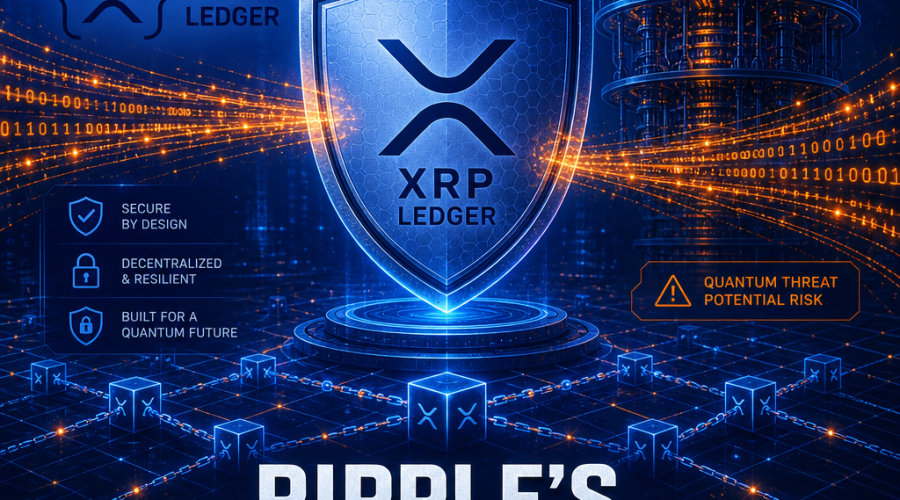
Classical computers, even with immense computational power, would need an unfeasible amount of time to break these systems. However, quantum computers, using fundamentally different principles of computation, promise the ability to solve certain mathematical problems exponentially faster. With a sufficiently powerful quantum computer, it would become possible for an attacker to derive private keys from their associated public keys, undermining the entire security model of today’s blockchains.
Yakovenko emphasizes that this risk is not merely theoretical. Researchers and industry experts have increasingly sounded the alarm, suggesting that quantum advancements may become commercially viable by the end of this decade. If blockchain networks are not prepared, vast holdings in digital wallets could be instantaneously compromised. The billions of dollars stored in blockchain-based systems could be exposed to theft and manipulation, shaking confidence in the very idea of decentralized digital money.
Why the Post-Quantum Migration Is an Urgent Concern
Yakovenko’s call to action is driven by a race against time: migrate to quantum-resistant cryptographic schemes before quantum computers reach the necessary level of maturity, or risk exposing users to irreparable losses. The transition is urgent because coordinating such a systemic upgrade across global, permissionless blockchain networks is a monumental challenge.
According to Yakovenko, the transition involves retooling every layer of the infrastructure—from individual wallet software to decentralized validator nodes—each of which must be updated to support new, quantum-safe algorithms. Unlike other technical upgrades, the stakes are not simply about performance or usability. Here, the very foundation of transaction security is in jeopardy.
The complexity is exacerbated by the decentralized nature of blockchain systems. Networks often consist of millions of active wallets and thousands of nodes distributed across the world. Achieving consensus on which quantum-resistant schemes to adopt, deploying the software, and ensuring all users migrate their holdings safely is a feat matched by few technological undertakings.
Moreover, the risk of failing to coordinate is severe. Users who do not migrate their keys in time could lose access to their funds forever. There may be no realistic way to recover value once quantum attacks become feasible, especially for users who are unresponsive or whose keys are exposed in less secure environments.
Potential Impact on Solana Users, Validators, and Developers
The Solana network, with its emphasis on high throughput and low transaction fees, faces unique technical challenges when it comes to post-quantum security. Introducing new cryptographic methods likely means larger key sizes and more computationally intensive validation processes. This could influence the network’s speed, scalability, and cost structure—compromising some of the very advantages that made Solana popular.
For Solana users, a post-quantum upgrade would mean updating their wallets to support new signature schemes. The process could involve moving funds to newly generated, quantum-resistant accounts—potentially a daunting task for average users not technically versed in cryptographic details.
For validators, the backbone nodes of the Solana ecosystem, the shift would mandate swift upgrades to systems tasked with processing transactions and securing the network. A seamless, well-orchestrated transition is vital, not only to prevent service disruptions but also to ensure that no assets are left behind in vulnerable accounts.
Developers would also be pressed to redesign protocols, audit smart contracts, and verify integration of the new cryptographic standards. The upgrade would touch everything from the client SDKs to core consensus mechanisms, requiring months if not years of labor-intensive work and extensive community coordination.


Lessons for the Wider Blockchain Ecosystem
While Solana finds itself at the forefront of the quantum debate, other leading networks face similar risks. Bitcoin, which has seen growing institutional interest, and Ethereum, which hosts a vast array of decentralized applications, also depend on forms of elliptic curve cryptography. The underlying threat is systemic: virtually all major blockchain protocols, wallets, and DApps could become vulnerable at once.
The risks are particularly acute for networks entrusted with large institutional or government treasuries. Quantum readiness is not just a technological issue; it’s a matter of market confidence. Enterprises and governments holding crypto assets on behalf of clients, citizens, or pension funds need assurance that their holdings are secure not only today, but for decades to come.
The race to post-quantum security could also create new competitive advantages in the blockchain sector. Projects that lead in adopting quantum-resistant protocols will likely attract more conservative capital and users who prioritize long-term security guarantees. Early adoption could set certain chains apart as safe havens for digital value in a post-quantum world.
However, the transition also introduces potential risks of fragmentation and confusion. If some networks or users delay migration, or adopt incompatible methods, islands of vulnerability may persist, undermining the confidence of the ecosystem at large. A coordinated, industry-wide approach—possibly even involving standard bodies or inter-chain agreements—may be required.
What Needs to Happen Next: Roadmap and Recommendations
According to Yakovenko’s perspective, the time to prepare is now. Waiting until quantum computers are at the doorstep means reacting in a crisis rather than planning ahead. The optimal path involves researching, testing, and progressively integrating quantum-resistant algorithms into production environments before a threat emerges.
Each network must balance unique trade-offs: for Solana, preserving transaction throughput while upgrading security; for Bitcoin, maintaining decentralization and consensus while overhauling deep-rooted technical assumptions; for Ethereum and others, ensuring smart contract platforms remain compatible with post-quantum primitives.
Wallet providers, too, will play an essential role in educating users, guiding them through upgrade processes, and minimizing opportunities for user error. Given the irreversible nature of crypto transactions, clear communication and robust documentation will be crucial.
Beyond technical upgrades, there’s an urgent need for community engagement and governance processes. Transitioning to post-quantum standards may require network-wide votes or hard forks—actions that have historically proven controversial and difficult to coordinate.
Finally, as quantum innovations move from theoretical speculation to practical engineering, ongoing research and development should be supported across academia, industry, and open source communities. Regular testing, cross-network collaboration, and robust threat modeling can help ensure no chain is left behind in the post-quantum era.
Conclusion: Seizing the Post-Quantum Moment
Anatoly Yakovenko’s warning is a timely reminder that the success of blockchain networks depends not only on day-to-day price movements or regulatory developments, but also on their ability to adapt to emerging technological risks. As the possibility of quantum computing draws closer, the blockchain community faces one of its greatest challenges yet: future-proofing the security of an entire industry.
The post-quantum migration won’t be easy, and it won’t be without cost or difficulty. But failing to act could mean handing over the keys to the kingdom—quite literally—to attackers enabled by the next leap in computing power. For Solana, Bitcoin, Ethereum, and the blockchain world at large, proactive planning today is the only viable path to security tomorrow.