The edgeX Token (EDGE) Endures Historic Plunge Amid Trust Issues and Market Turmoil
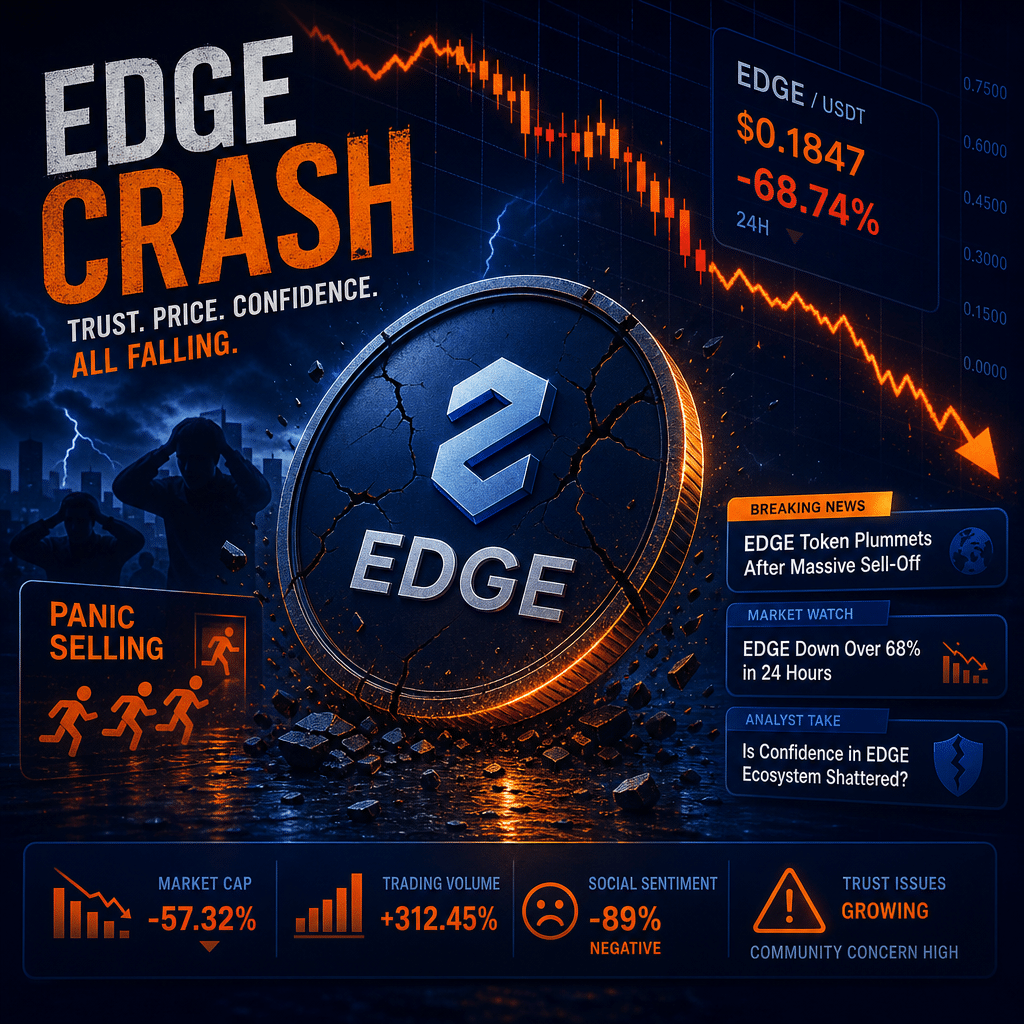
The cryptocurrency market experienced a major shock when edgeX’s native token, EDGE, underwent a rapid collapse on June 1. In a dramatic four-hour period on Binance, EDGE plunged from $1.1424 to $0.6115, marking a staggering fall of approximately 46%. The steep drop did not occur in isolation; it sent ripples of panic selling across multiple exchanges and set EDGE at a new all-time low. This sharp sell-off reflects a combination of project-specific controversies, macro-level fear, and the inherent volatility that mid-cap cryptocurrencies face in the current market climate.
The Anatomy of EDGE’s Price Meltdown
The crash unfolded briskly, as EDGE’s value was battered by relentless selling within hours. Data from leading platforms underscores the scale of the catastrophe. CoinGecko reported a 41.38% decrease in the EDGE price over a single 24-hour period, with the token reaching an all-time low of $0.4016. CoinMarketCap data provided an even bleaker snapshot, recording an intraday wick as low as $0.3663. The unprecedented volatility saw EDGE’s 24-hour trading volume soar to $104.82 million—a spike of more than 1,272%, indicative of panic-driven, capitulation-level selling across the board.
At the time of reporting, EDGE had partially rebounded and was trading near $0.759, a significant climb from its low but still a dramatic decline compared to its all-time high (ATH) of $1.54, set barely ten days earlier, on May 22. The time frame accentuates the magnitude of the loss: approximately 50% of EDGE’s value has been wiped out in less than two weeks.
EDGE V2 Launch and the “Sell the News” Phenomenon
What makes this collapse particularly notable is its timing. The selloff emerged mere days after the edgeX project launched its highly anticipated V2 platform on a proprietary EDGE Chain mainnet on May 28. This proximity has fueled speculation that traders who accumulated EDGE in advance of the upgrade took the opportunity to “sell the news,” a familiar dynamic in crypto where anticipated major events become exit points after the fact.
edgeX, which presents itself as a perpetual decentralized exchange (DEX) built on the Base network and enjoys backing from prominent institutional investors like Circle Ventures, has established undeniable traction. The platform claims over $800 billion in cumulative trading volume, backed by a user base exceeding 300,000 accounts. However, this growth in usage has not fully translated into solid investor confidence. Underlying trust issues have been an ongoing concern within the community and may well have contributed to the intensity of last week’s selloff.
The Shadow of Airdrop Controversy
Investor jitters surrounding EDGE did not arise overnight. In April 2026, edgeX was mired in controversy after on-chain analysts uncovered that approximately $195 million in genesis tokens had been sent to over 80 newly created wallet addresses connected to the team. This led to widespread suspicion in the community about internal distribution of tokens, fueling narratives of potential manipulation or undisclosed insider activities.
Although the incident did not lead to regulatory action, the revelation put a dent in community trust. Such erosion of confidence sets the stage for reflexive, panic-driven reactions whenever adverse price movements begin, as holders fear further undisclosed risks. The latest price crash thus appears to be the culmination of persistent trust deficits, triggered by the proximity to the mainnet launch and likely exacerbated by leveraged positions unwinding.
In response to recent events, the edgeX team released a statement acknowledging the “sudden and unusual price movement” in the EDGE token and said a full investigation was underway. As of press time, the team had not disclosed any root cause for the crash, further stirring speculation within the community. This move mirrors other projects, which have sometimes rebranded or changed strategic direction when facing community backlash—often as a last-ditch effort to repair reputation damage.


Market Sentiment and the Macro Backdrop
The EDGE selloff occurred amid a wider environment of heightened market anxiety. The Crypto Fear & Greed Index stood at just 23 on June 2, squarely in the “Extreme Fear” category. Such sentiment indexes capture broad-based risk aversion, reflecting investor concerns about macroeconomic uncertainty, regulatory developments, or potential contagion from other sectors in the market. In these conditions, traders and investors tend to react swiftly to negative catalysts, amplifying already volatile moves in digital assets.
It is important to note that EDGE, with a market capitalization of approximately $264.4 million and a circulating supply of 350 million tokens (out of a total 1 billion), is classified as a mid-cap digital asset. These types of tokens often have thinner liquidity profiles, making them more vulnerable to abrupt, large-scale swings—especially when large orders or liquidation cascades hit the market. The dramatic 46% drop seen in a four-hour period, while extreme, is not unheard of in this context and highlights the risks faced by investors in leveraged and thinly traded markets.
Critical Levels and Technical Considerations
In the wake of such a severe decline, traders and investors are now closely monitoring several key price levels. The $0.6115 close from the four-hour crash candle now acts as a critical reference point. A sustained breach below this price risks a retest of the sub-$0.40 zone, where the all-time low was established. Conversely, the $1.14 region—previously considered a major support level—has now flipped into formidable resistance territory, as it marks the area where sellers previously overwhelmed buyers during the crash.
Market analysts are also paying close attention to volume trends. The aforementioned 1,272% jump in trading volume during the sell-off is widely regarded as a hallmark of forced liquidation, panic sales, and widespread surrender by speculative holders. For a genuine recovery to take hold, any bounce in price should ideally be accompanied by a sustained rise in buying volume, which would signal authentic demand and smart-money accumulation, rather than mere opportunistic trading or short covering. An anemic recovery on declining volume, by contrast, suggests weak conviction and raises the risk of further downside once the immediate panic abates.
Risks of Supply Overhang and Tokenomics
Prospective traders and long-term investors must also consider the underlying tokenomics of EDGE. The total supply of tokens—1 billion—vastly exceeds the 350 million currently in circulation, meaning two-thirds of tokens remain unissued or locked. Future token unlocks pose a considerable risk, as gradual or sudden releases of new supply can place persistent downward pressure on prices, particularly during periods of already-depressed sentiment.
The results of the EDGE team’s investigation into the root causes of the price crash could also influence future price action. Should any findings reveal vulnerabilities or questionable behavior from project insiders, the overhang on the token could intensify, limiting any meaningful recovery. On the other hand, transparent disclosures and credible remediation measures from the team may help to restore a measure of confidence, although reputational damage can often linger in the notoriously fickle crypto markets.
Lessons for the Broader Crypto Ecosystem
The edgeX episode stands as a timely illustration of the volatility, rapid sentiment shifts, and persistent risks that define cryptocurrency trading—especially for newer projects and mid-cap tokens. It highlights the essential importance of transparency, sound tokenomics, and proactive communication from project teams to mitigate the risk of panic-induced, reflexive selloffs. Furthermore, it offers a cautionary tale for investors, reinforcing the need for diligent research, effective risk management, and an appreciation for just how quickly digital asset values can shift in both directions.
In conclusion, the EDGE price collapse underscores a confluence of factors: technical breakdowns, possible “sell the news” behavior after a major platform upgrade, unresolved team controversies, and prevailing market fears. Whether EDGE can recover and regain investor trust in the coming weeks will depend heavily on how the project addresses both internal and external challenges—and on the ability of the broader cryptocurrency market to stabilize and sustain interest in innovative but inherently risky assets.