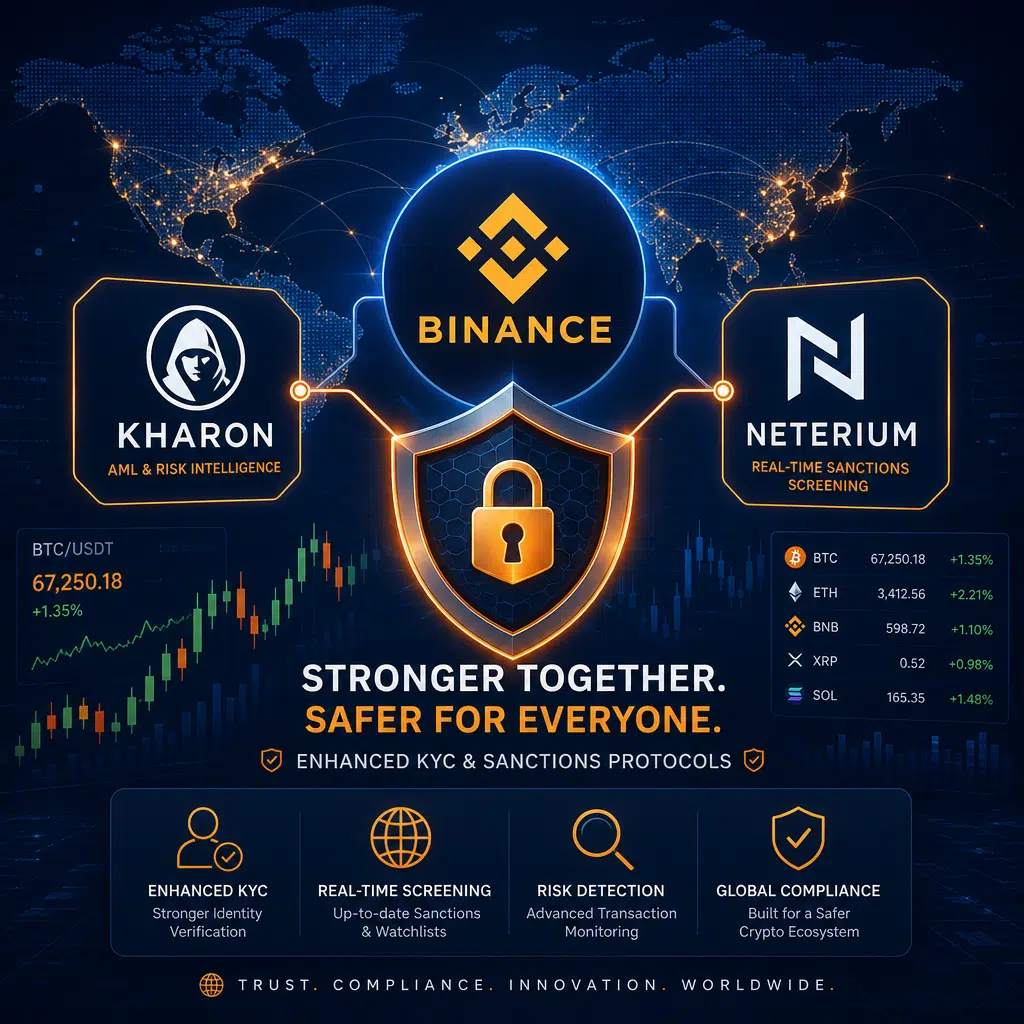
Boosting KYC and Sanctions Protocols: Binance Teams Up With Kharon and Neterium
Global crypto exchange powerhouse, Binance, has announced its latest collaboration with financial analytics firm Kharon, and API-native screening provider Neterium. The partnership aims to strengthen Binance’s know-your-customer (KYC) and sanctions protocols, thereby enhancing its compliance measures.
A Move to Enhance Sanctions Screening and KYC Procedures
Through this strategic partnership, Binance is set to leverage state-of-the-art data and analytics to enhance sanctions screening and fine-tune its KYC procedures. Kharon, a leader in financial data analytics, will provide comprehensive user data and intelligence that will be incorporated directly into Binance’s transaction screening systems. This collaboration is made possible through the partnership with technology provider, Neterium.
Contributing to Risk Mitigation and Compliance
The collaboration serves as a key developmental opportunity to enhancing data solutions committed to improving the capabilities of cryptocurrency trading platforms while also promoting strategies and tools to monitor and prevent activity by unlawful entities. According to Binance’s Global Head of Sanctions, Chagri Poyraz, this move signals the company’s commitment to building an industry-leading compliance program with big data and innovative technology playing key roles in managing risk.
Partnering for Regulatory Compliance and Risk Mitigation
On the other hand, Kharon’s Chief Client Officer, Howard Mendelsohn, highlighted that virtual asset service providers need high-quality data and dynamic technology to support their compliance programs. The collaboration with Binance to supply data and analytic tools is seen as a critical development in addressing the wider regulatory expectations and mitigating risk.
Binance’s Initial Stance and Subsequent Change
Binance’s CEO, Changpeng Zhao was initially hesitant about sanctioning Russian users following the onset of the war in Ukraine. He emphasized that blocking Russians from crypto exchanges was unethical and argued that avoiding economic sanctions was not specifically an issue related to cryptocurrencies.


Binance Adapts to the Changing Regulatory Landscape
However, Binance had to swiftly adjust its stance presumably due to government influence, leading to the implementation of further sanctions-related restrictions on its platform. This move came on the heels of the EU’s fifth package of restrictive measures against Russia, resulting in Binance limiting services for Russian natural persons living in Russia or legal entities established in Russia with crypto assets exceeding the value of 10,000 EUR.
Leading the Industry in Implementing Sanctions
Binance strives to maintain its leadership position in the digital currency exchange industry by implementing these sanctions promptly. This responsibility has brought about an increasing belief that other significant exchanges should soon follow suit and adhere to the same rules.
In conclusion, this new collaboration between Binance, Kharon, and Neterium showcases the crypto industry’s commitment to meeting stringent regulatory expectations while continuing to provide value to its diverse user base. Merging high-quality data, innovative technology, and advanced analytics promise to usher in a new era of compliance in the ever-evolving world of digital currencies.