Crypto trading strategies matter because the market moves fast, trades 24/7, and punishes random decision-making. If you are entering positions without a clear setup, risk limit, and exit plan, you are not really trading a strategy — you are reacting.
This guide covers four practical cryptocurrency trading strategies that many traders use to structure entries and exits: breakouts, moving average crossovers, pullbacks, and the bull flag pattern. None of them guarantees profits, but each can help you read price action with more discipline.
If you want a broader foundation first, start with our crypto trading guide.
Disclaimer: This article is for educational purposes only and should not be considered investment advice. Crypto is volatile and losses can happen quickly. Never risk more than you can afford to lose, and consider speaking with a qualified financial professional before trading.
How to choose a crypto trading strategy
The best crypto trading strategy is usually the one you can follow consistently. A setup may look great on paper, but if it does not match your time frame, risk tolerance, or experience level, it will be hard to execute well.
Before using any strategy, define:
- Your time frame: Are you trading intraday, swing trading over several days, or holding longer?
- Your risk per trade: Many traders cap risk to a small percentage of their account on each position.
- Your market conditions: Trending markets and range-bound markets often reward different setups.
- Your confirmation rules: Decide in advance what confirms an entry, where the stop goes, and where you will take profit.
A simple strategy followed well usually beats a complicated one used inconsistently.
1. Breakout trading
Breakout trading focuses on what happens when price pushes through a well-defined support or resistance level. The idea is straightforward: if price escapes an area where it has repeatedly stalled, momentum can expand quickly.
In crypto, breakouts can be powerful because volatility is high and liquidity can shift fast. That said, false breakouts are common, especially when traders chase the first move without waiting for confirmation.
How traders use breakouts
- Identify a clear support or resistance zone on the chart.
- Wait for price to break that level with conviction rather than just wick through it.
- Look for confirmation, such as a candle close beyond the level, rising volume, or a successful retest.
- Place a stop loss where the breakout idea is invalidated, not where it merely feels uncomfortable.
Example: if Bitcoin trades below resistance several times and then closes above it, some traders wait for a retest of that former resistance as new support before entering long. That extra patience can help filter out weak moves.
Breakout trading tends to work best in markets that are compressing before expansion. It tends to work worst when price is chopping around key levels with no real follow-through.
2. Moving average crossovers
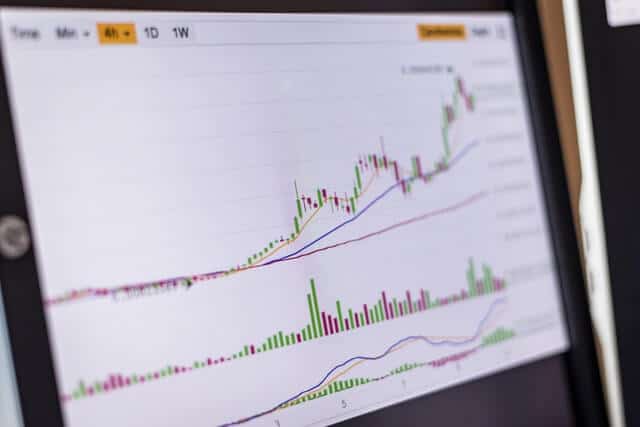
Moving average crossover strategies use trend-following indicators to spot potential shifts in momentum. The basic idea is that when a shorter-term moving average crosses a longer-term one, momentum may be changing.
The original version of this article mentioned the 6, 18, 50, and 200-period averages. Those settings can still be used, but the exact numbers matter less than understanding what the crossover is telling you.
What a crossover can show
- Bullish signal: a shorter moving average crosses above a longer one, suggesting momentum is strengthening.
- Bearish signal: a shorter moving average crosses below a longer one, suggesting momentum is weakening.
- Trend filter: many traders also use a longer moving average, such as the 200-period MA, to avoid trading against the broader trend.
For example, a trader might only take bullish crossover signals when price is above the 200-period moving average. That does not remove risk, but it can reduce the number of trades taken against the dominant trend.
The main weakness of crossover systems is lag. Moving averages react to price after the move has already started, so they can perform poorly in sideways markets. They are usually more useful as a trend filter than as a standalone reason to enter a trade.
If you want to go deeper on indicators, our guide to the AltAlgo indicator is a useful next step.


3. Pullback trading
Pullback trading means entering in the direction of the broader trend after a temporary move against it. Instead of chasing price after a sharp rally or sell-off, the trader waits for a partial retracement and looks for the trend to resume.
This is one of the most practical crypto trading strategies because strong trends rarely move in a straight line. Markets breathe.
How pullback setups are usually approached
- First identify the trend.
- Mark areas where price may react, such as previous support or resistance, moving averages, or trendlines.
- Wait for price to retrace into that area.
- Look for confirmation that the trend is resuming before entering.
Example: in an uptrend, Ethereum may break higher, retrace back toward a previous resistance zone, and then hold above it. If buyers step back in, that pullback can offer a cleaner entry than buying the initial breakout candle.
The common mistake here is assuming every dip is a pullback. Sometimes it is the start of a reversal. That is why confirmation matters.
4. Trading the bull flag
A bull flag is a continuation pattern that appears after a strong upward move. Price rallies sharply, pauses in a downward-sloping or sideways channel, and then may break higher again if the trend remains intact.
Some traders also apply the same logic in reverse for bearish continuation patterns, often called bear flags.
What traders look for in a bull flag
- A strong impulse move upward, often called the flagpole.
- A controlled consolidation rather than a full breakdown.
- Lower volume or reduced momentum during the pause.
- A breakout above the flag structure for confirmation.
One way to manage the setup is to place an entry above the high of the consolidation once the pattern is confirmed, with a stop below the structure or another logical invalidation level. The exact placement depends on the chart and the trader’s risk model.
Bull flags can be attractive because they offer a structured continuation setup. They can also fail quickly if the broader market loses momentum, so they should not be traded in isolation.
Risk management matters more than the setup
Most traders spend too much time hunting for the perfect strategy and not enough time managing risk. In practice, risk control often matters more than whether you trade breakouts, pullbacks, or moving average signals.
At a minimum, every trade should answer three questions:
- Where is the entry?
- Where is the stop loss?
- Where is the exit if the trade works?
It also helps to keep position sizing consistent. Crypto assets can be highly speculative and volatile, which is exactly why disciplined risk management is not optional in this market.
For a broader look at crypto market risk, see the SEC’s investor resources on crypto assets: Investor.gov.
Final thoughts
These four cryptocurrency trading strategies are popular for a reason: they are simple enough to understand, flexible across different coins and time frames, and grounded in common market behaviour.
That does not mean they are easy. A strategy only becomes useful when you test it, apply it consistently, and manage risk properly. If you keep changing rules every time the market gets uncomfortable, even a solid setup will look broken.
If you want help turning chart setups into a more structured process, you can explore AltSignals trading signals for additional market guidance.