

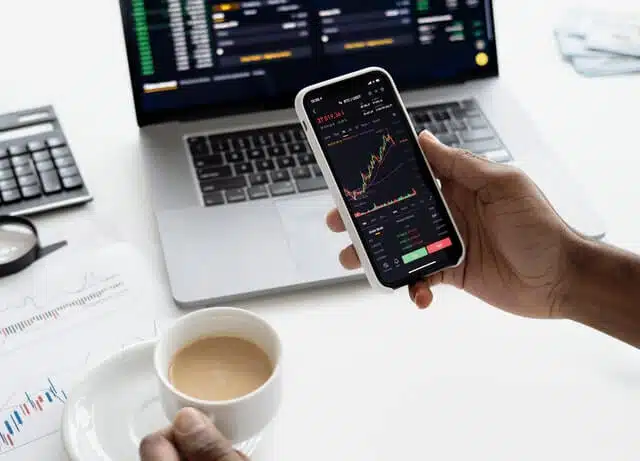
Telegram signal channels can be useful, but they are also one of the easiest places to get sold a fantasy. A polished feed, a few screenshots, and a big follower count do not prove that a provider is reliable.
If you are trying to choose the best Telegram signals channel, the real job is simple: filter out hype, check how signals are presented, and look for evidence that the provider takes risk management seriously.
This guide breaks down what to look for before you pay for any signal service, whether you trade crypto, forex, gold, or indices.
What are Telegram signals channels?
Telegram signals channels are groups or broadcast channels that share trade ideas through the Telegram app. A typical signal includes:
- the asset or trading pair
- entry price or entry zone
- take-profit target or targets
- stop-loss level
- sometimes a short explanation of the setup
These channels are popular because they are fast, easy to follow, and work across different markets. You will find Telegram channels focused on crypto, forex, stocks, commodities, and futures.
That said, a signal is still just a trade idea. It is not a guarantee, and it is not a substitute for understanding position sizing, leverage, or market risk.
If you want a broader foundation first, start with our crypto trading guide.
How do Telegram trading signals work?

Most Telegram channels send a message telling members what trade they are watching and how they plan to manage it.
A basic signal might look like this:
- Asset: BTC/USDT
- Direction: Buy
- Entry: a defined price or range
- Take profit: one or more target levels
- Stop loss: the level where the trade is invalidated
The better channels make this easy to understand and easy to execute. The weaker ones post vague calls like “buy now” or “massive pump incoming” with no clear invalidation level. That is not a signal. That is noise.
Some providers also connect signals to automation tools or bots. That can save time, but it also raises the stakes. If a signal format is sloppy, automation can turn a bad process into a faster bad process.
How to choose the best Telegram signals channels
There is no perfect checklist that guarantees you will avoid every bad provider. But there are clear signs that separate serious signal services from channels built on marketing alone.
1. Look for transparent reporting, not cherry-picked wins
A reliable provider should show more than a few winning screenshots. Anyone can post the trades that worked and quietly ignore the rest.
What you want to see instead:
- regular performance updates
- clear records of wins and losses
- signal history that members can review
- realistic commentary around drawdowns and losing streaks
Be careful with headline numbers, especially when they are presented without context. High percentage claims can be distorted by leverage, scaling, or selective reporting. A provider that explains risk and trade management is usually more credible than one that only posts oversized profit figures.
If a service publishes verified or structured performance summaries, that is a positive sign. If it only posts celebration graphics after winning trades, keep your guard up.
2. Check whether the signals are actually usable
A good signal should be clear enough that two different traders could read it and place roughly the same trade.
That means the channel should specify:
- what to trade
- where to enter
- where to exit in profit
- where to cut the trade if it fails
- whether the setup is spot, margin, or futures
If the provider uses leverage, partial exits, or moving stop losses, that should be explained too. Ambiguity is a problem. It creates confusion for members and gives the provider room to rewrite history later.
3. Pay attention to risk management
This is where many Telegram channels fail. They focus on excitement, not survival.
The best signal channels usually talk about risk in plain language. They do not treat stop losses as optional. They do not encourage reckless leverage. They do not make every trade sound like a once-in-a-lifetime setup.
Risk management matters because even a decent win rate can fall apart if losses are unmanaged. Regulators such as the U.S. SEC and the UK FCA regularly warn traders about investment scams and misleading promotions on social platforms. Telegram is fast, private, and lightly filtered, which makes basic due diligence even more important.
4. Read reviews, but read them carefully
Reviews can help, but they are not perfect. Some are genuine. Some are affiliate-driven. Some are fake in both directions.
Instead of looking only at star ratings, look for patterns:


- Do users mention poor communication after payment?
- Are signals posted late or edited after the move?
- Do members complain that stop losses are ignored in reports?
- Are refund terms unclear?
- Do positive reviews sound specific, or suspiciously generic?
Forums and community discussions can also be useful because they often contain more candid feedback than polished review pages.
5. Test the free channel or trial first
If a provider offers a free channel, sample signals, or a trial period, use it. This is one of the easiest ways to judge quality before committing to a subscription.
During the trial, ask yourself:
- Are the signals timely?
- Are the instructions clear?
- Is the tone professional or overly promotional?
- Do they explain losses as openly as wins?
- Would you actually be able to follow these trades in real conditions?
A short test often tells you more than a sales page ever will.
6. Check the support and communication quality
Good support does not mean someone replies with a rocket emoji in under 30 seconds. It means members can get clear answers when they need help with setup, billing, signal format, or platform issues.
Strong providers usually have:
- clear onboarding instructions
- fast and professional replies
- consistent posting schedules
- updates when market conditions change
If a channel goes quiet during volatility or only becomes active when it wants renewals, that tells you plenty.
7. Look beyond follower count
A large Telegram audience can be a positive sign, but it is not proof of quality. Followers can be bought. Engagement can be faked. Screenshots can be edited.
What matters more is whether the community looks real:
- Are members interacting in a believable way?
- Does the provider answer questions?
- Is there a consistent posting history?
- Do updates match actual market conditions?
A smaller but credible channel is usually better than a huge one built on vanity metrics.
8. Be cautious with bots and automation
Some Telegram signal providers also offer bots that copy or execute trades automatically. That can be useful if the setup is reliable and the risk controls are clear.
But automation is not a magic upgrade. Before using any bot, check:
- how signals are parsed and executed
- whether stop losses and targets are included correctly
- what happens if the market moves before execution
- whether you can control position size and risk
If you are interested in combining signals with tools, it also helps to compare them with an indicator-based approach such as the AltAlgo indicator.
Red flags that should make you walk away
- guaranteed profits or “no-loss” claims
- pressure to upgrade immediately
- no stop-loss guidance
- edited or deleted signal history
- unverified screenshots used as the main proof
- vague entries like “buy now” with no structure
- constant hype, little explanation
- no clear support or billing information
If a channel sounds more like a casino promoter than a trading service, trust your instincts.
What a good Telegram signals channel should offer
At a minimum, a solid provider should give you:
- clear trade setups
- defined risk levels
- consistent communication
- transparent reporting
- a realistic tone around wins and losses
Anything beyond that, such as education, market commentary, indicators, or automation, is a bonus.
Final thoughts
The best Telegram signals channels are not the loudest ones. They are the ones that communicate clearly, manage risk properly, and give you enough information to judge their process for yourself.
If you are comparing providers, start with structure and transparency before you look at marketing claims. A channel that survives scrutiny is worth more than one that looks impressive for five minutes.
If you want to explore a more structured signals service, you can review AltSignals trading signals and check the available performance information before deciding whether it fits your style.
FAQ
Are Telegram signal channels worth it?
How can I tell if a Telegram signals channel is fake?
Common warning signs include guaranteed profit claims, edited trade history, no stop-loss guidance, fake-looking engagement, and pressure to pay quickly. If the proof is mostly screenshots and marketing language, be cautious.
Should I use free or paid Telegram signals?
Free channels are useful for testing signal quality and communication style. Paid channels may offer more detail or support, but paying does not automatically mean better signals. It is usually smarter to test first before subscribing.
Can I automate Telegram signals with a bot?
Sometimes, yes. But only use automation if the signal format is consistent and you understand how entries, stop losses, targets, and position sizing are handled. Automation can reduce manual work, but it can also amplify mistakes.










They can be, but only if the provider is transparent and risk-aware. A signal channel is most useful when it gives clear entries, exits, and stop losses rather than vague trade ideas or hype.