

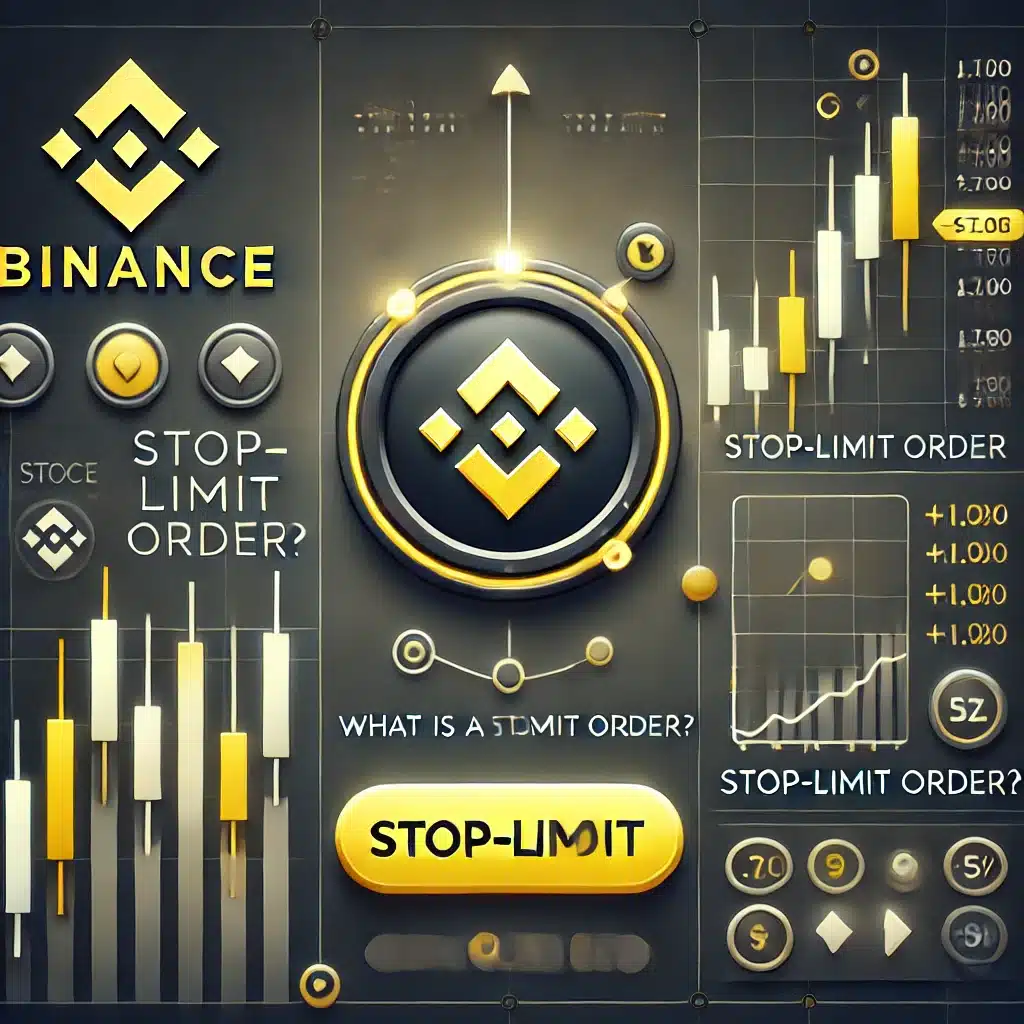
A stop-limit order on Binance lets you set two prices instead of one: the stop price, which triggers the order, and the limit price, which is the price you are willing to accept once the order is placed.
That extra control is useful, but it comes with a catch: execution is not guaranteed. If the market moves too fast after your stop is triggered, your order may sit unfilled.
If you are still getting comfortable with exchange order types, it helps to start with the broader crypto trading guide before using conditional orders with real money.
What is a stop-limit order on Binance?
A Binance stop-limit order is a conditional order that becomes a limit order once the market reaches your chosen stop price.
- Stop price: the trigger
- Limit price: the actual order price sent to the order book after the trigger
In plain English, you are telling the exchange: “If price reaches this level, place my buy or sell order at this price.”
This is different from a market order, which aims to execute immediately at the best available price. A stop-limit order gives you more price control, but less certainty that the trade will fill.
How a stop-limit order works
The process happens in two steps:
- The market reaches your stop price.
- Binance places your limit order on the order book.
That second step matters. Reaching the stop price does not mean your trade is complete. It only means your limit order is now active.
If buyers or sellers are available at your limit price, the order may fill. If the market gaps past it, the order can remain open or only fill partially.
Example: using a stop-limit order to limit downside
Imagine you bought BNB and want to reduce risk if the price breaks below support.
You might set:
- Stop price: just below the support level
- Limit price: slightly below the stop price
For a sell order, traders often place the limit price a little lower than the stop price. That gives the order a better chance of filling once triggered.
Example setup:
- You hold 5 BNB
- A support zone sits near your chosen level
- You set a sell stop price at one level
- You set the sell limit price slightly lower
If the market drops to the stop price, Binance places your sell limit order. If price keeps falling too quickly, your order may not fill. That is the trade-off: better price control, weaker execution certainty.
How to place a stop-limit order on Binance
- Log in to your Binance account.
- Open the trading pair you want to trade.
- Select the Stop-Limit order tab.
- Enter your stop price.
- Enter your limit price.
- Enter the amount you want to buy or sell.
- Review the details carefully.
- Confirm and place the order.
After submission, you can monitor the order in your open orders section. If the stop price has not been reached yet, the order is waiting in the background. Once triggered, it becomes a live limit order.
When should you use a stop-limit order?
Stop-limit orders are most useful when you want more control over entry or exit price and you are willing to accept the risk of not getting filled.
Common use cases include:


- Managing downside risk: placing a conditional sell order below support
- Buying breakouts carefully: entering only if price reaches a trigger level
- Avoiding poor fills: especially in thinner or more volatile markets
They are popular with traders who plan entries and exits in advance rather than reacting in the moment.
Stop-limit vs market order
Here is the practical difference:
- Market order: prioritises execution
- Stop-limit order: prioritises price control
If your main goal is getting out fast during a sharp move, a market order may be more reliable. If your main goal is avoiding a bad fill, a stop-limit order may make more sense.
Neither is automatically better. It depends on the market and your risk tolerance.
The main risk traders miss
The biggest mistake is assuming a stop-limit order works like a guaranteed stop-loss. It does not.
In fast-moving crypto markets, price can move through your stop and past your limit before enough liquidity appears. When that happens, the order may remain unfilled while the market keeps moving against you.
That is why stop-limit orders should be part of a broader risk plan, not your entire risk plan.
If you want more structure around trade planning, entries, and exits, you can also explore the AltAlgo indicator or review AltSignals trading signals for extra market context.
Final takeaway
A Binance stop-limit order is a useful tool when you want to define both the trigger point and the acceptable execution price.
Used well, it can help you manage trades with more discipline. Used carelessly, it can leave you with an order that triggers but never fills.
The simple rule is this: use stop-limit orders when price control matters more than guaranteed execution.
FAQ
Is a stop-limit order the same as a stop-loss on Binance?
Should the stop price and limit price be the same?
They can be, but many traders leave a small gap between them. For sell orders, the limit price is often set slightly below the stop price to improve the chance of execution after the trigger.
What happens if the stop price is triggered but the order does not fill?
Your limit order stays open on the order book until it fills, is cancelled, or expires under the exchange’s rules. In a fast market, that can leave you exposed longer than expected.
Is a stop-limit order good for beginners?
Yes, but only if you understand the difference between triggering and filling. Beginners often assume the order guarantees an exit, which is the main misunderstanding to avoid.













No. A stop-limit order triggers a limit order once the stop price is reached. Because it becomes a limit order, it may not fill if the market moves too quickly.