Telegram remains one of the main places traders follow crypto signals, market updates, and trade ideas in real time. That makes it useful, but it also means you need to be selective. Some Telegram groups share structured setups with entry, stop-loss, and targets. Others are little more than noise, recycled calls, or outright scams.
If you want the broader context behind how signals fit into a trading plan, start with our crypto trading guide. In this article, we’ll focus on how crypto trading signals Telegram groups work, what a good signal looks like, how altcoin-focused groups fit into the picture, and how to judge whether a group is worth following.
What is Telegram?
Telegram is a messaging app that became especially popular with crypto traders because it is fast, simple to use, and built around channels, groups, and bots. It works on desktop and mobile, supports large communities, and makes it easy for signal providers to publish updates instantly.
For traders, that matters. A signal is only useful if it reaches you quickly and clearly. Telegram channels can deliver trade setups, chart screenshots, market commentary, and follow-up updates in one place without much friction.
It also supports automation better than many mainstream messaging apps. Some traders use Telegram alongside execution tools and bots to copy signals into exchange accounts, although that should always be done carefully and with risk controls in place.

Telegram pros
- Fast delivery of trade alerts and updates
- Works across desktop and mobile devices
- Supports channels, groups, and bots
- Popular with crypto communities and signal providers
- Easy to share charts, screenshots, and trade management updates
Telegram cons
- Low barrier to entry means scam channels are common
- Large groups can create noise and conflicting opinions
- Privacy is better than some apps, but users still need basic security habits
What are trading signals?

Trading signals are trade ideas based on analysis. In crypto, they usually tell you what asset to trade, where to enter, where to place a stop-loss, and where to take profit. Some are generated manually by analysts. Others come from rule-based systems using indicators, price action, or a mix of both.
A simple example is a moving average crossover. If the 50-period moving average crosses above the 200-period moving average, some traders treat that as a bullish signal. If it crosses below, they may treat it as bearish. The same logic can be built around RSI, MACD, Fibonacci levels, support and resistance, or multi-indicator confirmation.
That does not mean signals are always right. No signal provider is 100% accurate, and no setup works in every market condition. Good signals improve decision-making. They do not remove risk.

If you already understand indicators and chart structure, you can create your own signals. If not, a signal group can save time by doing part of the analysis for you. Either way, you still need position sizing, discipline, and a plan for what happens if the trade fails.
What are crypto trading signals Telegram groups?
Crypto trading signals Telegram groups are channels or communities that publish trade setups for cryptocurrencies in real time. Some focus on spot trades, others on futures, and some cover both. A typical signal includes the trading pair, entry zone, stop-loss, leverage guidance if relevant, and one or more take-profit targets.
Many groups also post chart explanations, market commentary, and updates after entry. That extra context matters because a signal without reasoning is harder to evaluate. If a provider explains why a setup exists, you can decide whether it fits your own strategy instead of following blindly.
Another practical point is exchange alignment. Prices can vary slightly between exchanges, and futures contracts can behave differently from spot markets. If a group mainly posts setups for Binance futures but you trade elsewhere, execution may not match the published trade closely enough to be useful.
Some traders follow signals manually. Others connect Telegram alerts to automation tools. If you go down that route, keep the size small at first and make sure you understand exactly how entries, stops, and targets are being handled.
Good groups also tend to do more than drop a ticker and a target. They explain invalidation, update members if market structure changes, and keep the format consistent enough that you can act quickly without guessing what the message means.
Where altcoin Telegram groups fit in
Not every Telegram crypto group is a pure signals channel. Some are altcoin discussion groups built around a specific coin, sector, or trading style. These communities can still be useful because they often surface news, sentiment shifts, token unlock discussions, and chart levels before they show up in broader market commentary.
That said, discussion groups and signal groups serve different purposes. A discussion group may help you understand what traders are watching in coins outside Bitcoin, while a signals group should give you a clearer trade plan. If you join altcoin-focused Telegram groups, treat them as research input rather than automatic trade instructions.
How to use crypto trading signals Telegram groups
The best way to use a Telegram signal group is as part of your process, not as a replacement for it. Signals can help you scan the market faster, but they should still fit your risk tolerance, exchange, and trading style.
1. Use signals to spot setups faster
A good group saves time. Instead of scanning dozens of charts, you get a shortlist of setups that already meet certain conditions. That can be useful if you trade part-time or want a second layer of confirmation.
2. Check whether the setup matches your exchange and market
Before entering any trade, confirm the pair, market type, and price levels on the exchange you actually use. A signal built for one venue may not translate perfectly to another.
3. Learn from the reasoning behind the trade
The strongest groups do more than post numbers. They explain the setup, mention invalidation, and update the trade if conditions change. Over time, that helps you improve your own chart reading.
4. Keep your own risk rules
Even a well-structured signal can fail. Decide your position size before entry, use a stop-loss, and avoid overexposing your account just because several signals arrive on the same day.
5. Use altcoin groups for context, not confirmation bias
Altcoin communities can be helpful when you are researching a coin you do not know well. You may pick up on common narratives, liquidity concerns, or upcoming events that affect volatility. The risk is that these groups can also become echo chambers, especially around smaller-cap tokens. If everyone sounds certain, that is usually a reason to slow down, not speed up.
6. Start small and review execution
If you are new to Telegram signals, avoid treating the first few alerts like a full trading system. Start with small size, track slippage, and compare the posted setup with the trade you were actually able to enter. That tells you whether the group is practical for your exchange, timezone, and reaction speed.


Are crypto trading signals Telegram groups safe?
They can be safe to use, but only if you treat them carefully. Telegram itself is just the delivery channel. The real question is whether the provider behind the channel is credible, transparent, and realistic about risk.
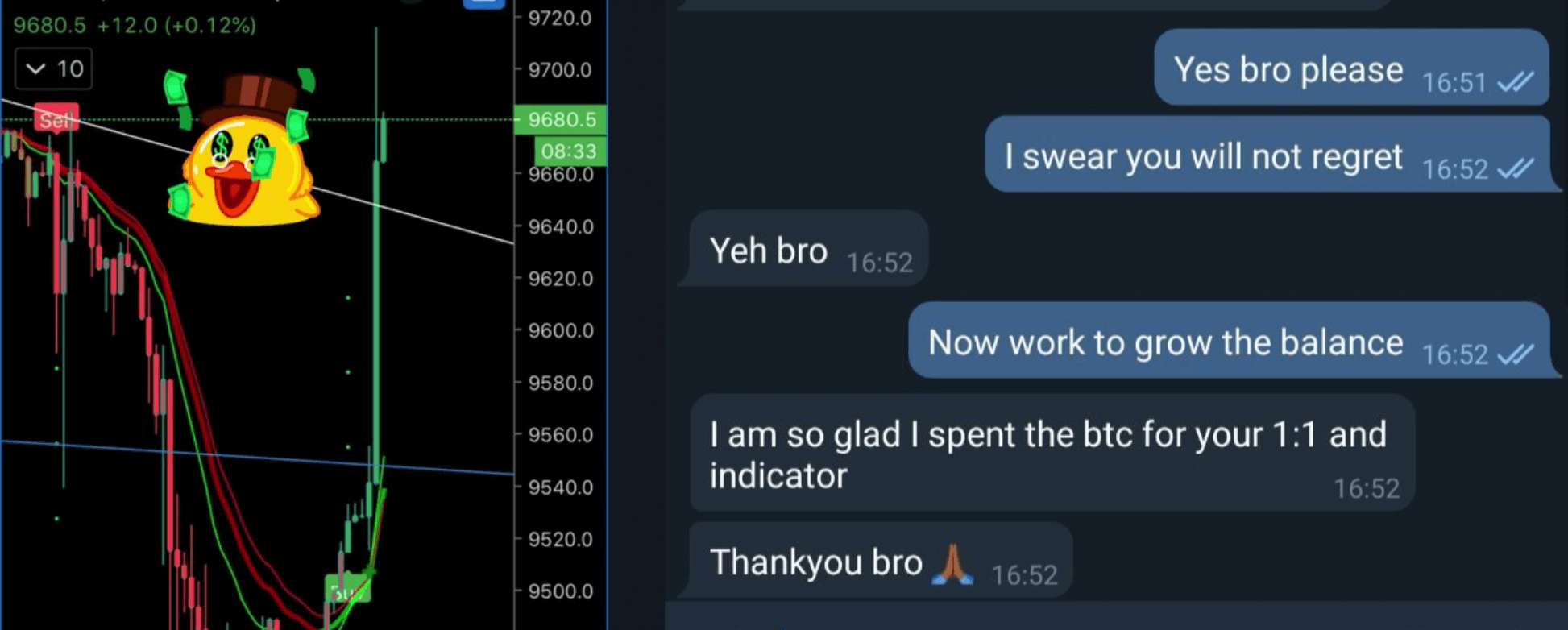
The biggest red flag is any group claiming guaranteed profits or near-perfect accuracy. Markets do not work like that. Losses are part of trading, and any provider pretending otherwise is usually selling a fantasy rather than a process.
You should also avoid any group that asks for private keys, wallet seed phrases, or direct access to your exchange account beyond standard API permissions that you fully understand. No legitimate signal provider needs custody of your funds.
There is also no universal regulatory filter for Telegram signal channels. Some operators are transparent and professional. Others stay anonymous and publish whatever attracts attention. That does not automatically make anonymous providers bad, but it does mean your own due diligence matters more.
Common red flags
- Claims of 100% accuracy or guaranteed returns
- No clear stop-loss or risk guidance
- No transparent history or performance reporting
- Pressure tactics, fake urgency, or constant upsells
- Requests for private keys, seed phrases, or unsafe account access
- Unmoderated chat groups full of spam, impersonators, or pump-style behaviour
If you want a more objective way to judge a provider, look for published trading results, consistent trade formatting, and realistic communication around wins and losses.
How to join a crypto Telegram signals group
Joining a Telegram signals group is usually simple. You install Telegram on mobile or desktop, create an account, and open an invite link or public channel link from the provider.
What matters more is how you set it up after joining. Turn on notifications for the channel you actually want to follow, check whether the group posts spot or futures setups, and make sure you understand whether alerts are manual, bot-assisted, or designed for automation tools.
If the provider uses a companion bot or third-party execution tool, read the setup instructions carefully before connecting anything to your exchange. Start with the minimum permissions needed and test with small size first.
How to choose the best crypto trading signals Telegram group
Most traders do not need the loudest group. They need the clearest one. A useful Telegram signals group should make it easy to understand the setup, the risk, and the logic behind the trade.
Start with transparency. Does the provider show past performance in a way that can be reviewed? Do they post losing trades as well as winning ones? Do they explain whether signals are for spot or futures, and on which exchanges?
Then look at structure. A proper signal should include entry, stop-loss, and targets. If those details are vague, the signal is not really actionable. It is just commentary.
Finally, look at consistency. Some groups flood members with low-quality calls to create the impression of activity. Others post fewer setups but with better filtering. In practice, fewer and clearer signals are often easier to manage than a constant stream of alerts.
It also helps to separate community value from trading value. A lively altcoin group may be useful for idea generation, but that does not automatically make it a good signals service. The best groups are clear about what they are: education, discussion, alerts, or a mix of all three.
One more practical check is whether the provider reviews its own performance openly. Monthly summaries, archived signals, or a visible results page will not remove risk, but they do make it easier to judge whether the service is disciplined or just good at marketing.
What are altcoins, and why do some Telegram groups focus on them?
Altcoins are cryptocurrencies other than Bitcoin. That includes large-cap assets such as Ethereum as well as smaller tokens tied to DeFi, gaming, infrastructure, AI, or newer blockchain ecosystems.
Some Telegram groups focus on altcoins because these markets often move faster than Bitcoin and attract traders looking for higher volatility. That can create opportunity, but it also increases risk. Smaller coins can have thinner liquidity, wider spreads, and sharper reversals, which makes disciplined execution even more important.
If you are using Telegram to research altcoins, it helps to combine community discussion with your own chart work and risk checks. For a closer look at indicator-based analysis, see the AltAlgo indicator.
AltSignals: one of the established crypto trading signals Telegram groups
If you are comparing providers, AltSignals is one of the longer-running names in the space. The service has been active since 2017 and focuses on structured signals rather than hype. Longevity alone does not guarantee quality, but it does give traders more history to review.
AltSignals publishes crypto setups with clear trade parameters and also offers broader tools for traders who want more than a Telegram alert feed. If you want to compare the service directly, you can review AltSignals trading signals and see whether the format matches your approach.
For traders who prefer more automation, Telegram signals can also be paired with execution tools. Automation can reduce manual workload, but it should still be monitored carefully and tested with conservative sizing first.
The main point is simple: a good signal group should help you trade with more structure, not tempt you into switching your brain off. Whether you use AltSignals or any other provider, the right mindset is the same. Verify the setup, manage the risk, and treat signals as support for your strategy rather than a shortcut around it.