


FTMO is one of the best-known prop trading firms, but that does not automatically make it the right fit for every trader. If you are looking for an FTMO review, the real question is simple: are the rules, costs, and payout structure realistic for your trading style?
The short answer: FTMO offers a structured evaluation model, solid trader tools, and a strong reputation in the prop firm space. The catch is that passing still depends on disciplined risk management, consistency, and understanding the firm’s rules before you pay for a challenge.
In this guide, we break down how FTMO works, what traders should watch out for, and who it may suit best.
What is FTMO?
FTMO is a proprietary trading firm that evaluates traders through a simulated assessment process. Traders who meet the firm’s objectives may qualify to trade under FTMO’s model and receive a share of profits based on the firm’s terms.
Rather than handing out capital to anyone with a chart and a dream, FTMO uses an evaluation to test whether a trader can follow risk limits, hit profit targets, and stay consistent under pressure. That is the core appeal: skilled traders can potentially access larger account sizes without risking the same amount of personal capital upfront.
FTMO is best known for:
- a structured evaluation process
- clear risk rules
- performance analytics and trader dashboards
- access to coaching and educational tools
- a profit-sharing model for traders who qualify
If you are still building your trading foundation, it also helps to understand broader forex trading basics before jumping into a prop firm challenge.

How does FTMO work?

FTMO’s model is built around an evaluation. You pay a fee to take the challenge, trade within the stated rules, and try to meet the required objectives. If you pass, you move on to the next stage and may eventually qualify for an FTMO account under the firm’s current terms.
At a high level, the process usually looks like this:
- Choose an account size and challenge type
- Trade the evaluation account while following the rules
- Meet the profit target without breaching daily or overall loss limits
- Complete the verification stage
- If approved, move on to the funded-style account structure offered by FTMO
The exact rules, fees, instruments, and payout terms can change over time, so traders should always verify the latest details directly on FTMO’s official site before signing up.
That matters because prop firm rules are not just admin details. A strategy that works on your personal account can fail in a challenge if it clashes with drawdown limits, minimum trading day requirements, or execution restrictions.
What happens if you lose money?
One of the main attractions of prop firms is limited personal downside compared with trading a large self-funded account. In most cases, if you breach the rules during an evaluation, you lose the challenge rather than taking direct market losses on a large funded balance.
That said, saying you have “nothing to lose” would be too generous. You still risk:
- the challenge fee
- the time spent preparing and trading the evaluation
- the opportunity cost of forcing trades just to hit targets
So yes, the capital structure can reduce some risk, but the evaluation is still a paid test. Treat it like one.
FTMO challenge and verification: what traders need to know
The FTMO review process is really a review of your trading behavior. The firm is not only looking for profit. It is looking for traders who can stay inside risk parameters and avoid the usual account-killers: revenge trading, oversized positions, and emotional overtrading.
While account options vary, traders should expect the evaluation to focus on a few core areas:
- Profit target: You need to generate a defined return within the challenge rules.
- Maximum daily loss: Breaching this usually ends the attempt.
- Maximum overall loss: This caps total drawdown.
- Minimum trading days: You may need to trade across a minimum number of days rather than passing in one lucky session.
- Consistency: Even when not stated as a separate metric, stable execution matters.
This is why many traders fail prop firm challenges even when they are profitable on paper. The issue is often not strategy quality. It is poor risk control.
If you want to sharpen that side of your trading, our risk management in trading guide is a useful next read.
Understanding the FTMO scaling plan
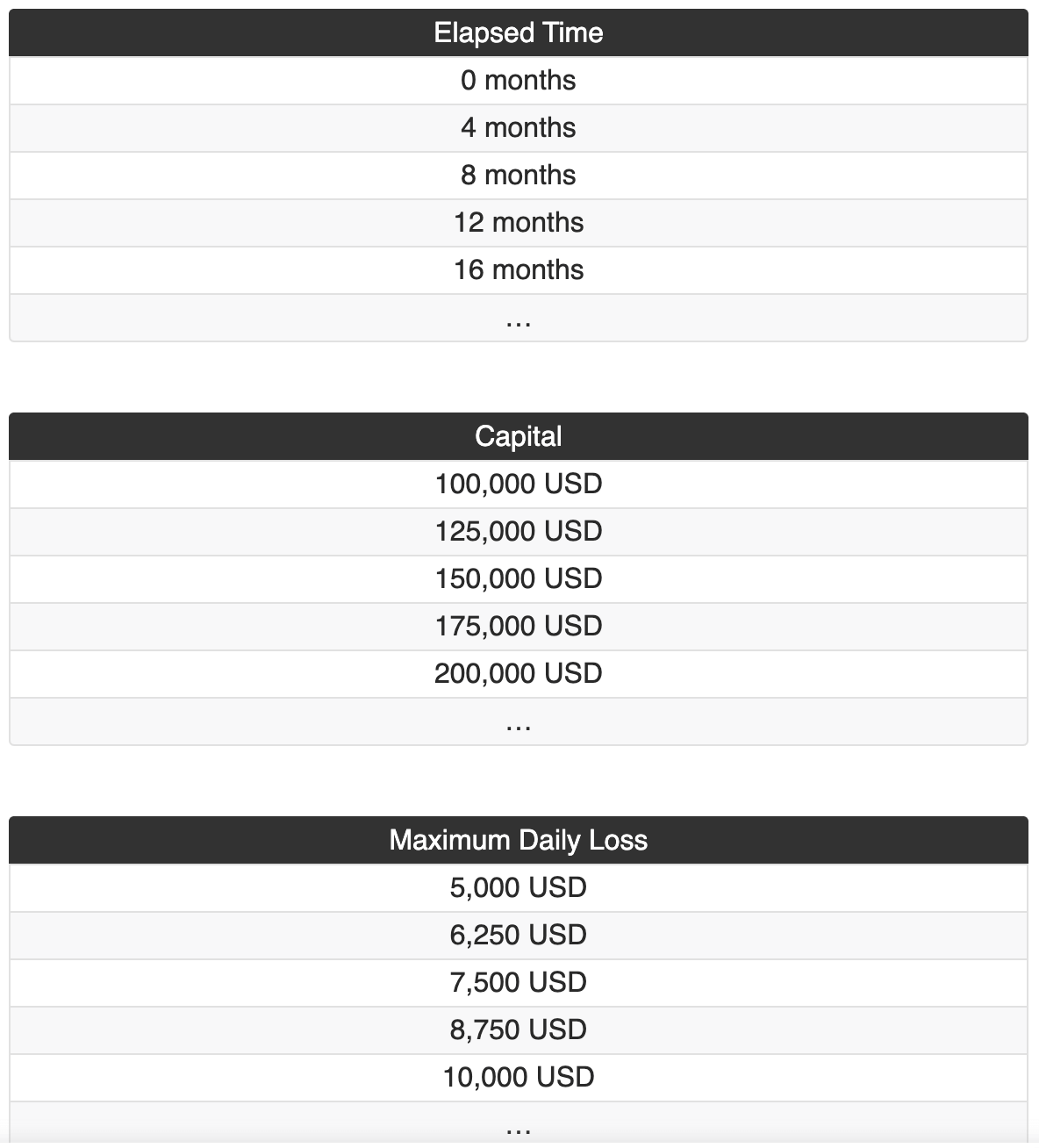
FTMO also offers a scaling concept for traders who perform well over time. The basic idea is straightforward: if a trader shows consistent results while respecting the rules, the firm may increase the account allocation under its scaling framework.
This is one of the more attractive parts of the model because it rewards consistency rather than one-off hero trades. In practice, scaling plans are designed to encourage traders to:


- protect capital first
- build steady returns
- avoid large drawdowns
- treat trading like a repeatable process
That is the good version. The bad version is when traders become obsessed with scaling and start forcing setups. Prop firm growth only works if your process survives contact with real market conditions.
As with the challenge rules, scaling criteria can change. Always check FTMO’s latest published terms before relying on any older figures or screenshots.

What can you trade with FTMO?
FTMO has historically offered access to multiple markets, including forex, indices, commodities, and some other instruments depending on platform and account setup. Availability can vary by region, platform, and current firm policy.
For most traders, the bigger question is not just what is available, but whether your strategy fits the environment. For example:
- Scalpers need to pay close attention to spreads, execution, and rule interpretation.
- Swing traders should check overnight and weekend holding rules.
- News traders need to confirm whether event-related restrictions apply.
- Algorithmic traders should review any EA or automation policies carefully.
If your edge depends on a very specific execution style, read the rulebook before paying the fee. That sounds obvious, but it is where plenty of challenge attempts quietly fail.
FTMO pros and cons
Pros
- Well-known brand in the prop trading space
- Structured evaluation with clear objectives
- Useful trader dashboard and analytics tools
- Access to coaching and educational support
- Potential to trade larger nominal account sizes than you could personally fund
Cons
- Challenge fees create upfront cost
- Strict drawdown rules can eliminate otherwise solid traders
- Profit targets may encourage overtrading for inexperienced users
- Rules and account terms can change over time
- Not every trading style translates well to a prop firm evaluation model
Is FTMO legit?
FTMO is widely recognized in the prop firm industry and has operated for years, which gives it more visibility than many smaller firms. That said, traders should separate two different questions:
- Is FTMO a real operating business? Broadly, yes.
- Does that mean you will pass or get paid easily? No.
Legitimacy is not the same as suitability. A legitimate prop firm can still be a poor fit for your strategy, psychology, or risk tolerance.
It is also worth remembering that prop firms do not work like traditional regulated brokers or investment managers. If you want to understand the broader regulatory backdrop around leveraged retail trading, the CFTC and FCA both publish useful consumer guidance on trading risk.
Who is FTMO best for?
FTMO may suit traders who already have:
- a tested strategy
- clear risk rules
- discipline under drawdown pressure
- realistic expectations about challenge difficulty
It may be a poor fit for traders who:
- are still learning basic execution
- change strategy every week
- struggle with emotional trading
- need complete freedom with no external rules
If you are still refining entries and exits, spending time on technical analysis first may improve your odds more than rushing into a funded challenge.
FTMO review: final verdict
FTMO remains one of the more established names in prop trading, and there are good reasons traders keep considering it. The structure is clear, the tools are useful, and the model can make sense for disciplined traders who want access to larger account sizes.
But this is not easy money, and it is definitely not a shortcut around trading skill. The traders most likely to benefit are the ones who already treat risk management as non-negotiable.
If you are considering FTMO, the smartest move is simple: review the latest rules on the official site, compare them against your actual trading behavior, and be honest about whether your strategy fits the challenge format.
And if you want help improving trade selection and market analysis before taking a prop challenge, you can explore the AltSignals trading indicator tools for a more structured workflow.
FAQ
Is FTMO good for beginners?
Does FTMO guarantee funding if you pass?
No firm should be treated as a guarantee. Traders need to meet the stated requirements and comply with the firm’s terms. Always read the latest official conditions before assuming how the process works.
Can you use trading bots or EAs on FTMO?
That depends on FTMO’s current rules and the type of automation being used. Some forms of automated trading may be allowed, while others may be restricted. Check the latest policy directly with FTMO before using any bot or EA.
What is the biggest reason traders fail the FTMO challenge?
In many cases, it is poor risk management rather than a lack of strategy ideas. Traders often fail by oversizing positions, chasing losses, or forcing trades to hit profit targets quickly.

















Usually not for complete beginners. FTMO is better suited to traders who already have a tested strategy and understand drawdown control. Beginners often struggle because the challenge format adds pressure on top of normal trading difficulty.