


Free Binance Futures Signals: What They Are and How to Use Them Properly
Free Binance futures signals can be useful, but only if you know what you’re looking at. A signal is not a magic shortcut. It’s usually a trade idea built around an entry, stop-loss, take-profit levels, and the reasoning behind the setup.
If you trade Binance futures, the appeal is obvious: you get a structured setup without having to scan every chart yourself. The catch is that futures trading involves leverage, fast price moves, and real liquidation risk. So the quality of the signal matters, but your risk management matters even more.
This guide explains how free Binance futures signals work, what a good signal should include, and how to use them without treating them like guaranteed wins.
What Are Binance Futures Signals?
Binance futures signals are trade alerts for perpetual or dated futures markets on Binance. They usually tell you:
- the trading pair, such as BTC/USDT or ETH/USDT
- whether the setup is long or short
- an entry zone
- a stop-loss level
- one or more take-profit targets
- sometimes the suggested leverage or trade invalidation point
Some providers publish signals manually based on chart analysis. Others use rule-based systems, quantitative models, or AI-assisted screening to identify setups.
If you’re new to the space, it helps to first understand the basics of crypto trading before following futures calls blindly.
What Makes a Free Futures Signal Actually Useful?
A decent signal should be clear enough that you can execute it without guessing. At minimum, it should include:
- Entry: the price or range where the trade idea becomes valid
- Stop-loss: where the setup is considered wrong
- Take-profit targets: realistic exit levels, not fantasy numbers
- Market context: why the trade exists in the first place
- Risk framing: whether the setup is aggressive, conservative, trend-following, or counter-trend
If a signal says only “buy now” or “100x long” with no invalidation level, that’s not analysis. That’s a stress test for your account.
How Free Binance Futures Signals Usually Work
Most signal services follow a similar process:
- They scan the market for setups using technical analysis, volatility, momentum, support and resistance, or automated models.
- They publish a trade idea with entry, stop, and target levels.
- Traders decide whether to copy the setup exactly, adjust position size, or skip it.
- The trade is managed as price moves toward the stop-loss or profit targets.
Some services focus on high-frequency alerts. Others publish fewer setups with more selective filtering. Neither approach is automatically better. What matters is consistency, transparency, and whether the signal fits your own trading style.
Why Traders Look for Free Binance Signals
There are a few obvious reasons:
- Speed: you don’t need to monitor charts all day
- Structure: signals can help newer traders understand how setups are built
- Idea generation: even experienced traders use signals as a second opinion
- Lower barrier to entry: free signals let you test a provider before paying for anything
That said, free signals should be treated as decision support, not autopilot. If you don’t understand leverage, margin, or liquidation mechanics, start there first. Binance explains futures risk in its educational materials, and the CFTC and SEC Investor.gov both warn that crypto markets can be highly volatile.
Common Problems With Free Signal Groups
Not all free Binance futures signals are worth your time. Common issues include:


- No risk controls: no stop-loss, no position sizing guidance, no invalidation
- Cherry-picked results: winners are posted loudly, losers quietly disappear
- Overtrading: too many alerts can push traders into low-quality setups
- Unrealistic leverage: high leverage may look exciting until one sharp move wipes out the trade
- Zero explanation: if you never learn why a setup exists, you stay dependent on the provider
A reliable service should make it easy to understand what was called, why it was called, and how risk should be managed.
How to Use Binance Futures Signals More Safely
If you want free signals to improve your trading rather than just increase your screen time, keep it simple:
- Use small size first: test execution and signal quality before scaling up
- Never skip the stop-loss: futures markets punish hope quickly
- Avoid copying leverage blindly: your account size and risk tolerance matter
- Check the chart yourself: even a 30-second review can stop bad entries
- Track results over time: one winning week proves very little
- Focus on process: a good losing trade is still better than a reckless winner
If you want more structure around trade selection, you can also explore AltAlgo indicator tools alongside signals to help confirm momentum, trend direction, or entry timing.
What AltSignals Offers for Traders
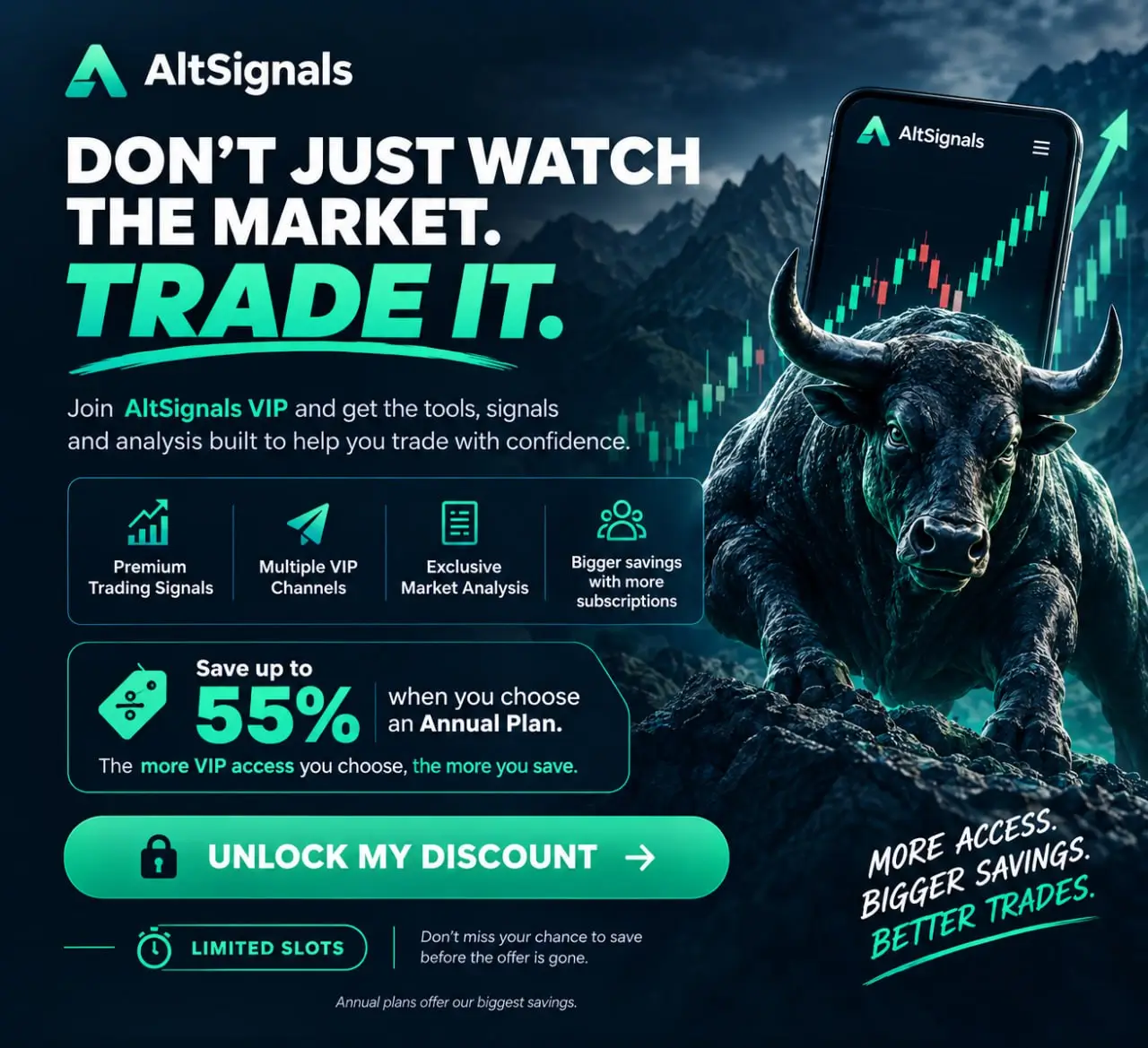
AltSignals provides trading ideas and market analysis for traders who want more structure than random social posts and more context than one-line Telegram calls. The goal is not to promise perfect trades. It’s to help traders approach markets with clearer setups, defined risk, and better discipline.
If you’re comparing providers or looking for a more consistent source of setups, you can review AltSignals trading signals to see how the service works and whether it fits your approach.
Should You Use Free Binance Futures Signals?
Yes, if you use them as a tool rather than a substitute for judgment.
Free Binance futures signals can save time, highlight opportunities, and help newer traders learn how setups are structured. But they only become useful when paired with position sizing, stop-loss discipline, and a basic understanding of futures risk.
The best approach is straightforward: use signals to narrow your focus, verify the setup, manage risk tightly, and keep expectations realistic. That’s a much better plan than chasing every alert that flashes across your phone.
FAQ
Are free Binance futures signals good for beginners?
Do Binance futures signals guarantee profit?
No. No signal provider can guarantee profits. Markets move quickly, and even strong setups fail. Signals should be treated as trade ideas, not certainty.
What should a Binance futures signal include?
A useful signal should include the pair, direction, entry zone, stop-loss, take-profit targets, and some explanation of the setup. Without those details, it is hard to assess the trade properly.
Is it better to use free or paid futures signals?
Free signals are useful for testing a provider and learning how alerts are structured. Paid services may offer more depth, consistency, or support, but price alone does not guarantee quality. Transparency and risk management matter more.









They can be, but beginners should use them carefully. Signals can help you learn trade structure, but futures trading is risky. Start small, understand stop-loss placement, and avoid high leverage until you know how margin works.