Nasdaq Slips as Investors Pivot From AI and Semiconductor Stocks
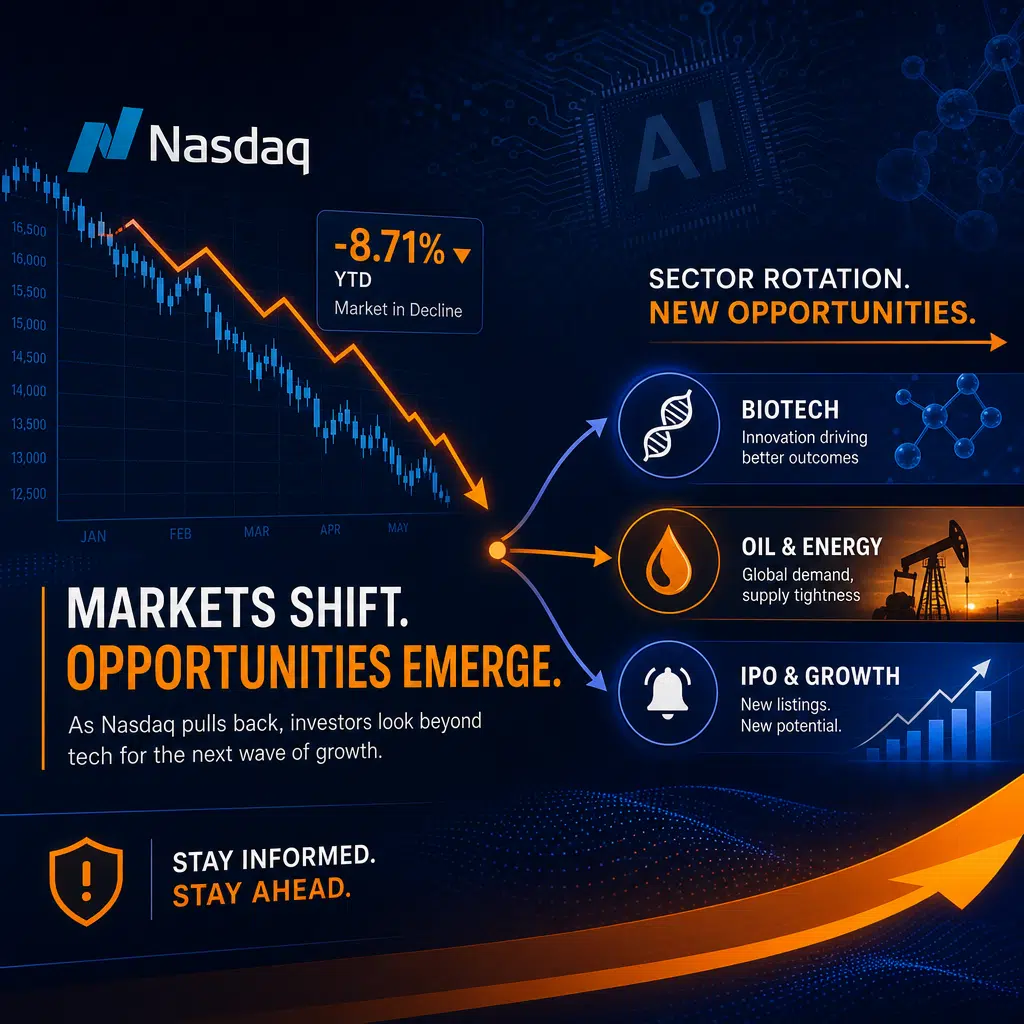
The Nasdaq endured a sharp decline, dropping nearly 3% in one of its most significant single-day losses in recent weeks. The sell-off was particularly notable among semiconductor, AI infrastructure, and high-growth technology stocks, which have previously outperformed the broader market in 2026. This shift in sentiment signals a growing caution among investors who have enjoyed hefty gains on the back of the AI boom but now reconsider their positions amid rising uncertainty.
Unwinding the AI-Led Rally
The recent pullback follows a sustained rally in artificial intelligence-related equities that pushed valuations to elevated levels. As these stocks reached record highs, many market participants opted to secure profits rather than risk further exposure in an increasingly uncertain environment. The broad tech sell-off highlights the vulnerability of major indices, where a handful of dominant technology companies have wielded disproportionate influence. When capital flows reverse, market moves can become abrupt and amplified.
Intel’s Stock Retreats After Foundry Speculation
One of the headline stories among semiconductor companies was Intel’s performance. Intel shares dropped over 4% after initially soaring on speculation about a foundry partnership with Alphabet. Reports indicated that Alphabet may consider leveraging Intel’s manufacturing facilities to produce next-generation AI chips—a potential lifeline for Intel as it works to reclaim relevance in advanced chip manufacturing. This partnership, if realized, could have marked a major pivot in Intel’s competition with established foundry giant Taiwan Semiconductor Manufacturing (TSMC).
The swift reversal in Intel’s fortunes underscores the fragile confidence surrounding tech stocks. Even a whiff of uncertainty, or the evaporation of speculative hype, can prompt a rapid slide. Investors will be watching closely to see whether Intel can secure substantial contracts and reduce its technology gap with Asian rivals. As the AI hardware race intensifies, any sign of competitive weakness tends to draw swift market reactions.
Oil Plunges, Relieving Inflation Concerns
Beyond technology, global energy markets also saw notable moves. Brent crude oil prices tumbled over 4% to approach the $90 per barrel mark. The dip came as geopolitical risks in the Middle East—and associated fears of supply disruptions—appeared to ease for the time being. The slide in oil prices provided relief to industries reliant on fuel, such as airlines, which saw their own stocks rally as fuel costs moderated.
Conversely, energy producers faced negative sentiment as lower oil prices threatened to compress margins and forced analysts to trim profit forecasts. This sectoral divergence highlights the delicate balance underlying global stock markets, where conditions in one industry can rapidly impact the fortunes of another.
Importantly, cheaper oil reverberates through the wider economy as well. Lower fuel prices could help cool persistent inflationary pressures, which have been a central concern for global markets over the past year. While it remains to be seen whether the trend is sustained, falling energy prices may eventually influence central bank policy, bond yields, and consumer sentiment in the months ahead.
OpenAI IPO Speculation Builds Momentum
Artificial intelligence remained a key theme in another corner of the market: IPO chatter. OpenAI, the pioneering company behind ChatGPT, stayed privately held but fueled fresh waves of speculation about a potential public offering. Given OpenAI’s central role in the ongoing AI revolution, the prospect of an IPO has become one of the most discussed scenarios among technology investors and analysts alike.
Should OpenAI choose to list on public markets, it would likely become one of the most anticipated technology IPOs in recent memory—potentially rivaling the debut of previous tech giants. Investors are widely debating the prospective valuation, as well as how such a move might impact the broader AI and tech sectors. A blockbuster IPO could have ripple effects throughout financial markets, influencing everything from index composition to capital allocation strategies across technology-focused funds.
In the meantime, continued speculation keeps the spotlight on other companies in the AI ecosystem, driving both optimism and volatility within the sector. Investors are keeping a close eye on any signs from OpenAI’s leadership regarding their long-term plans and timing for a potential listing.
Biotech Sees Renewed Interest Amid Nuvalent Acquisition Talks
While tech stocks cooled, the healthcare sector provided a surprise highlight. Nuvalent, a smaller biotechnology company, surged as news broke regarding acquisition interest. Shares jumped dramatically as speculation grew about potential deal-making in the biotech space, reflecting renewed investor appetite for M&A activity outside the crowded technology sector.


This enthusiasm for Nuvalent is emblematic of a broader strategic shift among some investors. While AI and tech names have dominated returns so far in 2026, there is growing interest in “under-owned” sectors such as healthcare and biotech. These areas, which have lagged the broader rally, are now increasingly viewed as attractive hunting grounds for value and growth opportunities. Mergers and acquisitions remain a central driver of returns in biotech, particularly for companies with promising drug pipelines and innovative therapies.
The sudden spike in Nuvalent’s share price served as a timely reminder that significant gains can also be found in sectors away from the market’s primary focus. As valuations in tech become stretched, renewed interest in healthcare and biotech may see capital rotation accelerate in the months ahead.
Broad Market Impacts and the Search for New Opportunities
This week’s market action provides a window into several important dynamics shaping global equities. The heavy reliance on a select group of high-growth, AI-related stocks has made the Nasdaq and related indices especially sensitive to any pullback in sentiment. Sharp reversals, such as the one witnessed, demonstrate the vulnerability that comes with concentrated positioning, as both professional and retail investors reassess risk in response to changing headlines and macro conditions.
Similarly, cross-sector influences remain pronounced. The drop in oil is a fresh reminder that global markets are interconnected: lower energy costs ripple through industries, alter company outlooks, and may ultimately sway the inflation debate that is central to monetary policy decisions. Continued volatility in commodities will likely translate to unpredictable sectoral leadership as 2026 progresses.
Meanwhile, the excitement around prospective IPOs is keeping animal spirits alive, even as some caution reasserts itself among crowded trades. Investors appear eager to identify the “next big thing,” particularly as the initial phase of the AI rally starts to mature. Innovations in machine learning, healthcare, and even areas like fintech and energy storage are drawing renewed scrutiny as investors look to diversify away from consensus technology leaders.
Looking Forward: Themes and Risks
Looking ahead, markets face several prominent crosscurrents. On one hand, the continued rollout of generative AI, machine learning hardware, and new data infrastructure is likely to produce further corporate winners and technological marvels. However, such breakthroughs come with increased volatility, as heightened expectations are challenging to sustain indefinitely. “Profit-taking” may remain a feature until more stable growth paths are established.
Investors are also recalibrating their approach to sectors like healthcare and energy, where pricing power, innovation, and cost structures are unusually dynamic. Biotech, in particular, remains fertile ground for both high risk and high reward, with deal-making and drug approvals acting as potential catalysts for outsized gains.
The potential OpenAI IPO serves as a bellwether for sentiment toward the next stage of the AI boom. How public markets digest such an event—both in terms of direct valuation and knock-on effects—will help guide asset allocation in the sector. For now, technical traders and long-term investors alike are proceeding with greater caution, seeking balance between exposure to dominant themes and the need for diversification in an unpredictable environment.
Conclusion
The latest market moves reflect a period of adjustment as the AI-driven rally pauses and attention turns to alternative opportunities and sectors. Volatility appears set to remain elevated as investors weigh the prospects for further tech gains against the risks of crowded trades and shifting macroeconomic winds. For those with an eye on long-term innovation—whether in AI, healthcare, or new energy technologies—this changing landscape presents as many opportunities as it does risks. The coming months will likely offer a series of pivotal moments for investors seeking to capitalize on the next wave of market disruption.