


Crypto trading is the process of buying and selling digital assets to profit from price movements. In plain English, you are trying to buy lower and sell higher, or in some markets profit when prices fall. The mechanics are simple enough. The part that catches most beginners out is everything around the trade: order types, fees, volatility, custody, and risk.
Most people trade crypto in one of two ways. They either buy the underlying coin on an exchange, or they speculate on price movements through a derivative such as a CFD where that product is legally available. If you want the wider picture on markets, platforms, and strategy basics, start with our crypto trading guide.
How does cryptocurrency trading work?
At its core, cryptocurrency trading means exchanging one asset for another. You might buy BTC with USDT, swap ETH for BTC, or sell a coin back into cash or a stablecoin after the market moves.
Prices move because buyers and sellers are constantly competing in the market. On an exchange, orders are matched electronically through an order book. If enough buyers are willing to pay higher prices, the market rises. If sellers become more aggressive, the market falls.
Crypto markets also trade 24/7, which makes them different from many traditional markets. There is no neat closing bell to force everyone to pause and think. News, liquidations, macro events, token unlocks, and shifts in sentiment can move prices at any hour.
If you buy an asset at one price and sell it later at a higher price, you make a gain before fees and taxes. If the price drops and you exit lower, you take a loss. That part is straightforward. Staying disciplined while the market moves quickly is where trading becomes difficult.
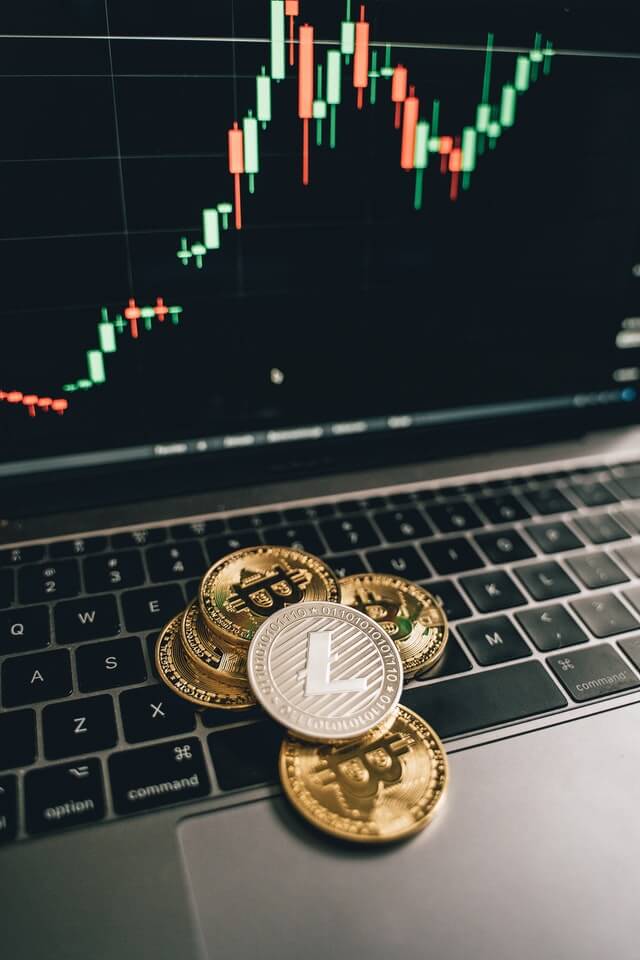
Bitcoin is the easiest example because it is the market most beginners recognise. If you buy BTC at one price and later sell it higher, the difference is your gross trading gain. If BTC falls after you enter, you either hold through the drawdown or close the trade at a loss. The same basic logic applies across most crypto markets, even though the risk profile can vary a lot from one asset to another.
What actually happens when you place a trade?
When you place an order on a crypto exchange, you are telling the platform how much you want to buy or sell and under what conditions.
- Market order: executes immediately at the best available price.
- Limit order: only executes at the price you choose or better.
- Stop order: triggers when price reaches a level you set, often used for risk control.
If you are buying the underlying coin, the asset is then credited to your exchange wallet or another wallet you control. If you are trading a derivative, you usually do not own the coin itself. You are simply gaining exposure to its price movement.
For a technical background on how crypto transactions are recorded and verified, the Reserve Bank of Australia has a useful explainer on how digital currencies work.
Spot trading vs derivatives
Most crypto trading falls into two broad categories: spot trading and derivatives trading.
Spot trading means you buy or sell the actual asset at the current market price. If you buy BTC on the spot market and your order fills, you own that BTC. You can keep it on the exchange, move it to a wallet, or sell it later.
Derivatives trading means you trade a contract whose value is based on the underlying crypto asset. Depending on the platform and jurisdiction, that could include CFDs, futures, options, or perpetual contracts. In these markets, you are usually trading price exposure rather than taking custody of the coin itself.
For beginners, spot trading is usually easier to understand because the mechanics are more direct. Derivatives can be useful, especially for hedging or short-term speculation, but they add complexity through leverage, liquidation risk, funding or overnight costs, and faster-moving losses.
What moves crypto prices?

Crypto prices can react fast, often for more than one reason at once. The main drivers include:
- Supply and demand: more buyers than sellers usually pushes price up, and vice versa.
- Liquidity: thinner markets can move sharply on relatively small orders.
- Market sentiment: fear and greed still do a lot of heavy lifting in crypto.
- Regulation: policy announcements can affect access, confidence, and trading activity.
- Project-specific news: upgrades, hacks, token unlocks, and ecosystem growth all matter.
- Macro conditions: interest rates, risk appetite, and dollar strength can spill into crypto.
Bitcoin also tends to influence the rest of the market. When BTC moves hard, altcoins often follow, sometimes with extra drama attached.
Key terms beginners should understand
You do not need to learn a full trading glossary before placing your first order, but a few basics make the whole process easier to follow:
- Trading pair: the two assets being exchanged, such as BTC/USDT.
- Bid and ask: the highest current buy price and the lowest current sell price.
- Spread: the gap between the bid and ask.
- Slippage: the difference between the expected price and the actual execution price.
- Wallet: where your crypto is stored if you own the underlying asset.
- Volatility: how sharply price moves over time.
- Leverage: borrowed exposure that can magnify both gains and losses.
Most beginners do not struggle with the buy button. They struggle with position sizing, chasing moves, and changing the plan halfway through the trade.
How do you trade cryptocurrency?
There are two main routes: trading the underlying asset on an exchange, or using a derivative product such as a CFD where available.
Trading via an exchange
This is the route most beginners start with. You open an account, complete verification if required, deposit funds, and place an order for the coin you want to buy or sell.
If your order is filled, you own the asset. You can keep it on the exchange, move it to a personal wallet, or sell it later. Your result depends on the difference between your entry and exit price, minus fees.
Exchange trading is usually easier to understand because the mechanics are more direct. You buy the coin, you hold the coin, and you decide when to sell it.
Trading through CFDs or other derivatives
CFD trading lets you speculate on whether a crypto price will rise or fall without owning the underlying coin. Your profit or loss depends on the price difference between entry and exit.
This can be useful for short-term traders and may allow both long and short positions, depending on the provider and local rules. It also adds complexity. Fees, overnight charges, and leverage can change the risk profile quickly.
Availability depends on your jurisdiction. The UK Financial Conduct Authority, for example, has published consumer warnings and restrictions around crypto-related products for retail users, so it is worth checking the FCA’s crypto basics guidance and your local regulator before using any leveraged or derivative product.
Is crypto trading safe?
Crypto trading is not safe in the sense of being low risk. It can be done more safely, but it is still a volatile market where losses can happen quickly.
The practical version of safety is using a reputable platform available in your country, understanding the product you are trading, securing your account properly, and controlling risk on every position. A regulated provider or established exchange can reduce some operational risks, but it does not remove market risk.
A trade can still go wrong even if everything on the platform side works exactly as it should. You might buy BTC at one level, watch it drop sharply, and find that it takes far longer than expected to recover, if it recovers at all. That is normal market risk, not a platform error.


How do you trade cryptocurrency as a beginner?
If you are starting from scratch, keep it boring. Boring is underrated in trading.
- Choose a reputable exchange or regulated provider available in your country.
- Complete identity checks and secure the account with a strong password and two-factor authentication.
- Deposit a small amount of capital you can afford to lose.
- Start with liquid markets such as BTC or ETH rather than thin altcoins.
- Use simple order types first, especially market and limit orders.
- Decide your entry, exit target, and risk level before placing the trade.
- Track fees, position size, and total exposure across your account.
A simple example: if you buy a small BTC position after identifying a setup, you should already know where you would take profit and where you would exit if the trade is wrong. If you only make those decisions after price starts moving, emotion usually takes over.
If you want more structure around entries and setups, some traders use AltSignals trading signals alongside their own analysis. That can help with market direction and timing, but it does not remove risk or replace judgement.
Risk management matters more than most beginners expect
Most new traders spend too much time looking for the perfect entry and not enough time thinking about what happens if the trade fails. That is backwards.
Risk management usually means deciding your position size in advance, setting a stop-loss level where appropriate, and making sure one bad trade cannot do serious damage to your account. It also means accepting that some trades will fail even when the setup looked reasonable.
If you are trading volatile assets like Bitcoin or smaller altcoins, this matters even more. A market can move hard against you in minutes. The goal is not to avoid every loss. It is to keep losses controlled enough that you are still in a position to take the next good setup.
What is the best way to trade cryptocurrency?
There is no single best way for everyone. The right approach depends on your experience, available time, and tolerance for risk.
For many beginners, spot trading major pairs is the cleanest place to start. It is easier to understand than leveraged products, and it forces you to focus on the basics: entries, exits, fees, and discipline.
Good practice usually includes using a reliable platform, trading liquid markets, keeping position sizes under control, avoiding unnecessary leverage early on, setting stop-loss levels where appropriate, and reviewing performance instead of judging yourself on one trade.
If your next step is improving chart-based decision-making, our AltAlgo indicator can help you analyse setups with more structure.
Can you get rich trading cryptocurrency?
It can happen, but treating crypto trading as a shortcut to getting rich is usually how people blow up accounts. Crypto is volatile enough to create outsized gains, but it is just as capable of producing outsized losses.
A few winning trades in a strong market do not prove that a strategy works. They may just prove that the market was forgiving for a while. The traders who last tend to focus on process, risk, and consistency rather than fantasy outcomes.
A better goal is to learn how markets behave, protect capital, and improve decision-making over time. That sounds less exciting than screenshots on social media, but it is far more useful.
Is crypto trading profitable?
Crypto trading can be profitable, but profitability is never guaranteed. Results depend on strategy, execution, fees, discipline, and risk management. Two traders can take the same setup and get very different outcomes because one sizes correctly and the other does not.
The aim is not to win every trade. It is to build an approach where losses stay manageable and winners are large enough, over time, to outweigh them. That is a process question, not a hype question.
If you want to compare your own process against transparent tracking, you can review our trading results.
Common risks beginners overlook
Most beginner losses do not come from failing to understand blockchain theory. They come from basic execution mistakes:
- using too much size on one trade
- buying illiquid coins with wide spreads
- ignoring fees and slippage
- using leverage too early
- moving stop losses emotionally
- keeping too much capital on one platform
- following social media hype without a plan
Security matters too. If you hold coins on an exchange, use strong passwords, enable two-factor authentication, and understand the trade-off between convenience and self-custody. Not your keys, not your coins is a cliché at this point, but it became a cliché for a reason.
Final thought
If you are trying to understand how cryptocurrency trading works, start with the mechanics, then spend just as much time on risk. Buying and selling is easy. Managing yourself while the market moves is the real skill.
If you want a hands-on next step after learning the basics, you can join AltSignals to explore our trading tools and signal services in more detail.
Disclaimer: This content is for educational purposes only and should not be considered financial advice. Crypto markets are volatile, and losses can be substantial. Always do your own research and consider speaking with a qualified financial adviser before making trading decisions.
FAQ
Do you need a wallet to trade crypto?
Is crypto trading the same as investing?
No. Trading usually focuses on shorter-term price movements, while investing is generally a longer-term approach based on holding assets over time.
Can beginners trade cryptocurrency?
Yes, but beginners should start small, use simple order types, avoid unnecessary leverage, and focus on risk management before trying advanced strategies.
What is the safest way to start trading crypto?
There is no risk-free way to trade crypto. A cautious starting point is using a reputable platform, trading highly liquid assets, avoiding leverage, and risking only a small amount of capital.
What is the difference between spot trading and derivatives?
Spot trading means buying or selling the actual crypto asset. Derivatives trading means using a contract based on the asset’s price, such as a CFD, futures contract, option, or perpetual contract. Spot is usually simpler for beginners, while derivatives add more complexity and risk.










Not always. If you trade on an exchange, the platform usually provides a hosted wallet. If you want more control over your assets, you can move coins to a personal wallet after purchase.