

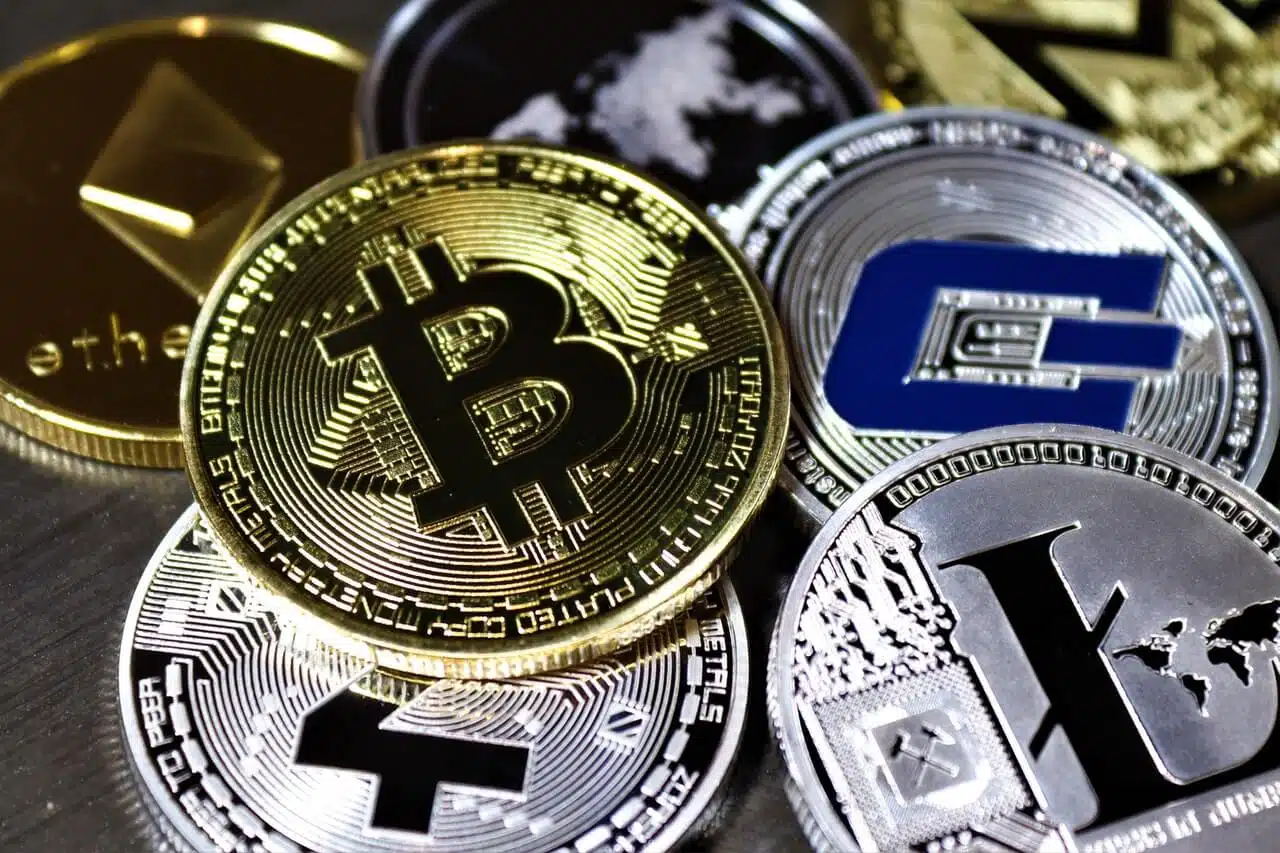
Bitcoin mining sounds simple on the surface: plug in a machine, let it run, and earn BTC. In reality, it is a highly competitive business built around specialised hardware, cheap electricity, and tight margins.
If you want to know how to mine Bitcoin, the first thing to understand is this: for most individuals, mining at home is no longer the easy route it was in Bitcoin’s early years. That does not mean it is impossible, but it does mean you need realistic expectations before spending money on equipment.
This guide explains what Bitcoin mining is, how it works, what you need to get started, and whether it still makes sense today.
What is Bitcoin?
Bitcoin is a decentralised digital currency launched in 2009. It allows users to send and receive value without relying on a central bank or payment company. Instead, transactions are recorded on a public blockchain and verified by a distributed network.
If you want a broader overview of how the market works, start with this crypto trading guide.
What is Bitcoin mining?
Bitcoin mining is the process that secures the Bitcoin network and confirms new transactions. Miners collect pending transactions into blocks and compete to solve a cryptographic puzzle. The first miner to find a valid solution earns the right to add the block to the blockchain.
In return, miners receive two forms of compensation:
- the block subsidy, which is newly issued BTC
- transaction fees paid by users included in that block
This system is part of Bitcoin’s proof-of-work model. It is designed to make rewriting the ledger extremely expensive, which helps keep the network secure.
How does Bitcoin mining work?
At a practical level, Bitcoin mining works like this:
- Users broadcast Bitcoin transactions to the network.
- Mining nodes gather valid transactions into a candidate block.
- Miners repeatedly hash the block header with different nonce values.
- If a miner finds a hash below the current network target, the block is accepted.
- The network validates the block, adds it to the chain, and mining starts again for the next block.
The process is competitive because the Bitcoin network automatically adjusts mining difficulty to keep average block production close to one block every 10 minutes. When more mining power joins the network, difficulty rises. When mining power drops, difficulty can fall.
If you are wondering why ordinary laptops are not used anymore, this is the reason. The competition is too intense.
What equipment do you need to mine Bitcoin?
Modern Bitcoin mining is dominated by ASICs, which stands for application-specific integrated circuits. These machines are built for one job: running Bitcoin’s SHA-256 hashing algorithm as efficiently as possible.
To mine Bitcoin, you usually need:
- An ASIC miner: consumer PCs and most GPUs are not competitive for Bitcoin mining today.
- A reliable power supply: electricity cost is one of the biggest factors in profitability.
- Cooling and ventilation: mining hardware produces significant heat and noise.
- A stable internet connection: not bandwidth-heavy, but it needs to be dependable.
- Mining software or firmware: often provided or supported by the hardware manufacturer or pool.
- A Bitcoin wallet: somewhere to receive mining payouts.
That last point matters more than beginners expect. A powerful machine in a poorly ventilated room with expensive electricity is not a mining setup. It is a space heater with ambition.
Can you mine Bitcoin on a PC or phone?
Technically, you can run software that attempts to mine Bitcoin on a PC. Economically, that is a different story.
Bitcoin mining on standard desktop hardware is generally not viable because ASIC miners are vastly more efficient. Mining on a phone is even less practical and can damage the device through heat and battery stress.
If your goal is to learn how mining works, experimenting with test environments can be useful. If your goal is to earn BTC from real Bitcoin mining, specialised hardware is the realistic route.
Solo mining vs mining pools
Once you have hardware, you need to decide how to participate.
Solo mining
Solo mining means you mine independently and keep the full block reward if you find a block. The upside is obvious. The downside is also obvious: unless you control substantial hash power, payouts can be extremely rare and unpredictable.
Mining pools
Most miners join a mining pool. A pool combines the hash power of many participants and shares rewards based on each miner’s contribution. This reduces payout variance and makes income more predictable, though the pool charges fees.
For most smaller operators, a pool is the more practical option.

How to mine Bitcoin step by step
- Check local electricity costs. This is usually the first filter. High power prices can wipe out any chance of profitability.
- Choose suitable ASIC hardware. Compare efficiency, power draw, noise, and upfront cost.
- Set up a Bitcoin wallet. You need a secure address for payouts.
- Pick a mining pool. Review payout methods, fees, reputation, and minimum withdrawal thresholds.
- Install and configure the miner. Connect the machine to power and internet, then enter your pool details and wallet information.
- Monitor temperature, uptime, and performance. Heat, dust, and unstable power can reduce efficiency or damage hardware.
- Track profitability over time. Revenue can change with Bitcoin price, network difficulty, fees, and halving cycles.
Is Bitcoin mining profitable?
Sometimes yes. Often no. It depends on your setup.
Bitcoin mining profitability usually comes down to five variables:
- hardware efficiency
- electricity cost
- Bitcoin price
- network difficulty and total hash rate
- pool fees, maintenance, and downtime
This is why broad claims like “mining is profitable” or “mining is dead” are both too simplistic. A professional operator with efficient machines and cheap power may still run a viable business. A home user with expensive electricity may struggle to break even.
Before buying hardware, use a reputable mining calculator and stress-test your assumptions. Model different scenarios rather than relying on the most optimistic one.
Bitcoin halving and mining rewards
Bitcoin’s code reduces the block subsidy roughly every four years in an event known as the halving. This slows the rate of new BTC issuance over time.
The most recent halving reduced the block subsidy from 6.25 BTC to 3.125 BTC per block. That matters because miners now rely on a smaller subsidy than before, which can put pressure on less efficient operations.
Halvings do not automatically make mining unprofitable, but they do raise the bar. After a halving, miners generally need some combination of better efficiency, lower costs, higher Bitcoin prices, or stronger fee revenue to maintain margins.
For an overview of the network rules, the Bitcoin.org explanation of how Bitcoin works is a useful starting point.
Risks and drawbacks of mining Bitcoin
Mining is not just a hardware purchase. It is an operational business with real risks:
- High upfront cost: ASIC miners and supporting equipment are expensive.
- Electricity exposure: rising energy prices can quickly change the economics.
- Heat and noise: home setups are often impractical for this reason alone.
- Hardware obsolescence: newer, more efficient machines can make older units less competitive.
- Revenue volatility: BTC price and network difficulty can move against you.
- Regulatory and tax considerations: treatment varies by country and may affect costs or reporting obligations.
For a broader look at market risk, it also helps to understand how traders manage exposure with structured analysis rather than relying on a single idea.
Is mining the best way to get Bitcoin?
For many people, no.
If your main goal is simply to gain exposure to Bitcoin, buying BTC directly can be simpler than running mining hardware. Mining makes more sense when you have access to efficient equipment, low-cost power, and the willingness to manage the operational side.
If your interest is in trading Bitcoin rather than mining it, you can explore AltSignals trading signals for market analysis and trade ideas.
Final thoughts
Learning how to mine Bitcoin starts with understanding what mining really is: a competitive proof-of-work process that secures the network and rewards efficient operators.
For beginners, the biggest mistake is treating mining like passive income. It is closer to running specialised infrastructure. If you approach it with realistic numbers, proper research, and a clear view of costs, you will make better decisions whether you mine, buy BTC directly, or focus on trading instead.
FAQ
Can I mine Bitcoin at home?
How long does it take to mine 1 Bitcoin?
There is no fixed answer. Mining rewards depend on your share of total network hash power, whether you mine solo or in a pool, and current network difficulty. Most miners earn small pooled payouts rather than mining a full BTC directly.
Do I need a mining pool to mine Bitcoin?
No, but most smaller miners use pools because solo mining payouts are highly unpredictable. Pools provide steadier, smaller rewards based on contributed hash power.
Is Bitcoin mining legal?
That depends on your country or region. Rules can vary on electricity use, taxation, licensing, and crypto activity more broadly, so check local regulations before starting.











Yes, but home mining is often limited by electricity cost, heat, noise, and hardware efficiency. It may be possible, but it is not automatically profitable.