

Getting started with crypto trading is easier than it looks. Doing it without blowing up your account is the hard part.
If you’re new, the goal is not to chase huge wins on day one. It’s to learn how the market works, choose the right platform, understand basic order types, and manage risk well enough to stay in the game. Crypto can move fast, and that cuts both ways.
This guide walks through the practical first steps: how to choose an exchange, what you need before placing a trade, how beginners usually make money or lose money, where to learn the basics, what to avoid early on, how timing and news can affect your entries, and why many beginners start with Bitcoin pairs before branching out. If you want a broader overview first, start with our crypto trading guide.
What does crypto trading actually mean?
Crypto trading means buying and selling digital assets to profit from price movements. In simple terms, you’re trying to buy lower and sell higher, or in some markets, sell first and buy back lower.
There are two common ways beginners enter the market:
- Spot trading: You buy the actual coin or token and own it until you sell.
- Derivatives trading: You trade contracts based on the asset’s price, often with leverage. This can increase gains, but it also increases losses.
For most beginners, spot trading is the safer place to start. Leverage looks exciting right up until a small move wipes out a large chunk of your account.
How to start trading cryptocurrencies

Here’s a sensible beginner path.
1. Choose a reputable exchange
Pick a platform with a solid reputation, clear fees, decent liquidity, and support for your region. Popular names include Coinbase, Kraken, Binance, and Gemini, but availability and features vary by country.
Before opening an account, check:
- Whether the exchange is available where you live
- Deposit and withdrawal methods
- Trading fees and spreads
- Security features such as two-factor authentication
- Whether it offers spot only or also margin and futures
If you’re just starting, you do not need the most complex platform on the market. You need one you can understand and use safely.
2. Complete verification and secure your account
Most major exchanges require identity verification. That’s normal. Once your account is open, turn on two-factor authentication, use a unique password, and learn how withdrawals are protected on the platform.
If you plan to hold crypto outside the exchange, consider a non-custodial wallet or hardware wallet. For active trading, many people keep only the amount they need on the exchange and move the rest to cold storage.
3. Fund your account
You can usually deposit fiat currency by bank transfer, card, or supported payment methods. Some traders also transfer crypto in from another wallet.
Start with an amount you can afford to lose. That isn’t just a disclaimer. It changes how you trade. People make worse decisions when the money on the screen is rent money.
4. Learn the basic order types
Before placing your first trade, understand these:
- Market order: Buys or sells immediately at the best available price.
- Limit order: Sets the price you want to buy or sell at.
- Stop-loss: Closes a trade if price moves against you to a defined level.
- Take-profit: Locks in gains at a target price.
Beginners often overuse market orders in fast-moving conditions and get worse entries than expected. Limit orders and stop-losses usually give you more control.
5. Pick one market and keep it simple
You do not need to trade every coin on the homepage. Start with one or two liquid markets such as BTC or ETH pairs and learn how they move.
For many beginners, BTC/USD or BTC/stablecoin pairs are the easiest place to start because they are usually the most watched and liquid crypto markets. That does not make them easy, but it does make price action easier to follow than a random low-cap token with thin volume.
Focus on:
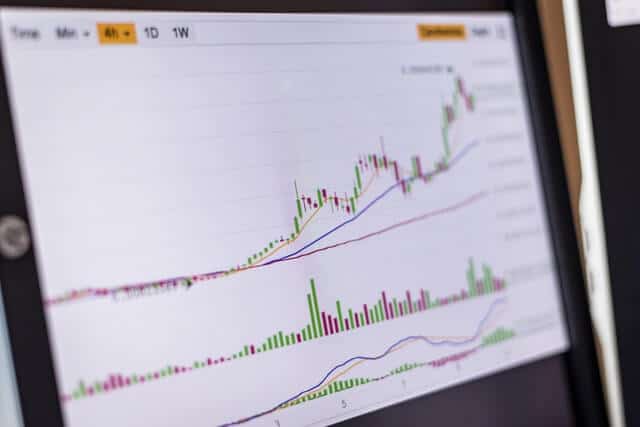
- Price trend
- Support and resistance
- Volume
- How the market reacts to news
Liquidity and volume matter more than many beginners realise. Crypto trades 24/7, but that does not mean every hour behaves the same way. Some periods are quiet and choppy, while others see sharper moves because more traders are active at the same time.
If you want help reading charts, our AltAlgo indicator can help simplify trend and setup analysis.
6. Use a basic strategy
New traders usually do better with a simple plan than with five indicators and a caffeine-fuelled belief in destiny.
Common beginner-friendly approaches include:
- Trend following: Trade in the direction of the broader move.
- Swing trading: Hold trades for days or weeks rather than minutes.
- Breakout trading: Enter when price moves through a key level with momentum.
Pick one approach, test it on a small scale, and keep notes. If you change strategy every three trades, you won’t know what is working and what is not.
A simple example is watching Bitcoin around a clear resistance level. If price breaks above that level with strong volume, some traders treat that as confirmation and look for continuation. If the breakout fails and price drops back below resistance, that can be a sign to stay out rather than force the trade.
7. Start small and track every trade
Your first goal is consistency, not size. Use small position sizes while you learn execution, timing, and emotional control.
Keep a trading journal with:
- Entry and exit price
- Reason for the trade
- Risk level
- Outcome
- What you would repeat or avoid next time
This sounds boring until you realise most trading mistakes repeat themselves.
Bitcoin pairs vs altcoin pairs
One useful lesson for beginners is that not all crypto pairs behave the same way.
Bitcoin pairs are usually the cleanest place to learn because BTC tends to have the deepest liquidity and the most attention from the market. That often means tighter spreads, more reliable volume, and fewer wild moves caused by one large order.
Altcoins can move faster than Bitcoin in percentage terms, which is exactly why they attract beginners and punish them. A coin that jumps 15% can look more exciting than Bitcoin moving 5%, but higher volatility cuts both ways. Thin liquidity, weaker market structure, and sudden sentiment shifts can make altcoin trades harder to manage.
If you trade altcoins, treat them as a step up in difficulty, not a shortcut to easier profits. The basic process is still the same: identify trend, support, resistance, and volume, then decide whether the setup justifies the risk.
Where can you learn crypto trading?
Most beginners learn from a mix of sources rather than one perfect course or community. The useful question is not just where to learn, but which option helps you understand the market and practice safely.
A few common routes:

- Self-study: Learn the basics of charts, order types, risk management, and market structure through guides, exchange education sections, and chart practice.
- Trading academies or courses: These can give you structure, but quality varies a lot. Look for clear teaching, realistic expectations, and material that is practical rather than motivational fluff.
- Signals communities: Some traders use signals groups to see how setups are built in real time. That can be useful if the service explains the reasoning behind entries, stops, and targets instead of just posting numbers.
The main trap is outsourcing your thinking too early. If you only copy trades without understanding why they were taken, you may follow a setup but learn very little. The best learning path usually combines education, observation, and small-scale practice.
Does timing matter when you start trading crypto?
Yes, but not in the magical “there is one perfect hour” sense.
Crypto markets are open all day, every day, so beginners often assume every session offers the same quality of setup. In reality, trading conditions change throughout the day depending on liquidity, volatility, and whether major regions are active at the same time.
Some traders notice stronger activity around periods when US and Asian market participants overlap or react to each other. That can lead to faster moves in major pairs like BTC and ETH. But these patterns are not stable enough to treat as a guaranteed edge.
The practical takeaway is simple: do not force trades during dead hours just because the market is open. If you are day trading, pay attention to when your chosen market usually has better volume and cleaner movement. If you are swing trading, timing still matters, but your entry quality and risk management matter more than the exact hour on the clock.
How do traders make money in crypto?
Traders make money when price moves in the direction of their position.
- If you buy BTC at one price and sell it later at a higher price, the difference is your profit before fees.
- If you short a market using derivatives and the price falls, you can profit from that decline.
That’s the simple version. In practice, fees, slippage, leverage, and bad timing can turn a decent idea into a poor trade.
Crypto prices move because of supply and demand, liquidity, macro conditions, regulation, exchange flows, and market sentiment. News can matter, but so can positioning. Sometimes the market rallies on bad news or drops on good news because traders were already leaning too far one way.
If you want a more structured way to follow setups instead of guessing, you can explore AltSignals trading signals as a practical next step.
Why crypto news matters more than beginners expect
News can change market conditions quickly. Exchange announcements, ETF developments, regulation, security breaches, token unlocks, and macro headlines can all shift sentiment in minutes.
That does not mean you should trade every headline. It means you should understand that news can override a clean-looking chart setup, especially in the short term.
A few useful habits:
- Check whether a major news event is driving the move before entering
- Avoid chasing candles caused by panic or hype
- Wait for the market to show its reaction instead of assuming you know what it should do
- Be extra careful with market orders during fast, news-driven volatility
Beginners often lose money not because they missed the news, but because they reacted emotionally to it.
Should beginners use leverage?
Usually, no.
Leverage lets you control a larger position with less capital, but it magnifies losses as well as gains. A move that looks small on the chart can be large enough to liquidate an overleveraged position.
For beginners, leverage often creates three problems at once:
- Position sizes become too large
- Stop-losses are placed poorly or ignored
- Emotions take over faster
If you are still learning order execution, chart structure, and risk management, stick to spot trading first.
Risk management rules worth following
- Never trade money you cannot afford to lose
- Do not borrow money to trade crypto
- Risk a small percentage of your account on each trade
- Use stop-losses where appropriate
- Avoid revenge trading after a loss
- Be sceptical of guaranteed returns, secret systems, and “can’t lose” setups
The FCA warns that crypto is high risk and that you should be prepared to lose all the money you invest. That may sound harsh, but it is a useful mindset for beginners because it forces discipline rather than fantasy.
Where should you start trading crypto?
Start on a reputable exchange that supports your country, offers clear fee information, and has strong security controls. For most beginners, that means a regulated or widely established platform rather than an obscure offshore venue promising huge leverage and very little friction.
There are traders who use offshore derivatives platforms, but that is not the best starting point for someone learning the basics. Better support, clearer onboarding, and stronger compliance standards usually make the learning curve less painful.
Before choosing any platform, review local rules and the exchange’s terms carefully. Crypto regulation differs by jurisdiction, and product availability can change.
Common beginner mistakes
- Trading too many coins at once
- Using leverage too early
- Entering trades without a stop or exit plan
- Buying because of hype on social media
- Ignoring fees and funding costs
- Trading low-liquidity hours without understanding the risks
- Moving from strategy to strategy after every loss
- Following signals or influencers blindly without understanding the setup
- Treating volatile altcoins as easier opportunities than Bitcoin
- Letting FOMO decide the entry
Most beginners do not fail because they lack intelligence. They fail because they trade too big, too fast, with too little structure.
A simple first-month plan
- Open and secure an account on a reputable exchange
- Learn market, limit, and stop orders
- Watch one or two major pairs daily
- Practice identifying trend, support, and resistance
- Notice when volume is active and when the market turns thin or erratic
- Place very small spot trades only
- Review every trade in a journal
- Avoid leverage until you can follow a plan consistently
That may not sound glamorous, but it is far more useful than trying to turn your first week into a trading documentary.
Final thoughts
If you want to start trading cryptocurrencies, keep it simple: choose a reliable exchange, learn the basic tools, trade small, and focus on risk before profit. The traders who last are usually the ones who treat survival as part of the strategy.
For broader market education, continue with our crypto trading guide. If you want trade ideas and market coverage, take a look at AltSignals trading signals. If you want to see how setups have performed over time, you can also review our trading results.
FAQ
How much money do I need to start trading crypto?
Is crypto trading the same as investing?
No. Trading usually focuses on shorter-term price moves, while investing is typically a longer-term approach based on holding assets over time. Some people do both, but they require different expectations and risk management.
Can I start with spot trading and move to futures later?
Yes, and that is usually the smarter route. Spot trading helps you learn market behaviour, order execution, and discipline before adding the extra risk that comes with leverage and liquidation.
What is the safest way to store crypto?
For active trading, many people keep a limited amount on an exchange. For longer-term storage, a non-custodial wallet or hardware wallet is generally considered safer because you control the private keys.
What is the best time of day to trade crypto?
There is no single best hour that works every day. Crypto trades 24/7, but liquidity and volatility change throughout the day. Beginners are usually better off trading when major markets are active and volume is healthy, rather than forcing trades during quiet periods.
Should I trade crypto based on news alone?
Usually not. News can trigger strong moves, but reacting emotionally to headlines is a common beginner mistake. It is better to watch how the market responds, then decide whether the setup still fits your plan and risk limits.
What is the best way to learn crypto trading as a beginner?
Usually a mix of education and practice. Learn the basics of charts, order types, and risk management first, then watch a few liquid markets and place very small trades. Courses, academies, and signals communities can help, but they are most useful when they explain the reasoning behind trades rather than asking you to copy blindly.
Should beginners trade Bitcoin or altcoins first?
Usually Bitcoin or other highly liquid major pairs first. Bitcoin markets are generally easier to follow because liquidity is deeper and price action is less erratic than many smaller altcoins. Altcoins can offer bigger percentage moves, but they also tend to be harder to manage.









There is no fixed minimum. Many exchanges let you start with a small amount. For beginners, the better question is how much you can afford to lose without affecting your finances. Start small while you learn.