


Bitcoin market cycles matter because they shape how traders read momentum, risk, and timing. Price does not move in a straight line. It tends to rotate through phases such as accumulation, expansion, euphoria, correction, and recovery. If you understand those phases, Bitcoin’s volatility starts to look a little less random.
This article updates the original piece by moving away from old price commentary and focusing on the bigger question: how do market cycles influence the price of Bitcoin? We’ll look at what a market cycle is, why Bitcoin often appears to move in multi-year waves, what tends to drive each phase, and how traders can use cycle analysis without treating it like a crystal ball.
If you want the broader context first, start with our crypto trading guide.
What is a Bitcoin market cycle?
A market cycle is a repeating pattern of behaviour in price, volume, sentiment, and liquidity. In Bitcoin, cycles are especially visible because the asset is still relatively young, highly speculative, and sensitive to shifts in macro conditions and investor psychology.
While no two cycles are identical, traders usually describe them in four broad stages:
- Accumulation: price stabilises after a major decline, volatility cools, and long-term buyers begin to step in.
- Markup: momentum improves, trend followers return, and price starts making higher highs and higher lows.
- Distribution: optimism becomes crowded, volatility rises, and early buyers begin taking profits into strength.
- Markdown: price breaks down, sentiment flips, and weaker hands exit the market.
That framework is not unique to Bitcoin, but crypto tends to compress emotion into shorter, sharper moves. That is why cycle analysis is useful here: it gives traders a structure for reading behaviour instead of reacting to every headline.
Why Bitcoin often moves in cycles

Bitcoin’s price is influenced by a mix of supply mechanics, market sentiment, liquidity, and macroeconomic conditions. Put those together and you get a market that often swings between underpricing and overpricing.
Several forces tend to reinforce cyclical behaviour:
- Halving-driven supply changes: Bitcoin’s issuance rate falls roughly every four years, which can affect long-term supply dynamics.
- Speculative sentiment: crypto markets are heavily influenced by fear, greed, and momentum chasing.
- Liquidity cycles: when capital is flowing into risk assets, Bitcoin often benefits; when liquidity tightens, it can struggle.
- Institutional participation: larger players can deepen markets over time, but they can also amplify trend shifts when positioning changes.
- Macro regime changes: interest rates, inflation expectations, dollar strength, and broader risk appetite all matter.
The source article also highlighted something traders still recognise today: Bitcoin often attracts capital faster than the rest of the crypto market during key parts of a cycle. In some periods, that shows up as rising Bitcoin dominance while many altcoins lag behind. That does not happen in every cycle, but it is a useful reminder that a crypto bull market does not always mean broad-based strength across the whole market.
This is one reason the old idea of a perfectly clean four-year Bitcoin cycle should be treated carefully. There is historical evidence of recurring multi-year patterns, but markets evolve. ETFs, regulation, derivatives, and institutional access can all change how future cycles behave.
How market cycles influence Bitcoin’s price
Cycles influence Bitcoin’s price by changing who is buying, who is selling, and how aggressively they are doing it.
During accumulation, price often looks boring. That is usually when interest is low, headlines are quiet, and many traders have already given up. Ironically, this is often where risk-reward starts improving for patient participants.
During markup, the opposite happens. Breakouts attract attention, volume expands, and trend confirmation pulls in more buyers. Price can rise faster than fundamentals alone would justify because momentum itself becomes part of the demand story.
Distribution is where things get messy. Price may still be rising, but the structure becomes less healthy. You might see sharper intraday reversals, weaker follow-through, or momentum indicators diverging from price. This is often the phase where late buyers confuse still going up with still strong. Those are not always the same thing.
In markdown, the market starts repricing risk. Support levels fail, leverage gets flushed out, and sentiment can swing from euphoric to miserable with impressive speed. Bitcoin has done this more than once, and it will probably do it again.
The key point is simple: market cycles affect Bitcoin’s price because they affect behaviour. Price is not just a reflection of value. It is also a reflection of positioning, expectations, and emotion.
Bitcoin dominance and altcoin behaviour across cycles
One of the more useful additions from older market commentary is the idea that Bitcoin and altcoins do not always move in sync, even when the wider market mood is bullish.
Early in a recovery or fresh uptrend, traders often rotate into Bitcoin first because it is the most liquid and widely watched crypto asset. That can leave altcoins underperforming for a while, even as headlines talk about a broader crypto rebound. Later in the cycle, if risk appetite expands, capital may rotate further out the curve into larger altcoins and then smaller speculative names.
That sequence is not guaranteed, but it helps explain why traders watch Bitcoin dominance alongside price. A rising Bitcoin price with rising dominance can suggest capital is concentrating in the market leader. A rising Bitcoin price with falling dominance may suggest broader participation across crypto. Both can happen inside a bull phase, but they imply different market conditions.
For traders, the practical takeaway is straightforward: do not assume every coin should behave like Bitcoin just because Bitcoin is trending. Relative strength matters, and cycle positioning matters too.
The role of sentiment, volume, and momentum
Cycle analysis works best when it is tied to observable market behaviour.
Three things traders usually watch closely are:
- Sentiment: extreme optimism often appears near overheated conditions, while extreme pessimism tends to show up closer to bottoms.
- Volume: rising volume can confirm trend strength, while weak participation during a rally may suggest fading conviction.
- Momentum: trend indicators and market structure can help show whether a move is strengthening or losing steam.
None of these signals should be used in isolation. A strong rally on improving volume and healthy pullbacks tells a different story from a rally driven mostly by short covering and hype. That distinction matters.
If you want a more practical look at chart-based decision making, our AltAlgo indicator page explains how traders use technical tools to spot trend shifts and momentum changes.


Mining profitability and cycle pressure
The source article also touched on mining profitability, which is worth keeping because it adds another layer to cycle analysis.
When Bitcoin’s price rises and network economics improve, miners generally have more room to operate profitably. That can reduce immediate stress selling and improve confidence around network participation. When margins tighten, especially after reward reductions or during sharp price drawdowns, less efficient miners can come under pressure.
That does not mean miner behaviour controls the whole market, but it can influence supply dynamics around the edges. If weaker operators are forced to shut down or sell reserves, that can add pressure during fragile periods. If profitability improves, the opposite can happen. It is another example of why Bitcoin cycles are not driven by sentiment alone.
This matters even more around halving discussions. A halving changes issuance, but it also changes miner economics overnight. Traders who only focus on the bullish supply narrative can miss the short-term adjustment stress that sometimes follows.
Does Bitcoin still follow a four-year cycle?
Sometimes broadly, yes. Precisely, not necessarily.
The popular four-year cycle theory comes from Bitcoin’s halving schedule and the observation that major bull and bear phases have often clustered around those events. That pattern has been useful historically, but it should not be treated as a law of nature.
There are a few reasons for caution:
- Bitcoin is now more integrated with global financial markets than it was in earlier cycles.
- Institutional products have changed access and liquidity.
- Macro conditions can overpower crypto-native narratives for long stretches.
- As more traders expect the same cycle, the market can front-run or distort it.
A better approach is to think in probabilities. The halving may still matter, but it is one input among many. Traders should combine cycle theory with trend structure, liquidity conditions, and risk management.
Bitcoin and the wider market
Older commentary often framed Bitcoin as moving in a simple inverse relationship to the US dollar. Reality is more nuanced.
There are periods when a stronger dollar and tighter financial conditions put pressure on Bitcoin and other risk assets. There are also periods when Bitcoin trades more on crypto-specific catalysts, such as ETF flows, regulation, exchange activity, or shifts in on-chain behaviour.
Bitcoin can also influence the rest of the crypto market. In practice, traders already know the short version: when Bitcoin enters a strong trend, the rest of the market usually notices.
That does not mean every coin moves the same way, but Bitcoin still acts as the market’s reference asset more often than not.
How traders can use cycle analysis without overfitting
Cycle analysis is useful, but only if you use it as a framework rather than a prediction machine.
Here are a few practical ways to apply it:
- Set expectations: late-stage rallies tend to be more fragile than early-stage recoveries.
- Adjust risk: position sizing should reflect where you think the market sits in the cycle.
- Watch confirmation: price structure, volume, and momentum should support the cycle thesis.
- Track leadership: watch whether strength is concentrated in Bitcoin or spreading across the market.
- Avoid all-in narratives: this time it only goes up has a poor track record.
- Plan exits as well as entries: distribution phases rarely send a calendar invite.
This is where disciplined execution matters more than clever theory. A trader who is slightly wrong with good risk management usually survives. A trader who is absolutely convinced and overleveraged usually becomes a lesson for everyone else.
Common mistakes when reading Bitcoin cycles
- Assuming history will repeat exactly: cycles rhyme more than they repeat.
- Ignoring macro conditions: rates, liquidity, and risk appetite can reshape crypto trends.
- Confusing price strength with market health: parabolic moves can be strong and unstable at the same time.
- Assuming altcoins must follow immediately: Bitcoin-led phases can leave much of the market behind for a while.
- Using one indicator as proof: no single chart tool can define a cycle on its own.
- Forgetting downside scenarios: every cycle includes corrections, sometimes brutal ones.
Final take
The influence of market cycles on Bitcoin’s price is real, but it is not mechanical. Cycles help explain why Bitcoin can spend months building a base, then move aggressively, then unwind just as dramatically. They reflect changes in supply, liquidity, sentiment, participation, and even miner economics.
For traders, the value of cycle analysis is not in calling the exact top or bottom. It is in understanding context. When you know which phase the market may be in, your decisions around entries, exits, and risk tend to improve.
If you want a hands-on next step, you can explore AltSignals trading signals for market setups and trade ideas that fit current conditions.
FAQ
What are the main phases of a Bitcoin market cycle?
Does the Bitcoin halving guarantee a bull market?
No. The halving changes Bitcoin’s issuance rate, which can influence long-term supply dynamics, but price still depends on demand, liquidity, sentiment, macro conditions, and how miners adjust to the new reward structure. It is a factor, not a guarantee.
Can market cycles help with Bitcoin trading?
Yes, as a framework. Cycle analysis can help traders judge whether the market looks early, mature, or overheated. It works best when combined with technical analysis and strict risk management.
Do altcoins always rise when Bitcoin enters a bull phase?
No. In many cycles, Bitcoin attracts capital first and altcoins lag behind. Broader altcoin participation can come later, but it is not guaranteed. That is why traders watch Bitcoin dominance as well as price.
Is Bitcoin negatively correlated with the US dollar?
Sometimes, but not always. Bitcoin can weaken when the dollar is strong and financial conditions tighten, yet crypto-specific catalysts can also drive price independently. The relationship is not fixed.





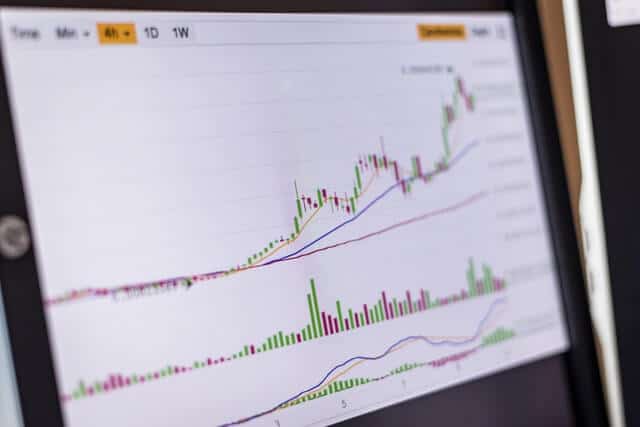











The main phases are accumulation, markup, distribution, and markdown. In simple terms, the market moves from stabilising after a decline, to trending higher, to becoming overheated, and then correcting.