Paid crypto trading signals groups: worth it or not?
A paid crypto trading signals group can save time, add structure, and help traders spot setups they might otherwise miss. It can also be a fast way to burn money if the provider is vague, reckless, or impossible to verify.
That is the real question here. Not whether paid signals exist, but whether paying for them gives you an edge that justifies the cost.
For most traders, the answer depends on three things: signal quality, risk management, and how you use the alerts. A good group gives you clear entries, exits, invalidation levels, and context. A bad one gives you hype, screenshots, and a lot of confidence after the move has already happened.
If you are still building your market knowledge, it helps to start with a broader crypto trading guide so you can judge signals properly instead of following them blindly.
What a paid crypto signals group should actually provide
At minimum, a paid group should offer more than a list of coin names and a “buy now” message. Useful signals are specific, repeatable, and easy to act on.
Look for signals that include:
- Entry zone: where the trade becomes valid
- Stop-loss level: where the idea is wrong
- Take-profit targets: where traders may scale out
- Timeframe: scalp, intraday, swing, or position trade
- Market context: why the setup exists in the first place
- Risk guidance: position sizing or maximum exposure notes
Without those details, you are not really getting a trading signal. You are getting a suggestion.
Why traders choose paid signals over free groups
Free groups can be useful for getting familiar with how signals work, but they often come with obvious limits. Delayed alerts, recycled calls, weak explanations, and little accountability are common.
Paid groups usually appeal to traders who want:
- More consistent coverage
- Faster alerts
- Better trade structure
- Ongoing market commentary
- A clearer process for managing risk
That does not mean every paid provider is better. It just means the bar should be higher once money is involved.
How paid signals can improve your trading process
The biggest benefit is not magic accuracy. It is decision support.
Crypto moves quickly, and many traders lose money by chasing candles, overtrading, or entering without a plan. A solid signals group can reduce that chaos by giving you a structured setup before emotions take over.
Used properly, signals can help you save research time when you cannot monitor charts all day, stay disciplined by trading predefined levels instead of impulse entries, learn trade construction by seeing how experienced analysts frame setups, and filter noise in crowded markets where every social feed has a different opinion.
That said, signals work best as part of your process, not as a substitute for one.


Red flags to watch before paying
This is where many traders get caught. A polished Telegram channel is easy to build. A reliable trading process is not.
Be cautious if a provider:
- Promises guaranteed profits or “near-perfect” win rates
- Shows only winning trades and never discusses losses
- Does not explain risk or position sizing
- Uses vague entries like “buy the dip” without levels
- Pushes urgency constantly instead of process
- Cannot show any track record or transparent results methodology
Regulators such as the CFTC and the SEC regularly warn traders about social-media investment scams, unrealistic claims, and unverified performance marketing. Crypto signals groups are not immune to that problem.
How to evaluate a paid crypto trading signals group
Before subscribing, run through a simple checklist:
- Check signal format. Are entries, stops, and targets clearly defined?
- Review consistency. Does the provider post regularly, or only after obvious moves?
- Look for transparency. Are losing trades acknowledged, or quietly deleted?
- Assess style fit. Does the group focus on scalping, swing trading, futures, or spot trading that matches your approach?
- Test communication. Fast markets need clear updates when conditions change.
- Verify risk culture. Good providers talk about downside as much as upside.
If you want a benchmark for what a structured service looks like, you can review trading results and compare how performance is presented with the screenshot-heavy channels often found on social platforms.
Where AltSignals fits
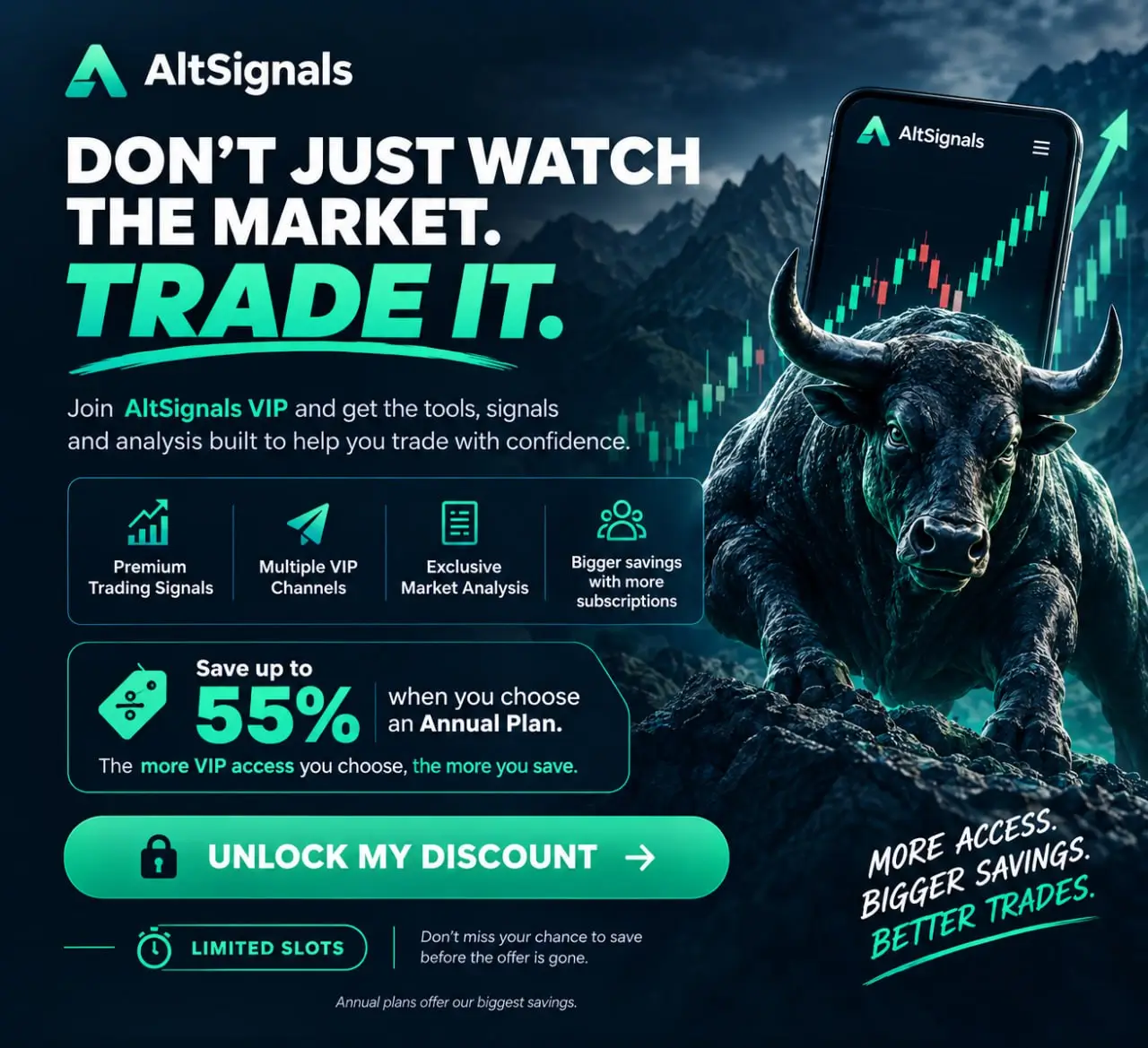
AltSignals is one option for traders who want more than raw alerts. The focus is on structured signals, market analysis, and tools that help traders make decisions with clearer rules.
Depending on your approach, traders may use AltSignals trading signals for trade ideas and execution support, while more chart-focused users may also want to explore the AltAlgo indicator for additional confirmation.
That combination matters because signals are strongest when they are backed by a repeatable framework rather than blind copying.
Best practices for using paid signals without becoming dependent on them
The traders who get the most value from paid groups usually do a few simple things well:
- Risk a fixed amount per trade instead of increasing size after a win
- Wait for the setup rather than forcing late entries
- Track outcomes in a journal to see which signal types suit them
- Skip trades that do not fit their plan
- Use signals as confirmation, not as a replacement for judgment
If you treat every alert like a command, you will eventually run into trouble. If you treat signals like structured market input, they can be genuinely useful.
Are paid crypto signals worth the money?
They can be, but only when the provider is transparent and your expectations are realistic.
A paid crypto trading signals group is not a shortcut to guaranteed profits. It is a tool. The value comes from better trade structure, faster analysis, and clearer risk planning. For some traders, that is worth paying for. For others, especially those who do not yet understand entries, stops, or leverage, it may be smarter to build fundamentals first.
The best approach is simple: judge the service by clarity, discipline, and transparency, not by marketing language. If a provider helps you trade with more structure and less emotion, that is useful. If it sells certainty in an uncertain market, walk away.