

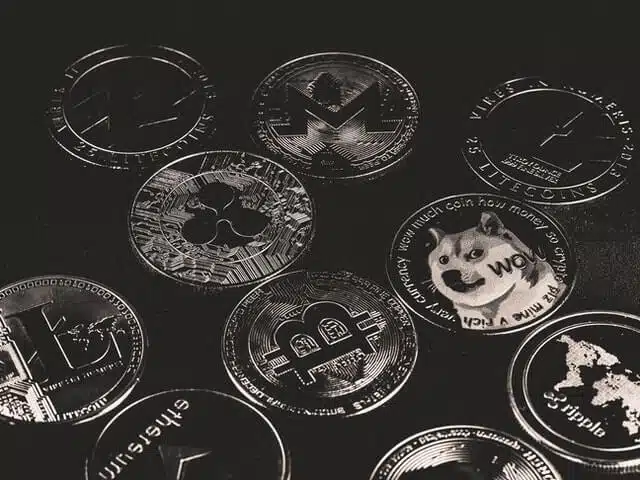
Picking cryptocurrencies to hold for the long term is harder than it sounds. There are thousands of tokens, plenty of hype, and no shortage of bold predictions. The sensible approach is usually much less exciting: focus on assets with strong liquidity, clear use cases, active developer ecosystems, and a track record of surviving ugly market cycles.
This list is not a promise of future returns. It is a practical shortlist of large, established crypto assets that many investors still watch for long-term exposure in 2026. If you want a broader foundation first, start with our crypto trading guide.
Disclaimer: The information shared by AltSignals and its writers is for educational purposes only and should not be considered financial advice. Crypto is volatile and high risk. Never invest more than you can afford to lose, and consider speaking with a qualified financial adviser before making investment decisions.
What makes a cryptocurrency worth holding?
Before looking at individual coins, it helps to define what “worth holding” actually means. For most long-term investors, the main factors are:
- Liquidity: Can the asset be bought and sold easily without huge slippage?
- Longevity: Has it survived multiple market cycles?
- Adoption: Is it used by investors, developers, institutions, or applications?
- Network strength: Does it have a secure, active, and credible ecosystem?
- Clear role: Does the asset solve a real problem, or is it mostly narrative-driven?
That does not remove risk. Even large-cap cryptocurrencies can fall sharply, face regulatory pressure, or lose momentum to newer networks. Diversification still matters. The U.S. SEC also continues to warn that crypto assets can be highly speculative and may not suit every investor.
Top 5 cryptocurrencies to hold in 2026
This is not a ranking of guaranteed winners. It is a focused list of established names that continue to matter for long-term crypto portfolios.
1. Bitcoin (BTC)
Bitcoin remains the benchmark crypto asset. It is the most widely recognised cryptocurrency, the most liquid, and still the first place many investors start when they want long-term exposure to the market.
Its main appeal is simple: Bitcoin has the strongest brand, the deepest market, and a fixed supply model that many investors view as part of its long-term thesis. It is often treated as the closest thing crypto has to a reserve asset.
That does not make it safe in the traditional sense. Bitcoin is still volatile. But compared with smaller altcoins, it has historically been more resilient during major market drawdowns.
Why investors still hold BTC:
- Highest liquidity in the crypto market
- Strong institutional and retail recognition
- Clear monetary narrative as a scarce digital asset
- Long operating history relative to the rest of crypto
2. Ethereum (ETH)
Ethereum is still central to the smart contract economy. It powers a large share of decentralised finance, token issuance, NFT infrastructure, and on-chain applications. Even with stronger competition than in earlier years, Ethereum remains one of the most important networks in crypto.
The long-term case for ETH is tied to utility. While Bitcoin is often held for scarcity and macro exposure, Ethereum is usually held for network usage and ecosystem depth. Developers continue to build on it, and its role in decentralised applications keeps it relevant.
Ethereum is not without challenges. Fees, scaling, and competition from faster chains are still part of the conversation. But if you want exposure to the broader blockchain application layer, ETH is still hard to ignore.
Why investors still hold ETH:
- Leading smart contract ecosystem
- Large developer community
- Broad use across DeFi, tokenisation, and Web3 infrastructure
- Strong market depth and long-term relevance
3. Solana (SOL)
Solana has become one of the most closely watched large-cap altcoins thanks to its speed, relatively low transaction costs, and growing ecosystem. It has attracted developers, traders, and users looking for a network that can handle high activity without Ethereum-level fees.
The reason SOL now belongs in conversations like this is simple: it has moved beyond being just a speculative alternative. It has built a meaningful presence in trading, payments, consumer apps, and on-chain activity.
That said, Solana tends to be more volatile than Bitcoin and Ethereum. It can offer more upside in strong markets, but it usually comes with more risk as well.
Why investors watch SOL:
- Fast and relatively low-cost transactions
- Growing ecosystem and user activity
- Strong visibility among large-cap altcoins
- Useful for investors seeking exposure beyond BTC and ETH
4. Chainlink (LINK)
Chainlink plays a different role from most major cryptocurrencies. It is not trying to be digital money or a general-purpose settlement asset. Its value proposition is infrastructure: helping smart contracts access reliable external data through oracle networks.
That matters because blockchains cannot natively pull in off-chain information on their own. If decentralised applications need price feeds, event data, or other external inputs, oracle infrastructure becomes essential. Chainlink has remained one of the best-known names in that category.

LINK is not always the loudest asset in bull markets, but it has a clearer utility case than many tokens that rely mostly on momentum.
Why investors consider LINK:
- Strong position in blockchain oracle infrastructure
- Useful role in smart contract ecosystems
- Exposure to crypto infrastructure rather than only payments or store-of-value narratives
- Longstanding relevance across multiple market cycles
5. XRP
XRP remains one of the most recognised large-cap crypto assets, largely because of its long market history and its association with cross-border payment infrastructure. It has also stayed relevant through years of regulatory scrutiny, which is part of both its risk profile and its resilience story.
The case for XRP is different from Bitcoin or Ethereum. Supporters tend to focus on payment efficiency, settlement speed, and enterprise-facing use cases. Critics point to centralisation concerns and the fact that adoption narratives do not always translate neatly into token performance.
Still, if the goal is to build a list around established cryptocurrencies with staying power, XRP is a defensible inclusion for this specific article.
Why some investors still hold XRP:
- Large market presence and strong brand recognition
- Long operating history
- Clear payments-focused narrative
- Continued relevance in mainstream crypto coverage
Why Litecoin and Cardano were removed from the original list
The earlier version of this article included Litecoin and Cardano. Both are still well-known projects, but this update focuses on assets that currently have stronger large-cap relevance, broader market attention, or clearer infrastructure importance in 2026.
That does not mean LTC or ADA are bad assets. It means they are harder to justify in a short top-five list when Bitcoin, Ethereum, Solana, Chainlink, and XRP are more consistently part of the current long-term conversation.
How to think about long-term crypto holdings
If you are building a long-term crypto watchlist, avoid treating every coin the same. Bitcoin and Ethereum are often used as core holdings. Assets like Solana, Chainlink, or XRP are usually more thesis-driven positions with different risk profiles.
A practical way to think about it:
- Core exposure: BTC, ETH
- Higher-risk growth exposure: SOL
- Infrastructure exposure: LINK
- Payments-focused exposure: XRP
You should also review position sizing, custody, and time horizon before buying anything. A strong asset can still be a poor investment if it is bought with the wrong expectations or too much leverage.
If you want help reading market structure before entering positions, our AltAlgo indicator can help you spot trend shifts and momentum changes more clearly. Traders looking for market-ready setups can also explore AltSignals trading signals.
Final thoughts
The best cryptocurrencies to hold are usually not the ones making the wildest promises. They are the ones with staying power, liquidity, real usage, and enough relevance to still matter after the next market shakeout.
For most investors, Bitcoin and Ethereum remain the foundation. Solana, Chainlink, and XRP add different types of exposure, but they also add different risks. Keep the list focused, stay realistic, and do not confuse popularity with quality.
For broader crypto market education, it is also worth reviewing the SEC’s investor bulletin on crypto asset risks.
FAQ
What is the safest cryptocurrency to hold long term?
Should beginners only hold Bitcoin and Ethereum?
Many beginners start with Bitcoin and Ethereum because they are the most established assets in the market. That does not guarantee better returns, but it can reduce some of the project-specific risk that comes with smaller altcoins.
Is it better to hold one crypto or diversify?
That depends on your risk tolerance and conviction. Concentrating in one asset can increase upside if you are right, but it also increases downside if you are wrong. Many long-term investors prefer a small number of high-conviction holdings rather than a wallet full of random tokens.
Are stablecoins good long-term holdings?
Stablecoins can be useful for liquidity, transfers, or defensive positioning, but they are not usually held for long-term capital growth. They also carry issuer, regulatory, and counterparty risks that investors sometimes underestimate.


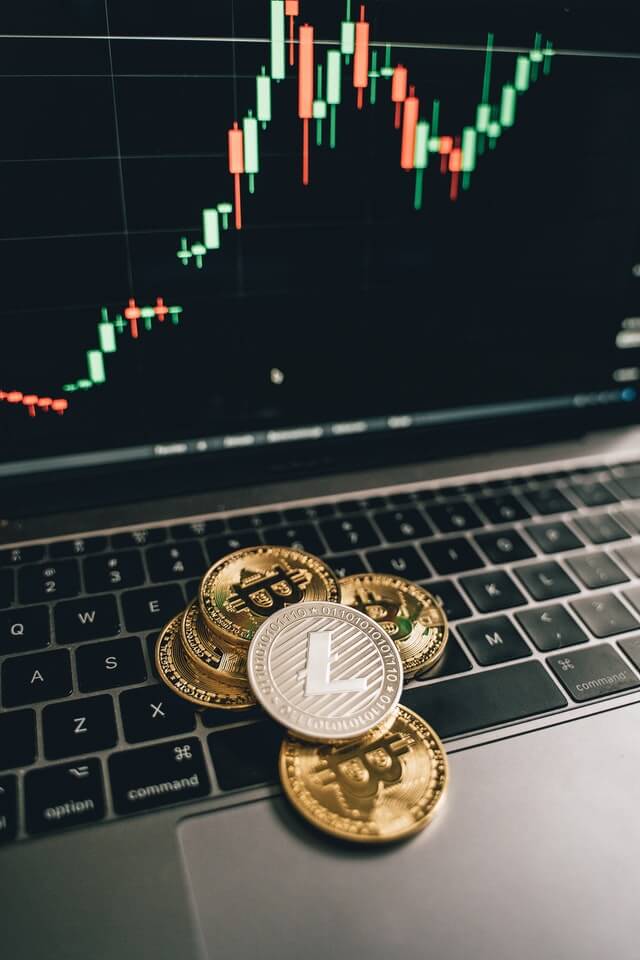

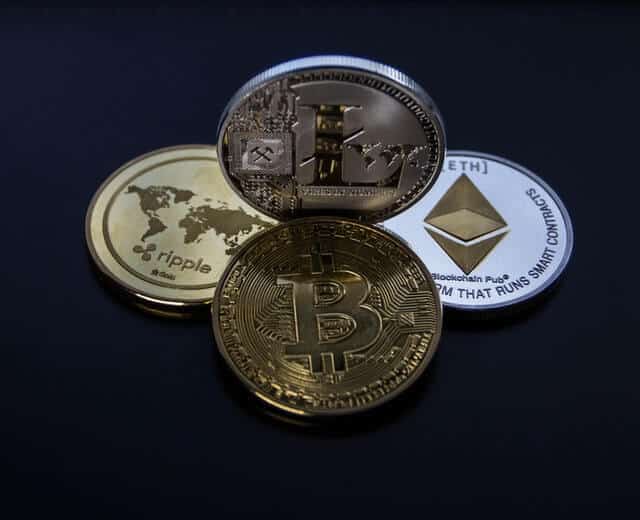








No cryptocurrency is truly safe. Bitcoin is often viewed as the least speculative of the major crypto assets because of its liquidity, market depth, and long history, but it can still experience large price swings.