


Some forex pairs barely stretch. Others can cover a lot of ground in a single session.
If you are asking what forex pairs move the most, you are really asking two things at once: which pairs tend to be the most volatile, and which pairs are actually practical to trade. Those are not always the same thing.
Exotic and emerging-market pairs can post the biggest percentage swings, but they often come with wider spreads, thinner liquidity, and sharper event risk. For many traders, the better question is not just “what moves most?” but “what moves enough and is still tradable?”
In this guide, we will break down the forex pairs that often show the largest moves, why they move, and how to choose pairs that fit your strategy without turning volatility into unnecessary risk.
Disclaimer: The information shared by AltSignals and its writers is for educational purposes only and should not be considered financial advice. Trading forex involves risk, and losses can exceed expectations if risk is poorly managed. Never trade with money you cannot afford to lose, and consider speaking with a qualified financial adviser if you need personal advice.
What forex pairs move the most?
The forex pairs that move the most are usually those with one or more of these traits:
- Lower liquidity than the major pairs
- Higher sensitivity to interest-rate changes, commodities, or political events
- Wider spreads and less stable order flow
- Risk-on/risk-off behaviour that can accelerate moves during global uncertainty
In practice, the pairs that often show larger daily ranges include:
- GBP/JPY – known for sharp intraday swings
- GBP/AUD – often active because both currencies can react strongly to macro news
- AUD/JPY – sensitive to risk sentiment and commodity-linked flows
- USD/ZAR – an example of an emerging-market pair that can be highly volatile
- USD/TRY and other exotic pairs
That said, volatility changes over time. A pair that was quiet for months can become active after a central bank surprise, inflation shock, election result, or geopolitical event. So there is no permanent list carved in stone.
If your goal is to trade movement rather than simply admire it from a safe distance, many traders focus on volatile but still liquid pairs such as GBP/JPY, GBP/USD, or USD/JPY rather than jumping straight into the most exotic markets.
Volatile does not always mean best

This is where many newer traders get caught out.
A pair can move a lot and still be a poor trading choice if:
- the spread is too wide
- slippage is common
- price reacts violently to headlines
- your stop-loss has to be so wide that position sizing becomes awkward
For example, exotic pairs may offer bigger swings, but they can also become expensive to trade. A major pair like EUR/USD may move less on average than an exotic pair, yet still be more attractive because execution is cleaner and costs are usually lower.
That is why traders often separate pairs into three practical buckets:
- Major pairs – highest liquidity, tighter spreads, easier execution
- Cross pairs – can offer stronger movement without relying on the US dollar
- Exotic pairs – potentially large moves, but usually higher risk and trading costs
Which major forex pairs are the most active?
If you want a balance between movement and tradability, the majors and liquid crosses are usually the best place to start.
The most active and widely traded pairs typically include:
- EUR/USD
- GBP/USD
- USD/JPY
- AUD/USD
- USD/CAD
- USD/CHF
- EUR/JPY
- GBP/JPY
EUR/USD is generally the most traded forex pair globally, which helps explain its deep liquidity and relatively tight spreads. According to the Bank for International Settlements Triennial Central Bank Survey, the US dollar remains on one side of the vast majority of FX transactions.
But the most traded pair is not always the fastest-moving pair. GBP/USD and USD/JPY can often produce larger directional moves around economic releases, while GBP/JPY is well known among traders for its bigger swings.
What makes a forex pair move more than others?
Forex volatility is not random. Pairs usually become more active when one or both currencies are exposed to strong catalysts.
The main drivers are:
- Central bank decisions – rate hikes, cuts, guidance, and surprise policy shifts
- Economic data – inflation, jobs, GDP, retail sales, and PMIs
- Political risk – elections, fiscal stress, sanctions, or policy uncertainty
- Commodity exposure – especially for currencies like AUD and CAD
- Global risk sentiment – pairs involving JPY often react when markets move into or out of risk-off mode
If you want to understand why a pair suddenly starts moving more than usual, check the economic calendar first. A quiet chart can become very lively when the market is waiting for a central bank announcement.
For a broader foundation, see our forex trading guide.
How do traders measure which pairs move the most?
Traders usually judge movement using a few simple tools:
- Average daily range (ADR) – how far a pair tends to move in a day
- Average true range (ATR) – a popular volatility indicator that includes gaps and range expansion
- Percentage change – useful when comparing pairs with different price levels
- Session behaviour – some pairs are quiet for hours and then become active during London or New York
ATR is especially useful because it gives you a practical sense of whether your stop-loss and profit target make sense for current conditions. If a pair has a small ATR, expecting a huge move in one session may be unrealistic. If ATR is elevated, your usual stop may be too tight.


If you use indicators to time entries and exits, the AltAlgo indicator can help you combine volatility with clearer trade structure rather than chasing every fast candle.
What is the best forex pair to trade?
There is no single best forex pair for everyone.
The best pair depends on your strategy, schedule, and risk tolerance:
- Beginners often start with EUR/USD or GBP/USD because they are liquid and widely covered
- Intraday traders may prefer GBP/USD, USD/JPY, or GBP/JPY for cleaner session-based movement
- News traders often focus on pairs tied to major economic releases
- Swing traders may prefer pairs with sustained trends rather than constant whipsaws
A good trading pair is not just one that moves. It is one you can follow consistently, understand fundamentally, and manage properly.
If you want help spotting setups across active markets, you can also explore AltSignals trading signals.
How many forex pairs should you trade?
For most traders, fewer is better.
Tracking one to three pairs is usually enough when you are building consistency. That gives you time to learn how those pairs behave during different sessions, how they react to news, and what normal volatility looks like.
Watching too many pairs can create a false sense of opportunity. In reality, it often leads to overtrading, duplicated exposure, and messy decision-making.
A simple approach looks like this:
- Start with one major pair, such as EUR/USD
- Add one more active pair, such as GBP/USD or USD/JPY
- Only expand once you can explain why each pair deserves your attention
Also remember that some pairs are correlated. Trading EUR/USD and GBP/USD at the same time may feel like diversification, but often it is just two versions of a similar dollar trade.
What is the best time to trade forex pairs that move the most?
The best time to trade depends on the pair, but volatility usually increases when the relevant financial centres are open.
As a rule of thumb:
- London session often brings strong movement in EUR, GBP, and CHF pairs
- New York session adds activity to USD pairs, especially when US data is released
- London-New York overlap is often the busiest period for major pairs
- Asian session is more relevant for JPY, AUD, and NZD pairs
For example, GBP/USD and EUR/USD often become most active during the London session and the London-New York overlap. Meanwhile, USD/JPY, AUD/USD, and NZD-related pairs can show more meaningful movement during Asian hours and then again when US trading begins.
The key is to match your pair to its most active session instead of forcing trades during dead hours when spreads can feel wider and setups are weaker.
Final takeaway
The forex pairs that move the most are usually not the same pairs that are easiest to trade.
If you want raw volatility, exotic pairs and certain crosses can deliver it. If you want a better balance of movement, liquidity, and execution, major pairs and liquid crosses are usually the smarter choice.
For most traders, the sweet spot is simple: choose a small watchlist, learn each pair’s rhythm, track volatility with tools like ATR, and trade during the sessions that actually matter.
Fast movement can create opportunity. It can also punish impatience. Forex tends to reward traders who know the difference.
FAQ
What is the most volatile forex pair?
Is EUR/USD the pair that moves the most?
No. EUR/USD is usually the most traded pair, not necessarily the most volatile. Its high liquidity often means tighter spreads and cleaner execution, but other pairs such as GBP/USD, USD/JPY, or GBP/JPY may show larger short-term moves.
Are exotic forex pairs better for profit?
Not automatically. Exotic pairs can move more, but they also tend to have wider spreads, lower liquidity, and greater event risk. Bigger movement does not guarantee better trading conditions.
How can I check which forex pairs are moving the most today?
Traders usually check average daily range, ATR, percentage change, and session-based market mover tools. It also helps to review the economic calendar because scheduled news often explains why a pair is unusually active.





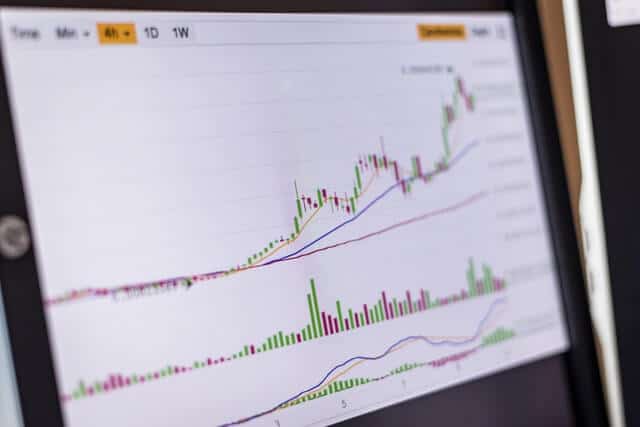




















There is no single pair that is always the most volatile. It changes with market conditions. Liquid crosses like GBP/JPY often show strong movement, while exotic pairs such as USD/ZAR can post even larger swings but with higher trading costs and risk.