

Aave is one of the best-known names in DeFi, but the simple version is this: it’s a decentralised lending and borrowing protocol that lets users supply crypto to earn yield or borrow against collateral without using a traditional bank.
If you’ve seen AAVE mentioned and want to understand what it actually does, this guide breaks down the basics, how lending and borrowing work, what makes the protocol different, and the main risks to keep in mind before using it.
What is Aave?
Aave is a non-custodial DeFi protocol. In plain English, that means users interact with smart contracts rather than handing funds to a central company that controls deposits and loans on their behalf.
On Aave, there are two main types of users:
- Suppliers, who deposit supported crypto assets into liquidity pools and earn a yield
- Borrowers, who lock up collateral and borrow other assets against it
The protocol started on Ethereum, but Aave has expanded across multiple networks over time. That matters because users often choose a network based on fees, available assets, and liquidity.
Aave is also governed by its community through the AAVE token, which is used in protocol governance. So when people ask “what is AAVE?”, they may mean either the protocol itself or the governance token tied to it.
How does Aave work?
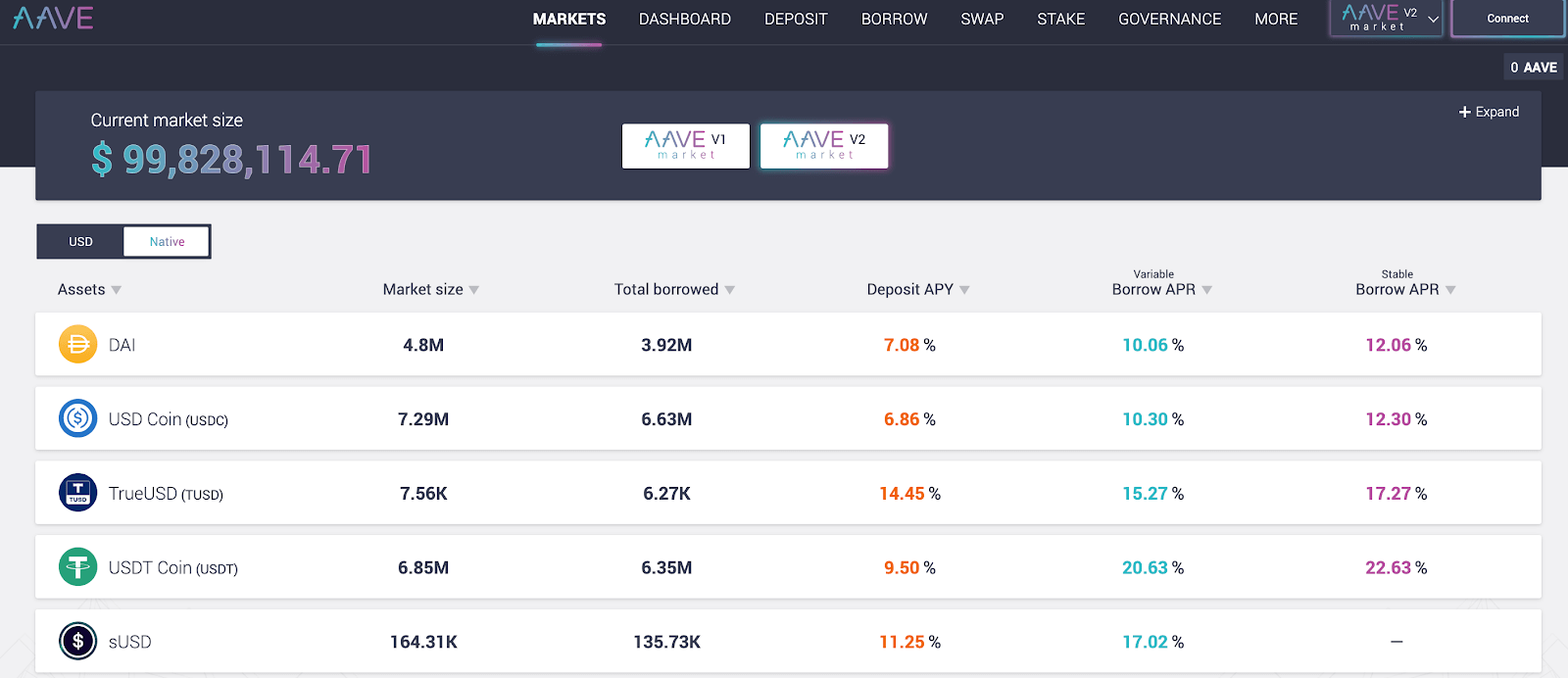
Aave uses liquidity pools instead of matching one lender directly with one borrower. Suppliers deposit assets into a pool, and borrowers draw from that pool by posting collateral.
Interest rates are typically determined algorithmically based on supply and demand. If demand to borrow an asset rises and available liquidity falls, borrowing costs usually increase. If liquidity is abundant, rates tend to be lower.
That model is one reason Aave became popular in DeFi. It removes a lot of the friction you would normally expect from traditional lending markets, but it also shifts responsibility onto the user. You need to understand collateral, liquidation risk, wallet security, and network fees before using it.
Lending on Aave
When you supply crypto to Aave, your assets are added to a liquidity pool. In return, you earn yield from borrowers who pay interest to access those funds.
People use Aave for lending for a few common reasons:
- to earn yield on idle crypto holdings
- to keep exposure to an asset while still putting it to work
- to use supplied assets later as collateral for borrowing
The important detail is that yields are not fixed. They move with market conditions, asset demand, and available liquidity. Any article quoting a specific APY as if it is stable should be treated carefully, because rates on DeFi protocols can change quickly.
That makes Aave more flexible than a traditional savings account, but also less predictable.
Borrowing on Aave
Borrowing on Aave usually requires overcollateralisation. That means you deposit crypto worth more than the amount you want to borrow.
A simple example:
- You deposit ETH or another supported asset as collateral
- You borrow a different asset, such as a stablecoin
- If your collateral value falls too far relative to the loan, your position can be liquidated
Traders and investors use this for different reasons. Some want liquidity without selling their long-term holdings. Others want to switch exposure, hedge, or access stablecoins while keeping a crypto position open.
Useful in the right setup? Yes. Risk-free? Definitely not.
What makes Aave different?
Aave helped popularise several features that made DeFi lending easier to use and more flexible.
- Non-custodial design: users interact through wallets rather than depositing funds into a central exchange account
- Wide asset support: supported assets vary by market and network, but Aave is known for broad DeFi coverage
- Variable-rate borrowing: borrowing costs adjust with market conditions
- Flash loans: Aave became widely known for flash loans, which allow borrowing and repayment within a single blockchain transaction
- Governance: AAVE token holders can participate in protocol decisions
Flash loans get a lot of attention because they sound exotic, and to be fair, they are. But for most beginners, the real use case is much simpler: supplying assets, borrowing against collateral, and understanding how DeFi money markets work.


What is the AAVE token?
The AAVE token is primarily associated with governance in the Aave ecosystem. Token holders can take part in proposals and decisions related to the protocol.
That does not mean the token price always moves in line with protocol usage, and it does not make AAVE a low-risk investment by default. Like other crypto assets, it can be volatile and sentiment-driven.
If your goal is to understand the protocol, it helps to separate two ideas:
- Aave the protocol = the lending and borrowing system
- AAVE the token = the governance asset tied to that ecosystem
What is DeFi, and where does Aave fit in?
DeFi, short for decentralised finance, refers to blockchain-based financial applications that aim to offer services like lending, borrowing, trading, and yield generation without relying on traditional intermediaries.
Aave sits in the DeFi lending category alongside other money-market style protocols. Its role is fairly straightforward: connect suppliers and borrowers through smart contracts and liquidity pools.
If you want a broader overview of the market Aave belongs to, start with our crypto trading guide. For a wider look at DeFi projects, you can also read our piece on DeFi projects to follow.
Main risks of using Aave
Aave is established by DeFi standards, but that does not remove risk. Before using any lending protocol, keep these points in mind:
- Smart contract risk: bugs, exploits, or unexpected failures can still happen in decentralised protocols
- Liquidation risk: if collateral value drops too far, part of your position may be sold automatically
- Market volatility: crypto prices can move fast, which changes collateral ratios quickly
- Stablecoin risk: borrowed or supplied stablecoins can still face depegging or issuer-related issues
- Network and execution risk: congestion, fees, and transaction timing can affect outcomes
- User error: wallet mistakes, wrong network selection, or poor risk management can be costly
If you are actively trading around DeFi positions, risk management matters more than the headline yield. Chasing the highest number on screen is usually where people get humbled.
Is Aave good for beginners?
Aave can be beginner-friendly compared with some DeFi tools, but only if you already understand the basics of wallets, gas fees, collateral, and liquidation thresholds.
If you are completely new to crypto, it may be smarter to learn the market structure first before borrowing against volatile assets. DeFi is efficient, but it does not forgive confusion.
For traders who want help reading market conditions before making decisions, our AltSignals trading signals may be a useful next step.
Final thoughts
Aave remains one of the most recognisable DeFi lending protocols because it solves a clear problem: letting users lend and borrow crypto without relying on a traditional intermediary.
That said, the appeal of decentralisation should not distract from the risks. Rates change, collateral can be liquidated, and smart contract systems are only as safe as their design and use.
If you understand those trade-offs, Aave is a useful protocol to know. Even if you never use it directly, it is one of the clearest examples of how DeFi lending works in practice.
FAQ
Is Aave safe to use?
Can you make passive income with Aave?
You can earn yield by supplying supported assets, but returns are variable and not guaranteed. Earnings depend on borrowing demand, liquidity conditions, and the risks tied to the asset and network you use.
What is the difference between Aave and a bank?
Aave uses smart contracts and liquidity pools instead of a central institution. There is no traditional bank approving loans, but users usually need to overcollateralise their borrowing and manage the risks themselves.
Do you need the AAVE token to use Aave?
No. You do not usually need to hold the AAVE token just to supply or borrow assets on the protocol. The token is mainly tied to governance and the wider ecosystem.

















Aave is one of the more established DeFi protocols, but no DeFi platform is completely safe. Users still face smart contract risk, liquidation risk, stablecoin risk, and wallet security risk.