


Compounding is one of the simplest ideas in investing, but it is also one of the most misunderstood. At its core, it means earning returns on your original money and on the returns you already made. That is why small gains can grow into much larger amounts over time.
It sounds almost too neat on paper. In real markets, especially crypto and active trading, returns are not smooth, losses happen, and compounding only works if you protect capital well enough to stay in the game. So yes, compounding matters — but only when it is paired with realistic expectations and risk management.
Disclaimer: this article is for educational purposes only and is not financial advice. Crypto and other financial markets carry risk. Never invest more than you can afford to lose, and speak to a qualified financial adviser if you need personal advice.
What is compounding?
Compounding is the process of reinvesting profits so future returns are calculated on a larger base. People often call it “interest on interest,” but the same idea applies to investing returns, not just savings accounts.
Here is the basic idea:
- You start with an initial amount of money.
- You earn a return.
- Instead of withdrawing all of that return, you reinvest some or all of it.
- Your next return is earned on the new, larger total.
Over time, that snowball effect can become meaningful.
A simple compounding example
Imagine you invest $1,000 and earn 10%.
- After year one, you have $1,100.
- If you earn another 10% on the original $1,000 only, you would add another $100.
- If you compound, you earn 10% on $1,100 instead, so the next gain is $110.
That difference looks small at first. The point is that compounding becomes more noticeable as time passes and as gains are repeatedly reinvested.
This is why time matters so much. Compounding is not usually dramatic in the early stages. It becomes powerful when it has enough time and consistency to work.
Compound interest vs simple interest
The easiest way to understand compounding is to compare it with simple interest.
Simple interest means returns are calculated only on the original amount.
Compound interest means returns are calculated on the original amount plus previously earned returns.
For example:
- With simple interest, a 10% annual return on $10,000 produces $1,000 each year.
- With compounding, the second year’s return is based on $11,000 if the first year’s gain was reinvested.
That is the basic engine behind long-term portfolio growth.
How investors actually use compounding
In practice, compounding happens when you leave profits in the account instead of removing them. That can apply to:
- savings products that pay interest
- dividend reinvestment
- long-term investing portfolios
- systematic trading strategies that increase position size gradually
For traders, this is where things get more nuanced. Compounding is not just “keep reinvesting forever.” If your strategy is volatile, increasing size too quickly can magnify drawdowns just as fast as it magnifies gains.
That is why experienced traders usually think about compounding alongside position sizing, maximum drawdown, risk per trade, and consistency of returns.
If you are still building those basics, it helps to first understand risk management before trying to scale aggressively.
Why compounding matters in trading and investing
The main benefit of compounding is efficiency. Your money does more of the work for you over time because gains are added back into the base.
That said, compounding is not magic. It depends on three things:
- Time — the longer the period, the more visible the effect.
- Consistency — irregular returns and large losses can interrupt the process.
- Capital preservation — a deep drawdown can undo a lot of progress.
This is especially relevant in crypto, where volatility can be extreme. A strategy that compounds nicely in a spreadsheet may behave very differently in a live market.
If your focus is crypto specifically, you may also want to read about crypto signals to see how traders structure entries, exits, and risk in fast-moving markets.
The biggest misconception about compounding
The common mistake is assuming compounding means steady profits in a straight line. Real returns do not work like that.


Here is the part many beginners miss: losses hurt compounding more than they expect.
If a portfolio falls 50%, it does not need a 50% gain to recover. It needs a 100% gain just to get back to where it started. That is why avoiding large losses matters so much.
Compounding works best when returns are modest, repeatable, and protected by sensible risk controls. Chasing oversized gains often does the opposite.
Can compounding make you rich?
Compounding can build wealth over time, but it is not a shortcut. It rewards patience, discipline, and survival.
That is why investors often use Warren Buffett as an example. His long-term wealth is frequently cited in discussions about compounding because he stayed invested for decades. The lesson is not that everyone can replicate Buffett. The lesson is that time and consistency matter more than most people think.
For most people, compounding is less about turning a small account into a fortune overnight and more about steadily improving outcomes over many years.
What are the risks of compounding?
Compounding has clear upside, but there are risks too.
- Reinvesting after gains can increase exposure at the wrong time.
- Large losses interrupt the compounding cycle and can take a long time to recover from.
- Overconfidence can creep in after a strong run.
- Fees, taxes, and slippage can reduce the real-world effect of compounding.
For active traders, there is another practical issue: just because your account grew does not mean your strategy scales cleanly. Liquidity, execution quality, and psychology all matter more as size increases.
Should you reinvest 100% of your profits?
Not necessarily.
Some investors reinvest everything. Others withdraw part of their gains and compound the rest. Neither approach is automatically right. It depends on your goals, risk tolerance, and the type of strategy you are using.
A balanced approach often makes more sense than an all-or-nothing one. For example, some traders periodically take partial profits while still allowing the account to grow over time. That can reduce the temptation to overtrade and help lock in progress.
How to think about compounding realistically
If you want compounding to work in the real world, keep it boring:
- focus on consistency rather than huge wins
- keep risk per trade under control
- avoid deep drawdowns
- review performance over long periods, not a few lucky trades
- use calculators and projections as rough guides, not promises
That last point matters. Compounding calculators are useful for understanding the concept, but they assume a level of consistency that markets rarely deliver.
If you want to build stronger trading foundations before scaling position size, our trading course is a practical next step.
Final thoughts
Compounding is powerful because it turns time and discipline into growth. The concept is simple: reinvest gains so future returns build on a larger base. The hard part is not the maths. It is staying consistent, managing risk, and avoiding the kind of losses that break the process.
Used properly, compounding can improve long-term results in both investing and trading. Used carelessly, it can magnify mistakes just as quickly.
That is the real takeaway: compounding rewards good habits more than bold predictions.
FAQ
What is compounding in simple terms?
Is compounding the same as compound interest?
Compound interest is one form of compounding. The broader idea also applies to investment gains, dividends, and trading profits that are reinvested.
Does compounding work in crypto trading?
It can, but crypto is volatile. Compounding only works well if losses are controlled and position sizing stays sensible. Without risk management, volatility can damage the process quickly.
Can you lose money while compounding?
Yes. Compounding increases exposure as your account grows, so losses can also become larger in absolute terms. That is why preserving capital matters as much as chasing returns.


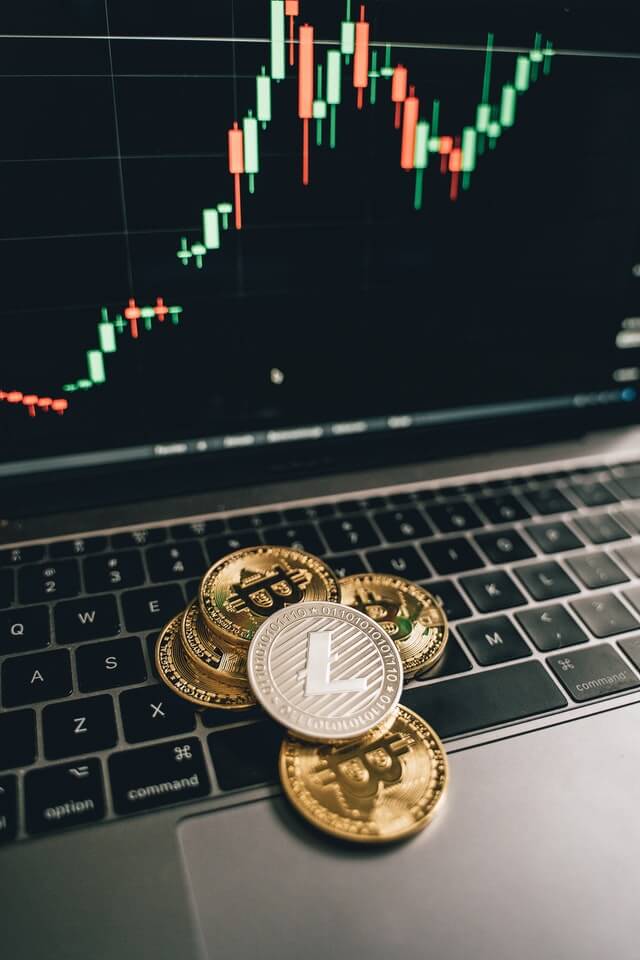














Compounding means earning returns on your original money and on the returns you already made. Over time, that can create a snowball effect.