

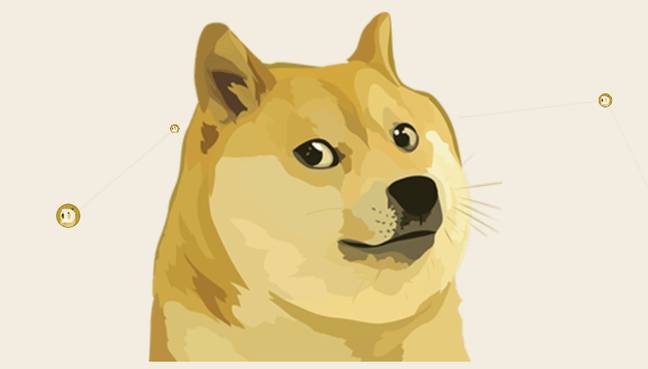
Dogecoin (DOGE) started as a joke, which is exactly why many people underestimated it. Years later, it is still one of the best-known cryptocurrencies in the market, with a large community, broad exchange support, and a reputation for moving fast both on-chain and in price.
If you are asking what Dogecoin is, the short answer is simple: it is an open-source, peer-to-peer cryptocurrency launched in 2013 by Billy Markus and Jackson Palmer. It was inspired by the Shiba Inu “Doge” meme, but the network itself is real, tradable, and still actively used.
This guide explains what Dogecoin is, how it works, what people use it for, and how it differs from Bitcoin. It also covers one point that often gets misunderstood: why Dogecoin’s supply model matters when people make big price predictions.
Disclaimer: The information shared by AltSignals and its writers should not be considered financial advice. This content is for educational purposes only. We are not responsible for any investment decision you make after reading this post. Never invest more than you can afford to lose, and consider speaking with a qualified financial adviser.
What is Dogecoin (DOGE)?
Dogecoin is a decentralised cryptocurrency created as a lighter, more playful alternative to early Bitcoin-era crypto culture. It launched in December 2013 and was built using code derived from Litecoin, which means it shares some technical DNA with Litecoin rather than Bitcoin directly.
Over time, Dogecoin evolved from an internet joke into a widely recognised digital asset. Its branding helped it go viral, but its staying power came from something more practical: low fees, relatively fast transactions, and a community that kept the project relevant.
Today, DOGE is mainly known for three things:
- its meme-driven identity and strong online community
- its use as a tradable crypto asset on major exchanges
- its role as a payment coin for small transfers, tipping, and simple peer-to-peer use cases
If you want a broader view of how assets like DOGE fit into the market, see our crypto trading guide.
A brief history of Dogecoin
Dogecoin was created by software engineers Billy Markus and Jackson Palmer. The original idea was partly satirical: a cryptocurrency that poked fun at the hype surrounding digital assets at the time.
That joke travelled further than expected. Dogecoin quickly built an online following and became known for internet tipping, fundraising campaigns, and a more casual culture than many other crypto projects.
Its profile later grew even more through social media attention, celebrity mentions, and speculative trading waves. That visibility helped DOGE reach a much wider audience, but it also made the coin more vulnerable to hype cycles and sharp volatility.
What is Dogecoin used for?
Dogecoin has several real-world and market uses, even if speculation still dominates most of the headlines.
1. Trading and speculation
DOGE is heavily traded because it is liquid, widely listed, and often reacts strongly to news, sentiment, and social media. That makes it attractive to short-term traders, but it also makes it risky. Fast upside usually comes with equally fast downside.
2. Payments and transfers
Dogecoin can be used to send value from one wallet to another without relying on a bank or payment processor. Compared with some older crypto networks, transfers are generally quicker to confirm and often inexpensive, which is one reason DOGE gained traction for small online payments.
3. Tipping and community use
Dogecoin became popular for tipping creators and rewarding online contributions. That use case is closely tied to its culture: DOGE was never positioned as a highly serious “digital gold” asset. It was easier to use casually, and that helped it stand out.
4. Merged mining with Litecoin
Dogecoin is also part of a merged mining setup with Litecoin. In practice, this means miners can help secure both networks at the same time, which supports Dogecoin’s network security without requiring a completely separate mining ecosystem.
How does Dogecoin work?
Dogecoin runs on a proof-of-work blockchain. Transactions are grouped into blocks, and miners validate those blocks by contributing computing power to the network.
Here are the basics:
- Consensus model: Proof of Work (PoW)
- Mining algorithm: Scrypt, like Litecoin
- Block time: around 1 minute
- Network design: peer-to-peer and open source
The one-minute block time means Dogecoin can confirm transactions faster than Bitcoin in normal conditions. That does not automatically make it “better,” but it can make the network feel more lightweight for simple transfers.
Dogecoin also has official project documentation, while its merged mining relationship with Litecoin is a key part of how the network remains secure.
Is Dogecoin inflationary?
Yes. Dogecoin is generally described as an inflationary cryptocurrency because it does not have a fixed maximum supply like Bitcoin.

That matters because supply affects scarcity. Bitcoin has a hard cap of 21 million coins, which is one reason many investors frame it as a scarce asset. Dogecoin works differently: new DOGE continues to enter circulation over time.
This does not mean Dogecoin is worthless. It does mean that price forecasts should be viewed with more caution. When a coin has a very large and expanding supply, extremely high per-coin price targets become harder to justify.
Will Dogecoin reach $100?
It is possible to ask the question, but it is better to frame it properly. A $100 DOGE price would imply an enormous total market value because Dogecoin’s circulating supply is very large and continues to grow.
That does not make it impossible in a purely theoretical sense. It does make it highly unrealistic under normal market assumptions.
When traders throw out big round-number targets, they often focus on the coin price and ignore market capitalisation and supply. That is the mistake. With Dogecoin, supply is not a side detail. It is central to the valuation discussion.
A more sensible approach is to treat DOGE as a high-volatility asset whose price is driven by sentiment, liquidity, adoption, and broader crypto market conditions rather than by meme targets alone.
Dogecoin vs Bitcoin: what is the difference?
Dogecoin and Bitcoin are both proof-of-work cryptocurrencies, but they were built for different purposes and behave differently in the market.
- Supply: Bitcoin has a fixed maximum supply. Dogecoin does not.
- Positioning: Bitcoin is often treated as a long-term store-of-value asset. Dogecoin is more commonly viewed as a community-driven payment coin and speculative asset.
- Mining: Bitcoin uses SHA-256 mining. Dogecoin uses Scrypt and is merged mined with Litecoin.
- Block speed: Dogecoin blocks are produced more frequently than Bitcoin blocks.
- Market behaviour: Bitcoin tends to be the benchmark crypto asset, while Dogecoin is usually more sentiment-driven and more volatile.
That last point matters most for traders. Bitcoin often moves the market. Dogecoin often reacts to it, then adds its own layer of meme-fuelled chaos on top.
Is Dogecoin a good investment?
That depends on your time horizon, risk tolerance, and reason for buying it.
Dogecoin may appeal to traders who want exposure to a highly liquid, high-volatility crypto asset. It may also appeal to users who simply like the community and want to hold a small amount. But it is not the same kind of asset as Bitcoin, and it should not be analysed as if it were.
Before buying DOGE, it helps to ask:
- Are you trading momentum or investing with a long-term thesis?
- Do you understand how supply affects valuation?
- Can you handle sharp price swings without making emotional decisions?
If your focus is trading rather than long-term holding, structured analysis matters more than social media excitement. You can explore AltSignals trading signals if you want a more disciplined way to follow crypto market setups.
Final thoughts
Dogecoin is no longer just a punchline from early crypto culture. It is a real blockchain network with a long history, a recognisable brand, and a loyal community. At the same time, it remains one of the market’s more sentiment-sensitive assets, which means hype can move it quickly in either direction.
If you understand that balance, Dogecoin makes more sense. It is not Bitcoin in a dog costume. It is its own thing: simpler, more playful, more inflationary, and usually more speculative.
That can make it interesting. It can also make it dangerous if you buy it for the wrong reasons.
FAQ
Who created Dogecoin?
Can Dogecoin be mined?
Yes. Dogecoin uses proof-of-work mining and can be merged mined with Litecoin, allowing miners to help secure both networks at the same time.
Why is Dogecoin so volatile?
Dogecoin is heavily influenced by market sentiment, social media attention, and speculative trading activity. That combination can lead to sharp price moves in short periods.
Does Dogecoin have a maximum supply?
No. Unlike Bitcoin, Dogecoin does not have a fixed maximum supply, which is why it is usually described as inflationary.












Dogecoin was created by Billy Markus and Jackson Palmer in 2013. It began as a lighthearted project inspired by the Doge meme but developed into a widely traded cryptocurrency.