


Bitcoin was created by Satoshi Nakamoto — but that only answers the question on paper.
The real mystery is that nobody has publicly proved who Satoshi Nakamoto actually is. The name could belong to one person or a group, and after more than 17 years of speculation, the identity behind it remains unconfirmed.
What we do know is much clearer. In October 2008, Satoshi published the Bitcoin white paper, outlining a peer-to-peer electronic cash system. In January 2009, the Bitcoin network went live. That launch introduced a working way to transfer digital value without relying on a bank or central authority.
So if you are asking who created Bitcoin, the short answer is simple: Satoshi Nakamoto created Bitcoin. If you are asking who Satoshi really is, the honest answer is: we still do not know.
Disclaimer: This article is for educational purposes only and should not be considered financial advice. Crypto markets are volatile, and nothing here should be treated as a recommendation to buy, sell, or hold any asset. If you need personal advice, speak to a qualified financial professional.
Who is Satoshi Nakamoto?
Satoshi Nakamoto is the pseudonym used by the person, or possibly the group, that designed Bitcoin, wrote its original white paper, and helped launch the network.
Satoshi was also active in Bitcoin’s early development. That included communicating with developers, releasing early software, and discussing technical issues in emails and forum posts. Over time, Satoshi gradually stepped back from public involvement and disappeared from active communication in 2010 and 2011.
That disappearance is one reason the mystery has lasted so long. There is no verified public appearance, no confirmed legal identity, and no universally accepted proof tying the name to any specific individual.
What did Bitcoin solve?
Before Bitcoin, digital money had a major problem: double spending. If money exists only as digital information, what stops someone from copying it and spending it twice?
Traditional payment systems solve that with a central authority, usually a bank or payment processor, that keeps the official ledger. Bitcoin took a different route. It used a decentralized network, cryptography, and a public blockchain to let participants agree on transaction history without a central gatekeeper.
That was the breakthrough. Bitcoin was not the first attempt at digital cash, but it was the first system to make decentralized digital scarcity work at scale.
If you want a broader look at how this market works, see our crypto trading guide.
When was Bitcoin created?
The timeline matters because people often compress the whole story into a single date.
- 31 October 2008: the Bitcoin white paper was published.
- 3 January 2009: the Bitcoin network launched with the mining of the genesis block.
- 12 January 2009: the first recorded Bitcoin transaction took place between Satoshi Nakamoto and Hal Finney.
So, depending on how you define “created,” Bitcoin was conceived in 2008 and launched in 2009.
Was Bitcoin created by one person or a group?
No one knows for certain.
The name Satoshi Nakamoto reads like a single author, and much of the early communication sounds consistent enough that many people assume it was one person. Still, some researchers and commentators have argued that the breadth of skills involved — cryptography, economics, distributed systems, coding, and writing — could point to a small group.
There is no definitive proof either way. For now, the safest wording is that Bitcoin was created by the pseudonymous Satoshi Nakamoto, who may have been an individual or a group.
People often suggested as Bitcoin’s creator
Over the years, several names have been linked to Satoshi. Some were suggested because of writing style, some because of technical background, and some because the internet enjoys a mystery a little too much.
None of the names below has been conclusively proven to be Satoshi Nakamoto.
Hal Finney
Hal Finney was one of the earliest Bitcoin users and a respected cryptographer. He received the first known Bitcoin transaction from Satoshi and was deeply involved in the early cypherpunk scene.
Because Finney had the technical ability, the right background, and a writing style some people thought resembled Satoshi’s, he has long been one of the most discussed candidates. He denied being Satoshi, and no conclusive evidence has emerged to prove otherwise.
Nick Szabo
Nick Szabo is another frequently mentioned name. He developed the concept of bit gold, a digital money proposal that predates Bitcoin and shares some philosophical similarities with it.


Szabo’s work on smart contracts and digital scarcity made him a natural candidate in many people’s eyes. He has repeatedly denied being Satoshi Nakamoto.
Adam Back
Adam Back is a computer scientist and the creator of Hashcash, a proof-of-work system that influenced Bitcoin’s design. Because proof of work is central to Bitcoin, Back is often included in discussions about Satoshi’s identity.
Recent media speculation has kept his name in the headlines, but speculation is not proof. Back has publicly denied being Bitcoin’s creator.
Other names that appear in the debate
Other individuals have been mentioned over the years, including Dorian Nakamoto, Len Sassaman, and several researchers or inventors connected to cryptography and digital cash. In some cases, the links are based on timing, language patterns, patents, or geographic coincidences.
That is the problem with most Satoshi theories: they are interesting, but they rarely move beyond circumstantial clues.
Why Satoshi’s identity still matters
On one level, it does not matter. Bitcoin works whether or not anyone ever unmasks its creator. The code is open, the network is decentralized, and no single founder is needed for it to keep running.
On another level, the identity matters because it touches on trust, influence, and history.
- Market influence: wallets believed to be linked to Satoshi are thought to hold a large amount of early-mined BTC. Any confirmed movement would attract major attention.
- Political and legal questions: if Satoshi were identified, regulators, journalists, and courts would almost certainly take interest.
- Historical significance: Bitcoin changed finance, technology, and digital ownership. Naturally, people want to know who started it.
Still, Bitcoin’s design deliberately reduces dependence on personalities. That is part of the point.
Did Satoshi Nakamoto invent blockchain?
Not exactly in the broadest sense.
Ideas that fed into blockchain technology existed before Bitcoin, including cryptographic timestamping, proof-of-work systems, and earlier digital cash experiments. What Satoshi did was combine those ideas into a practical, decentralized system that worked in the real world.
So it is fair to say Satoshi created Bitcoin’s blockchain-based system, even though some of the building blocks existed earlier.
Can anyone prove they are Satoshi?
Yes — in principle.
The clearest way would be to use cryptographic proof tied to early keys known to belong to Satoshi, such as signing a message from an early Bitcoin address associated with the project’s launch period. Claims without that kind of proof are usually treated with heavy skepticism.
That is why headlines about “the real Satoshi” should always be read carefully. Extraordinary claims are common. Extraordinary proof is much rarer.
Final answer
Bitcoin was created by Satoshi Nakamoto, the pseudonymous author of the Bitcoin white paper and the person or group that launched the network in 2009.
Beyond that, the identity remains unverified.
If you are learning how Bitcoin fits into the wider market, you can also explore our guide to AltSignals trading signals for a practical look at how traders follow crypto market setups.
FAQ
Who created Bitcoin in simple terms?
When was Bitcoin created?
The Bitcoin white paper was published in 2008, and the network launched in 2009. Both dates are important, depending on whether you mean the idea or the live system.
Has Satoshi Nakamoto ever been identified?
No verified identification has been accepted by the wider Bitcoin community. Many theories exist, but none has been conclusively proven.
Why is Satoshi Nakamoto anonymous?
No one knows for sure. Possible reasons include privacy, personal safety, legal concerns, or a deliberate choice to keep Bitcoin independent from any single public founder.




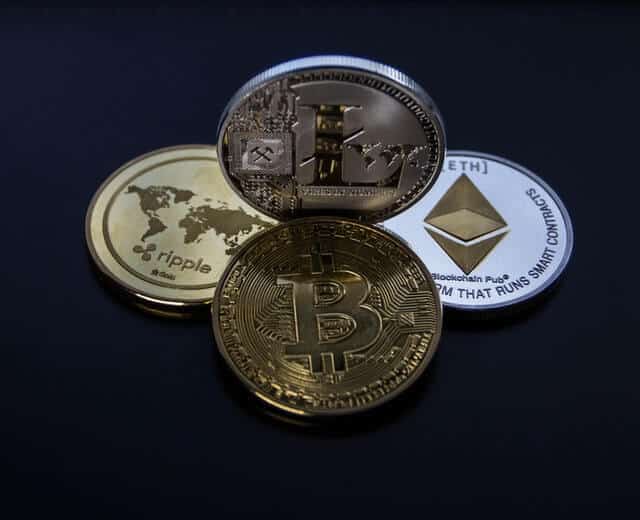












Bitcoin was created by someone using the name Satoshi Nakamoto. That name may refer to one person or a group, but the real identity has never been publicly confirmed.