Last week was a historic one for financial markets and the global economy, with significant developments ranging from the unprecedented debut of SpaceX on the Nasdaq stock exchange to shifting tides in monetary policy, rising inflation, diplomatic moves regarding the Strait of Hormuz, and key corporate earnings signaling the resilience and direction of the U.S. economy. In this comprehensive review, we’ll explore these critical events, unpack what they mean for investors and businesses, and analyze the underlying factors that could affect markets in the months ahead.
SpaceX Sets New Records with a Groundbreaking IPO
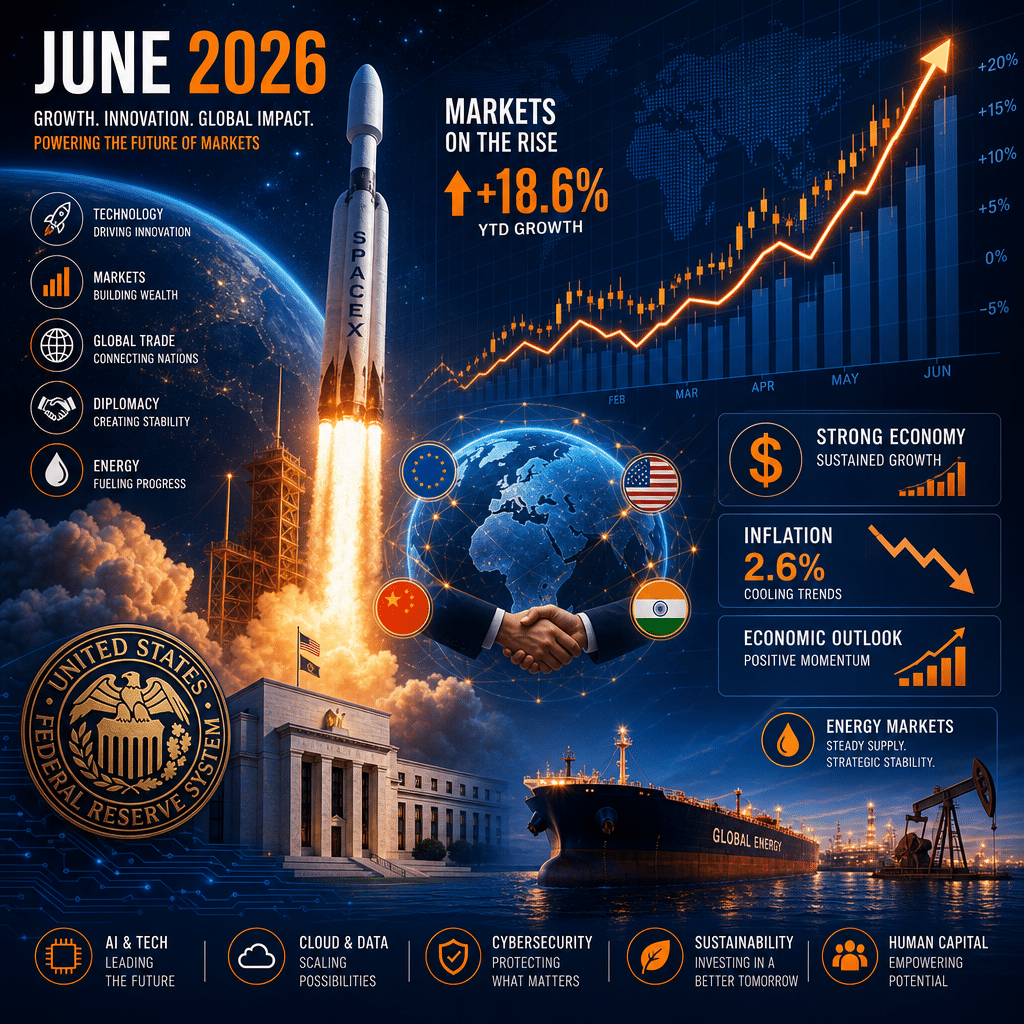
On Friday, SpaceX stunned Wall Street by making its public debut at $150 per share, marking an 11% gain above its initial public offering (IPO) price of $135. Investors responded enthusiastically, with the stock surging nearly 20% throughout the trading day. By the session’s close, SpaceX commanded a market capitalization of approximately $2.1 trillion – instantly positioning it as the sixth-largest company in the United States.
This historic IPO was not merely a win for Elon Musk and his cohort of early investors. It was the largest public offering in history in terms of capital raised, reflecting enormous and widespread investor interest in the space industry and commercial technologies that promise to shape the future. The implications go even further: Elon Musk, already the world’s richest individual, became the first modern-era trillionaire, further cementing his status as a visionary titan whose ventures continue to redefine industry benchmarks.
The market’s exuberance was contagious. Broad indices rallied as the SpaceX IPO dominated headlines, with the S&P 500 up 0.5% on Friday and notching a weekly gain of 0.6%. This kind of market momentum demonstrates the far-reaching influence of high-profile IPOs, especially from companies spearheading next-generation technologies and industries.
Monetary Policy in Focus: New Fed Chair and Rising Inflation
While the SpaceX debut reaffirmed investors’ appetite for innovation, another focal point was the first Federal Open Market Committee (FOMC) meeting chaired by Kevin Warsh, who assumed the role of Federal Reserve Chair on May 22. Warsh’s leadership comes at a pivotal moment for the central bank, which is grappling with persistent inflationary pressures that show no signs of abating.
Last month’s inflation data painted a sobering picture. Consumer price growth reached its highest level since 2023, and producer prices accelerated at a rate not seen since late 2022. The labor market remained robust, with hiring consistently outpacing forecasts over recent months.
Warsh is known for his preference to keep the Fed’s forward guidance vague, which could prompt markets to react more sensitively to upcoming economic data, as investors will have to pay close attention to every signal about the central bank’s next steps. While President Trump has vocally advocated for interest rate cuts, analysts at firms such as BNP Paribas argue that current economic conditions contrast sharply with those seen in the Fed’s last rate-cutting cycle.
Further complicating matters, Macquarie strategists suggest that the recent surge in artificial intelligence (AI) investments could be contributing to short-term inflation, even if AI ultimately brings deflationary benefits as it becomes more integrated across industries. Warsh’s nuanced perspective on the disinflationary potential of AI will be tested as policymakers balance the dual mandates of price stability and full employment.
Global Diplomacy and Oil Market Volatility
Geopolitical risk continues to exert a powerful influence on global markets, most notably in the ever-volatile energy sector. Friday brought news that U.S. and Iranian officials may be nearing a diplomatic agreement to reopen the Strait of Hormuz, which has been closed due to protracted regional conflict. The waterway is a critical passage for global oil shipments, and any developments related to its status can have substantial impacts on energy prices worldwide.
The negotiations remain fraught with complexities. According to Iranian state media, a compromise could see the United States withdrawing troops, the release of $24 billion in frozen Iranian assets, and an ambitious $300 billion reconstruction plan for the region. For the U.S., terms have reportedly included the destruction of Iran’s enriched uranium reserves and phased asset releases contingent on verified compliance.
Despite positive signals, last-minute disruptions persist. For example, a senior diplomat involved in the talks noted that Israeli military strikes on Beirut have introduced fresh challenges to the process, sparking concerns of broader destabilization.
Oil prices responded to the possibility of a resolution by retreating from recent highs but remain elevated compared to pre-conflict levels. Even with an agreement, the energy market faces a slow, arduous journey towards stabilization. Rystad Energy projects that the cumulative loss of oil production due to the conflict already surpasses one billion barrels, and this tally could potentially double by year-end, even in a best-case scenario.


Corporate Earnings and Retail Insights
Beneath the headline-grabbing IPOs and geopolitical developments, this week also brings a pulse check on the U.S. consumer and key sectors through a wave of important earnings reports and economic data releases.
CarMax: Used-Car Market Under Scrutiny
CarMax is set to announce its first-quarter results on Wednesday morning, providing a valuable window into the state of the used-car market. The company’s new CEO, Keith Barr, faces the challenge of navigating persistent supply chain disruptions, shifting consumer preferences, and tightening credit conditions. Analysts and investors will be watching for clues about demand trends, inventory levels, and pricing dynamics—factors that could shape both the auto market and broader consumer sentiment in the months ahead.
Accenture: Weighing Tech Spending and AI Integration
The consulting and IT giant Accenture will report its quarterly performance on Thursday. Recent concerns around federal spending reductions and competition in artificial intelligence advisory services have introduced an element of caution among investors. With digital transformation and AI initiatives serving as pivotal growth engines, Accenture’s results and guidance will offer important insights into both public sector and private sector technology spending. Any signs of decelerating momentum or increasing competition may weigh on the sector as a whole.
Kroger, Jabil, and the Broader Earnings Landscape
Supermarket leader Kroger and electronics manufacturer Jabil are also on deck to share their financial updates this week. Both are seen as bellwethers in their respective industries, so their commentary on consumer demand, input costs, supply chain logistics, and pricing strategies will be closely scrutinized.
Additionally, companies in diverse fields—ranging from insurance (The Progressive Corporation) and technology (Domo, La-Z-Boy, Quantum) to cannabis (Canopy Growth) and retail (Vince, Dave & Buster’s)—will be updating stakeholders and helping to paint a broader picture of corporate America’s health. Retail sales data for May, scheduled for release Wednesday, will further inform the state of consumer spending and the degree to which households are absorbing ongoing inflation.
Tying It All Together: What Does This Mean Going Forward?
This confluence of events—an all-time record IPO, a new approach to U.S. monetary policy, progress (and setbacks) in high-stakes diplomacy, and earnings snapshots from across the economy—creates a complex, fast-evolving landscape for investors and businesses alike. The SpaceX IPO signals extraordinary confidence in technology and innovation, but also reflects considerable risk-taking and faith in leadership to see ambitious visions through to reality.
The Federal Reserve, under new guidance from Chair Kevin Warsh, must contend with shifting inflation dynamics and a political environment where policy tools are scrutinized and debated intensely. Investors are bracing for a period where economic data takes on even greater importance, potentially introducing volatility as everyone tries to anticipate the Fed’s next move.
Globally, any stabilization in the Middle East would bring relief but not immediate resolution to energy markets, emphasizing the interconnected nature of geopolitics and investment strategy. Meanwhile, the earnings calendar promises a window into the economic reality on the ground, from groceries and gadgets to cars and consulting – each sector with its own challenges and opportunities as 2026 unfolds.
The coming weeks will require close attention to central bank commentary, corporate results, and global negotiations. Investors and businesses that remain agile and informed will be best positioned to navigate volatility, capitalize on emerging opportunities, and adapt to whatever the next pivotal news cycle may bring.
Conclusion
June 2026 marks a turning point on multiple fronts—space, finance, policy, and geopolitics. Whether it’s Elon Musk’s record-breaking IPO, Kevin Warsh’s first test as Fed Chair, shifting oil markets, or the resilience of American consumers and corporations, the stakes are remarkably high. As investors recalibrate amid these cross-currents, diligent analysis and strategic perspective will be key to unlocking the opportunities and managing the risks that lie ahead.