Binance Futures gives traders access to perpetual and dated crypto contracts, long and short positions, and leveraged exposure from one interface. That flexibility is useful, but it also makes mistakes more expensive. If you are new to Binance Futures, the goal is not to learn every button at once. It is to understand how the platform works, how risk is calculated, and how to avoid getting liquidated by a move you did not plan for.
This guide walks through the basics of Binance Futures, the main order types, how leverage changes your risk, and a few practical ways to improve your trading process. If you want a broader foundation first, start with our crypto trading guide.
What is Binance Futures?
Binance Futures is the derivatives section of Binance where traders can speculate on crypto price movements without buying the underlying coin for spot delivery. In simple terms, you are trading contracts that track the price of assets such as BTC or ETH rather than moving coins into a spot wallet and holding them there.
The two big attractions are straightforward:
- Long or short exposure: you can trade rising or falling markets.
- Leverage: you can control a larger position with a smaller amount of margin.
That second point is where most beginners get into trouble. Leverage magnifies gains, but it also magnifies losses and brings liquidation risk much closer than many traders expect.
What futures trading means in practice
A futures contract is an agreement tied to the price of an asset. In crypto, traders mostly use futures for speculation, hedging, or short-term positioning. On Binance, many traders use perpetual futures, which do not have a fixed expiry date but do use a funding mechanism to help keep contract prices close to the spot market.
If you are coming from spot trading, the main difference is this: with futures, your position is margin-based. That means your available collateral, leverage setting, fees, and liquidation threshold all matter just as much as your entry price.
How to open a Binance Futures account
If Binance Futures is available in your region and your account is eligible, the setup is usually simple:
- Log in to your Binance account.
- Go to the Futures section.
- Complete any required verification, disclosures, or suitability checks.
- Open your futures wallet.
- Transfer funds from your spot wallet to your futures wallet.
Availability depends on jurisdiction, and Binance does not offer the same products in every country. Before funding an account, check the exchange’s current eligibility rules and local restrictions.
If you still need the basics, our Binance exchange guide covers the standard account setup process.
Understanding the Binance Futures interface
The Binance Futures screen can look busy at first, but most of it falls into a few core areas:
- Chart: price action, indicators, and timeframe selection.
- Order book and recent trades: useful for seeing current market activity and liquidity.
- Order entry panel: where you choose market, limit, stop, take-profit, and leverage settings.
- Position panel: shows entry price, size, unrealized PnL, margin, and liquidation price.
- Open orders and order history: helps you track what is active and what has already executed.
Beginners often focus only on the chart. The position panel matters just as much. If you do not know your liquidation price, margin mode, and order trigger settings, you are trading half-blind.
Leverage on Binance Futures
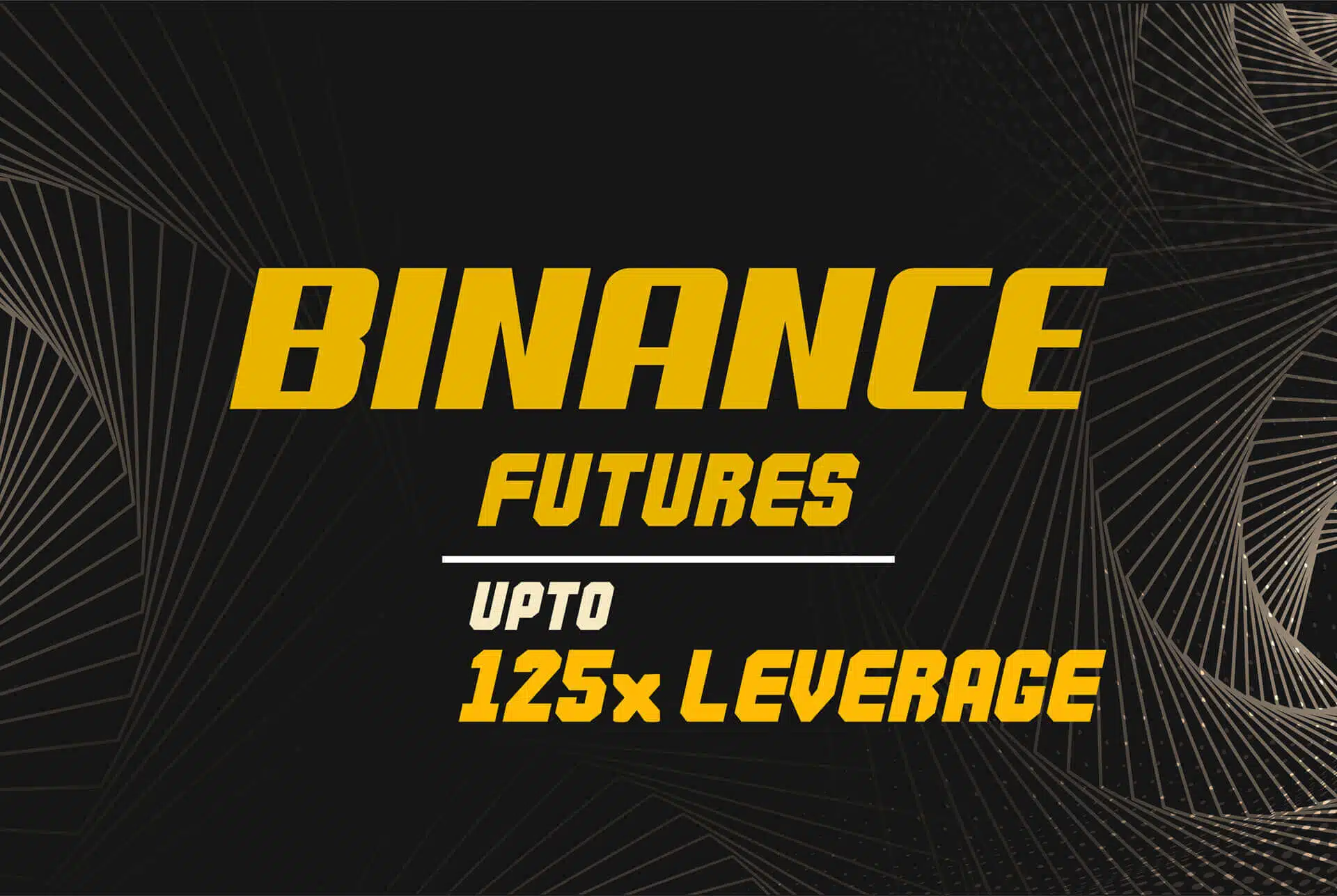
Binance Futures supports leveraged trading, and the maximum available leverage can vary by contract and position size. Higher leverage means you need less margin to open a position, but it also means a smaller adverse move can wipe out that margin.
Here is the practical version:
- Low leverage gives your trade more room to breathe.
- High leverage makes liquidation much easier to reach.
New traders are often tempted by the headline numbers. That is usually the wrong lesson to take from futures. Just because a platform allows very high leverage does not mean it is sensible to use it.
Binance also uses margin modes such as cross margin and isolated margin. With isolated margin, risk is limited to the margin assigned to that position. With cross margin, more of your account balance may be used to support the trade. If you are learning, isolated margin is generally easier to control.
Mark price vs last price
This is one of the most important concepts on Binance Futures.
Last price is the most recent traded price on the contract. It is commonly used to show the latest execution level and can affect realized profit and loss when trades close.
Mark price is a fair-price estimate used to reduce the impact of short-term price distortions. On futures platforms, liquidation logic is typically tied to mark price rather than the last traded print.
Why does that matter? Because a brief wick on the chart is not always the thing that liquidates you. If you do not understand which trigger price your stop uses and which price the platform uses for liquidation calculations, unpleasant surprises are more likely.


Main order types on Binance Futures
Binance offers several order types, but beginners only need to understand a handful before placing live trades.
Limit order
You choose the price where you want to buy or sell. The order sits in the book until the market reaches that level or better.
Market order
Your order executes at the best available price in the market. It is fast, but in volatile conditions the fill may be worse than expected.
Stop order
A stop order is triggered when price reaches a chosen level. Depending on the setup, it can place either a market order or a limit order. Traders often use stops to cut losses or enter on a breakout.
Take-profit order
This closes all or part of a position when price reaches a target. It is a simple way to avoid turning a winning trade into a round trip back to zero.
For most traders, the useful habit is simple: enter with a plan, place the invalidation level early, and know where you will take profit before the market starts moving quickly.
Extra features worth knowing
Binance Futures includes tools that can help with planning and risk control:
- Calculator: useful for estimating PnL, target prices, and liquidation levels before entering a trade.
- Reduce-only orders: designed to reduce or close a position without accidentally increasing exposure.
- Position mode settings: depending on the product and account setup, traders may be able to manage one-way or hedge-style positioning.
- Risk controls: exchanges may use insurance funds and auto-deleveraging mechanisms during extreme volatility.
You do not need every advanced feature on day one. You do need to understand how your position can be closed, reduced, or liquidated during fast market conditions.
How to improve your Binance Futures trading strategy
Most futures losses do not come from a lack of indicators. They come from poor risk control, oversized positions, and inconsistent execution. A few practical upgrades usually help more than adding another oscillator.
1. Use less leverage than you think you need
Lower leverage gives you more room for normal volatility. It also makes position sizing easier to manage. Surviving bad trades matters more than squeezing every last percentage point out of a good one.
2. Define the trade before you enter
Know your entry, stop, target, and invalidation point. If you cannot explain why the trade is wrong at a certain level, you probably do not have a complete setup yet.
3. Watch liquidation distance, not just potential profit
Many beginners calculate upside and ignore how close the liquidation price sits. On futures, that is backwards.
4. Keep a simple trading journal
Track the setup, leverage used, reason for entry, exit quality, and whether you followed your plan. Patterns show up quickly when you write them down.
5. Build around risk management, not prediction
No signal, indicator, or chart pattern wins every time. Strong traders think in probabilities and protect capital first. For a deeper look at execution tools, see the AltAlgo indicator.
Using signals without outsourcing your brain
Trading signals can help with structure, timing, and market focus, especially if you are still learning how to scan setups efficiently. The catch is that signals work best when you understand the trade you are taking. Blindly copying entries with high leverage is not a strategy. It is just faster confusion.
If you want trade ideas with clearer structure, you can explore AltSignals trading signals. Used properly, signals can support your process by helping you spot setups, compare risk-to-reward, and stay more disciplined with entries and exits.
Final thoughts
Binance Futures can be a useful platform for active crypto traders, but it is not forgiving. Before you worry about advanced tactics, get the basics right: margin mode, leverage, order types, mark price, and liquidation risk. Those are the parts that keep you in the game long enough to improve.
Start small, keep your process simple, and treat leverage with respect. In futures trading, boring risk management usually beats exciting mistakes.