


Telegram has become one of the default places where crypto traders share ideas, publish signals, and react to market moves in real time. That is not an accident. Crypto trades around the clock, price moves can be sharp, and traders want updates faster than email, cleaner than X threads, and more organised than a noisy comment section.
That said, Telegram is just a tool. It can help traders move quickly, but it can also expose them to low-quality signals, fake performance claims, and outright scams. The real question is not whether Telegram matters in crypto trading. It does. The better question is how traders should use it well.
If you want the broader picture first, start with our crypto trading guide.
Why traders use Telegram for crypto trading
Telegram fits crypto unusually well because it solves a few practical problems at once.
- Speed: Signals, chart updates, and trade alerts arrive instantly.
- Always-on access: Traders can follow markets from desktop or mobile without much friction.
- Channels and groups: Providers can broadcast signals, while communities can discuss setups and market sentiment.
- Bot support: Telegram works well with alerts, automation, and trading-related tools.
- Global reach: Crypto communities are international, and Telegram is widely used across regions.
For a market that never really sleeps, that combination is hard to beat.
It also helps that Telegram is simple. A trader can join a channel, pin key messages, mute the noise, and keep only the alerts that matter. In practice, that convenience is a big reason many signal providers still prefer it over more complex platforms.
What Telegram is actually used for in crypto

When people talk about “Telegram crypto trading”, they usually mean one of four things:
- Signal delivery — buy, sell, stop-loss, and take-profit levels sent to subscribers.
- Market commentary — quick updates on momentum, news, or key levels.
- Community discussion — traders comparing setups, sentiment, and risk ideas.
- Bot-based workflows — alerts, watchlists, and in some cases trading bot integrations.
Those use cases overlap, but they are not the same. A signal channel is not automatically an education channel. A busy group chat is not automatically useful. And a bot is not automatically safer or smarter than manual execution.
How crypto signals work on Telegram
A Telegram signal usually gives a trader a structured setup to review. That often includes:
- the asset pair
- direction, such as long or short
- entry zone
- stop-loss level
- one or more take-profit targets
- sometimes a short rationale
The appeal is obvious: instead of scanning dozens of charts, traders receive a shortlist of setups that may be worth acting on.
Used properly, signals can save time and help traders stay disciplined. Used badly, they can encourage blind copying and poor risk control.
The best signal channels do a few things well:
- they present setups clearly
- they avoid exaggerated promises
- they explain risk, not just upside
- they keep records transparent
- they stay consistent in format and timing
If you want a deeper look at how signals are structured and how traders use them, read our guide to crypto trading signals.
Why Telegram works better than some alternatives
Telegram is not the only place traders gather, but it remains one of the most practical.
Telegram vs Discord
Discord is strong for deeper communities and layered discussions, but it can become cluttered fast. For traders who want clean, immediate alerts, Telegram is often easier to follow.
Telegram vs WhatsApp
WhatsApp is familiar, but it is less suited to large public trading communities and signal distribution at scale.
Telegram vs X or social feeds
Social platforms are useful for discovery and sentiment, but they are poor for structured signal delivery. Important updates disappear quickly in the feed.
Telegram sits in a useful middle ground: fast enough for alerts, simple enough for everyday use, and flexible enough for communities and bots.
The main advantages of Telegram for traders
There are good reasons traders keep coming back to Telegram.
- Real-time alerts: Timing matters in crypto, especially for short-term setups.
- Low friction: Joining a channel is easy, and messages are simple to review.
- Portable workflow: Traders can monitor alerts on the move.
- Community access: Good groups can surface useful discussion around setups and market conditions.
- Tool compatibility: Telegram works well with bots, notifications, and automated updates.
For signal providers, it is also efficient. One message can reach a large audience instantly, which makes it a natural distribution layer for trading ideas.
The risks traders should not ignore
This is where a lot of traders get caught out. Telegram is useful, but it is also easy to abuse.


- Fake experts: Anyone can create a channel and claim a strong track record.
- Cherry-picked results: Some channels highlight winners and quietly ignore losses.
- Guaranteed profit language: That is usually a red flag, not a selling point.
- Impersonation scams: Fake admin accounts and cloned channels are common.
- Overtrading: Constant alerts can push traders into taking setups they do not fully understand.
Regulators have repeatedly warned that crypto markets carry high risk, and that promotions can be misleading. The UK Financial Conduct Authority and Investor.gov guidance on social media and investment fraud are useful reminders that fast-moving online communities can attract bad actors.
That does not mean Telegram channels are inherently unreliable. It means traders need a filter.
How to judge whether a Telegram signal channel is credible
Before trusting any channel, check the basics.
- Is the signal format clear? Vague calls like “buy now” are not enough.
- Is risk explained? A serious provider talks about stop-losses and invalidation, not just targets.
- Are results presented transparently? Look for consistency rather than selective screenshots.
- Is the tone realistic? Professional channels do not promise easy money.
- Is there evidence of analysis? Even short commentary should show some reasoning.
A good rule: if a channel spends more time selling a lifestyle than explaining trades, keep walking.
Best practices for using Telegram signals safely
Telegram works best when it supports your process rather than replacing it.
- Use signals as input, not orders. Review the setup before entering.
- Check position size first. Risk management matters more than finding one more alert.
- Turn on two-factor authentication. Protect your account and be cautious with direct messages.
- Mute noise, keep signal. Too many groups can wreck focus.
- Track outcomes yourself. Keep your own record instead of relying on channel screenshots.
- Test before scaling. Start small or paper trade if you are evaluating a new provider.
If your process still needs work, pairing signals with a stronger chart-reading framework helps. Our AltAlgo indicator is built for traders who want clearer technical context alongside alerts.
Where Telegram fits in a modern trading workflow
For most traders, Telegram should sit near the top of the workflow, not at the centre of it.
A sensible setup looks something like this:
- use Telegram for alerts and market updates
- use charts and indicators to validate the setup
- use a written risk plan before entering
- review results over time and adjust
That approach keeps Telegram in its proper role: fast communication, not outsourced decision-making.
It is also worth noting that Telegram’s role has expanded beyond plain messaging. Crypto communities now use it alongside bots, wallet features, and automated notifications. That makes the platform more useful, but it also raises the stakes. More convenience usually means more room for mistakes if traders stop checking what they are doing.
How AltSignals uses Telegram
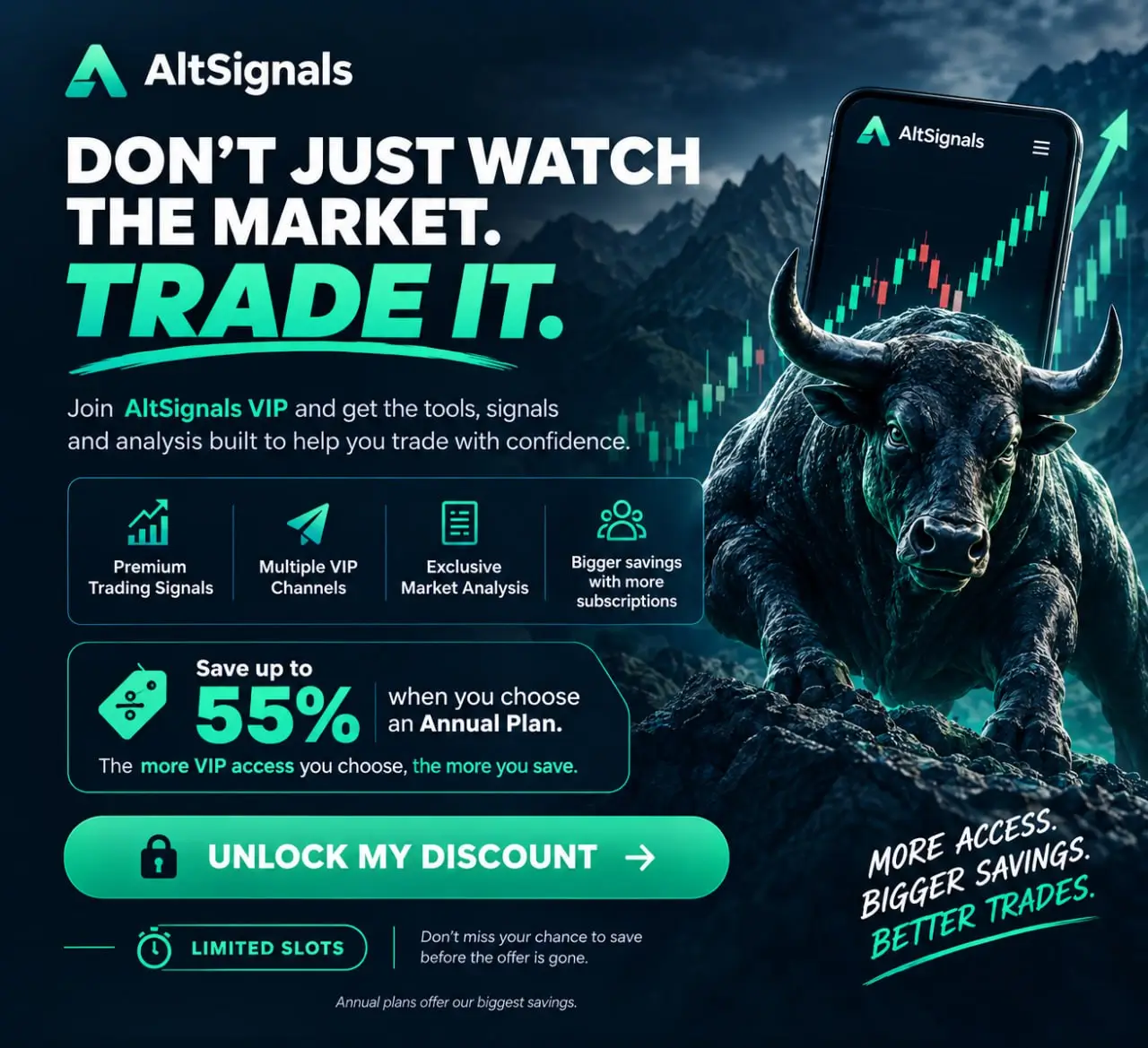
At AltSignals, Telegram is used as a delivery channel for timely market updates and trading signals, not as a substitute for discipline. The goal is simple: clear setups, fast delivery, and a format traders can actually use.
Readers who want a practical next step can explore AltSignals trading signals. If you want to compare signal ideas against published performance, you can also review our trading results.
As always, no signal service removes market risk. Execution, sizing, and judgment still matter.
Final take
Telegram matters in crypto trading because it matches the pace of the market. It is fast, flexible, and easy to use. That makes it ideal for alerts, communities, and signal delivery.
But speed cuts both ways. The same features that make Telegram useful also make it easy for weak providers and scammers to blend in.
The traders who get the most from Telegram tend to use it with a bit of scepticism and a lot of structure. They verify setups, manage risk, and treat signals as support rather than certainty. That is usually the difference between using Telegram as an edge and using it as a shortcut.
FAQ
Why do crypto traders prefer Telegram?
Is Telegram safe for crypto trading signals?
Telegram itself can be used safely, but signal quality varies a lot. Traders should watch for fake admins, cloned channels, unrealistic profit claims, and providers that do not explain risk.
Can you trade directly on Telegram?
Some bots and integrations support trading-related actions through Telegram, but most traders still use it mainly for alerts, commentary, and signal delivery rather than as their only execution platform.
Should beginners rely on Telegram signals alone?
No. Signals can be useful, but beginners should still learn basic chart analysis, position sizing, and risk management. Blindly copying trades is rarely a good long-term plan.









Mostly because it is fast and simple. Telegram makes it easy to receive instant alerts, follow channels, join trading communities, and keep market updates in one place.