


Cryptocurrency trading means buying and selling digital assets to profit from price moves. It sounds simple. In practice, it involves market structure, order types, risk control, and a lot of patience.
If you’re new to crypto, the fastest way to get lost is to jump straight into charts without understanding how trading actually works. This guide covers the basics clearly: what crypto trading is, where it happens, the main strategies traders use, the tools they watch, and the risks that matter before you place a trade.
If you want the broader picture first, start with our crypto trading guide.
What is cryptocurrency trading?
Cryptocurrency trading is the act of exchanging one digital asset for another, or for fiat-backed assets such as USD or stablecoins, based on expected price movement. A trader might buy Bitcoin because they expect it to rise, or sell an asset because they think momentum is fading.
Unlike long-term investing, trading usually focuses on shorter timeframes and more active decision-making. That can mean minutes, hours, days, or weeks depending on the strategy.
Crypto markets are popular because they are:
- Open 24/7: there is no closing bell
- Highly volatile: prices can move quickly in either direction
- Accessible: anyone with an exchange account and internet access can participate
- Global: liquidity and news flow come from around the world
That mix creates opportunity, but it also punishes sloppy execution. Knowing what you are trading is only half the job. Knowing when to enter, where to exit, and how much to risk matters just as much.
How cryptocurrency trading works

At a basic level, crypto trading works through exchanges that match buyers and sellers. You place an order, the exchange fills it if there is matching liquidity, and your position changes based on market price.
Most beginners start on centralized exchanges (CEXs) such as Coinbase, Kraken, or Binance. These platforms are generally easier to use and often provide deeper liquidity, charting tools, and fiat on-ramps.
Decentralized exchanges (DEXs) such as Uniswap work differently. Instead of relying on a central company to hold funds and match orders in the same way, they let users trade directly from their wallets using smart contracts. That gives you more control, but usually comes with a steeper learning curve and different risks.
Crypto is usually traded in pairs, such as BTC/USDT or ETH/BTC. The first asset is what you are buying or selling. The second is what it is priced against.
In practice, most trades follow the same basic flow: choose the market, study the chart, decide whether conditions support a long or short idea, place the order, and define your exit before the trade is live. Traders often use candles, volume, support and resistance, and a small set of indicators to build confirmation rather than relying on a single signal.
Prices move because of supply and demand, but the drivers behind that demand can vary a lot:
- macro news and interest-rate expectations
- regulatory developments
- exchange listings or delistings
- on-chain activity and network usage
- market sentiment and momentum
For a beginner, the key point is this: crypto trading is not just “buy low, sell high.” It is a process of reading market conditions, choosing a setup, managing risk, and sticking to a plan when the market gets noisy.
Spot trading vs leveraged trading
Not all crypto trading works the same way.
Spot trading means you buy and sell the actual asset. If you buy BTC on the spot market, you own BTC until you sell it or transfer it. Some traders prefer spot because it is simpler and gives them the option to hold the asset rather than being forced out by liquidation.
Leveraged trading means you use borrowed capital or derivatives to increase exposure. This can amplify gains, but it also amplifies losses. A small move against your position can do much more damage than many beginners expect.
In crypto, leveraged exposure usually shows up through margin trading or futures trading. Margin trading uses borrowed funds from the platform to increase position size. Futures trading uses contracts that track the asset price rather than requiring you to own the coin itself. Both can allow long and short positions, and both carry liquidation risk if the market moves too far against you.
That is why spot trading is usually the better starting point. It is simpler, easier to understand, and less likely to punish basic mistakes with liquidation.
If you are still learning order flow, chart structure, and position sizing, adding leverage is usually adding chaos.
Common cryptocurrency trading strategies
There is no universal best strategy. The right approach depends on your time, temperament, and risk tolerance.
- Day trading: opening and closing trades within the same day to capture short-term moves
- Swing trading: holding positions for several days or weeks to ride medium-term trends
- Scalping: taking many small trades and aiming for small gains repeatedly
- Trend trading: following the broader direction of the market rather than trying to catch every reversal
- Position trading: holding trades for longer periods based on a bigger market thesis
Beginners often assume faster trading means faster profits. Usually it means faster mistakes. Swing trading or simple trend-following is often easier to manage than scalping because it gives you more time to think and less room for impulsive decisions.
If you want to go deeper into setups and methods, these guides are a good next step:
- Mastering Effective Crypto Trading Strategies
- Our Editor’s Choice Top Trading Strategies
- Top 3 Best Moving Average Trading Strategies
Order types every beginner should know
A lot of trading mistakes happen before the market even moves. They happen when traders use the wrong order type.
- Market order: buys or sells immediately at the best available price
- Limit order: executes only at your chosen price or better
- Stop-loss order: closes a trade if price moves against you to a defined level
- Take-profit order: locks in gains when price reaches your target
Market orders are fast, but in volatile conditions they can fill at worse prices than expected. Limit orders give you more control, but they may not fill at all. Stop-losses are not glamorous, but they are one of the few tools that can stop a bad trade from becoming a much worse one.
A simple beginner mistake is entering a trade without defining both the invalidation point and the target. If you do not set a take-profit, price can reach your planned exit and reverse before you act. If you do not set a stop-loss, a manageable loss can turn into a much larger one.
Tools and indicators used in crypto trading
Good traders do not rely on instinct alone. They use tools to read trend, momentum, volatility, and market structure.
Some of the most common indicators include:

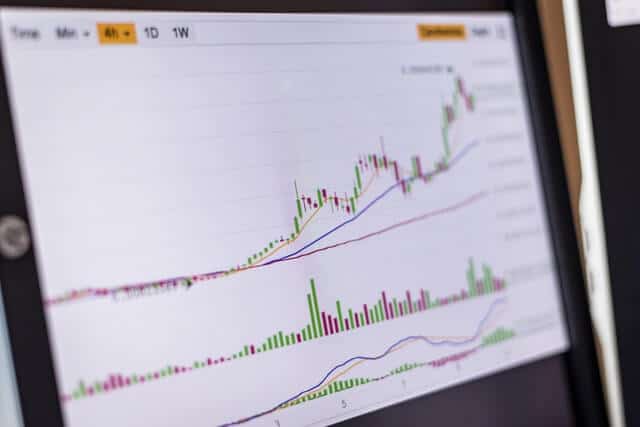
- RSI (Relative Strength Index): helps identify overbought or oversold conditions
- MACD: tracks momentum shifts and possible trend changes
- Moving averages: smooth price action and help define trend direction
- Bollinger Bands: show volatility expansion and contraction
- Volume: helps confirm whether a move has real participation behind it
Indicators are useful, but they are not magic. A chart with six indicators and no plan is still just a messy chart.
Many traders combine indicators with support and resistance, trendlines, and clear risk rules. If you want a more structured way to read setups, our AltAlgo indicator can help traders spot opportunities without overcomplicating the process.
For a closer look at trading metrics and what actually matters on a chart, read Trading Values: Key Metrics for Successful Trading.
Risk management matters more than your entry
Most new traders obsess over finding the perfect entry. Experienced traders spend more time thinking about risk.
Why? Because even strong setups fail. Crypto markets can reverse hard, react badly to news, or simply ignore what looked obvious on the chart.
Basic risk management includes:
- risking only a small portion of your capital on each trade
- using stop-losses before the trade is live
- avoiding overtrading after wins or losses
- not using leverage you do not fully understand
- keeping position size consistent with your account size
If you choose to trade with leverage, keep size conservative. High leverage can magnify returns, but it can also empty margin quickly and trigger liquidation. For newer traders, smaller exposure is usually the smarter trade.
This is also where trading signals can help. Used properly, signals can save time and provide structure, especially if you are still learning how to evaluate setups on your own. If you want that kind of support, you can explore AltSignals trading signals. They should support your process, not replace your judgment.
Main risks and challenges of crypto trading
Crypto trading can be rewarding, but it is not easy money. The risks are real and they show up quickly.
- Volatility: prices can swing sharply within minutes
- Emotional trading: fear, greed, and FOMO can wreck a plan fast
- Security threats: phishing, scams, wallet compromise, and exchange risk
- Liquidity issues: smaller coins may have wider spreads and worse execution
- Regulatory uncertainty: rules differ by country and can change
- Market manipulation: thin markets are especially vulnerable to sudden spikes and dumps
Regulators such as the U.S. Securities and Exchange Commission and the UK Financial Conduct Authority regularly warn that crypto assets are high risk and may not be suitable for all investors. That is not boilerplate. It is a fair summary.
How to start trading cryptocurrency
If you are starting from scratch, keep it simple.
- Choose a reputable exchange: look for security features, supported regions, fees, and ease of use.
- Secure your account: use a strong password and enable two-factor authentication.
- Learn the platform before funding heavily: know where spot, orders, balances, and withdrawals are.
- Start with spot trading: avoid leverage until you understand the basics.
- Use a small amount of capital: treat your first trades as tuition, not a payday.
- Set a plan before entering: define entry, stop-loss, and target in advance.
- Track your trades: a simple journal will show patterns in your mistakes faster than memory will.
If you plan to hold assets outside an exchange, review wallet basics and custody options carefully.
Is cryptocurrency trading the same as investing?
Not really.
Investing usually means buying an asset because you believe in its long-term value and are willing to hold through volatility.
Trading is more active. It focuses on shorter-term price movement, timing, and execution.
Some people do both. They keep a long-term portfolio and trade a smaller portion separately. That can work, but only if the two approaches are clearly separated. Mixing an investment thesis with a bad short-term trade is how many traders end up “accidentally long-term.”
Where crypto trading is heading in 2026
Crypto trading keeps evolving. A few trends stand out:
- Better trading infrastructure: exchanges, charting tools, and execution platforms are more mature than they were a few years ago
- More automation: traders increasingly use alerts, bots, and AI-assisted analysis to reduce manual workload
- Stronger compliance pressure: regulation is still fragmented, but oversight is tighter in many regions
- More informed retail traders: educational content and analytics tools are improving, even if bad advice still travels fast
That does not mean trading is becoming easy. It means the edge is shifting away from guesswork and toward process, discipline, and better tools.
Final thoughts
Cryptocurrency trading is the practice of buying and selling digital assets based on expected price movement. The mechanics are straightforward. Doing it well is not.
If you are learning, focus on the basics first: market structure, order types, strategy, and risk management. You do not need to master everything in a week. You do need to avoid the classic beginner mistake of treating volatility like a shortcut.
And if you want extra structure while you build your own process, tools such as signals and indicators can help. Just remember: no tool removes risk, and no signal replaces discipline.
FAQ
Can beginners trade cryptocurrency?
Is cryptocurrency trading legal?
That depends on your country and the platform you use. Crypto trading is permitted in many regions, but rules on taxation, derivatives, and exchange access vary. Always check local regulations before trading.
How much money do you need to start crypto trading?
You can usually start with a relatively small amount on major exchanges. The better question is how much you can afford to risk. Start with an amount small enough that mistakes are educational, not financially damaging.
What is the safest way to start trading crypto?
The safest approach is to use a reputable exchange, enable two-factor authentication, trade spot rather than leverage, and use strict position sizing and stop-loss rules.
What is the difference between spot, margin, and futures trading?
Spot trading means buying and selling the actual coin. Margin trading uses borrowed funds to increase exposure. Futures trading uses contracts tied to the asset price and often includes leverage. Margin and futures can increase gains, but they also increase the risk of fast losses and liquidation.










Yes, but beginners should start small, use spot markets first, and learn order types and risk management before trying advanced strategies or leverage.