BIS Report Critiques Stablecoins: Risks, Dollarization, and the Path Forward for Crypto-Dollar Tokens
In its 2026 Annual Economic Report, the Bank for International Settlements (BIS) — the central bank for the world’s central banks — delivers a critical analysis of the rapidly expanding stablecoin market. These digital assets, designed to maintain a steady value, typically pegged to the United States dollar, have grown immensely over the past several years. However, the BIS cautions that despite their popularity and their technical innovations, stablecoins lack the institutional foundations needed to make them robust, trustworthy forms of money. Scaling them up, the BIS warns, could introduce new vulnerabilities to the global financial system.
The Rise of Stablecoins: Size, Structure, and Dominance
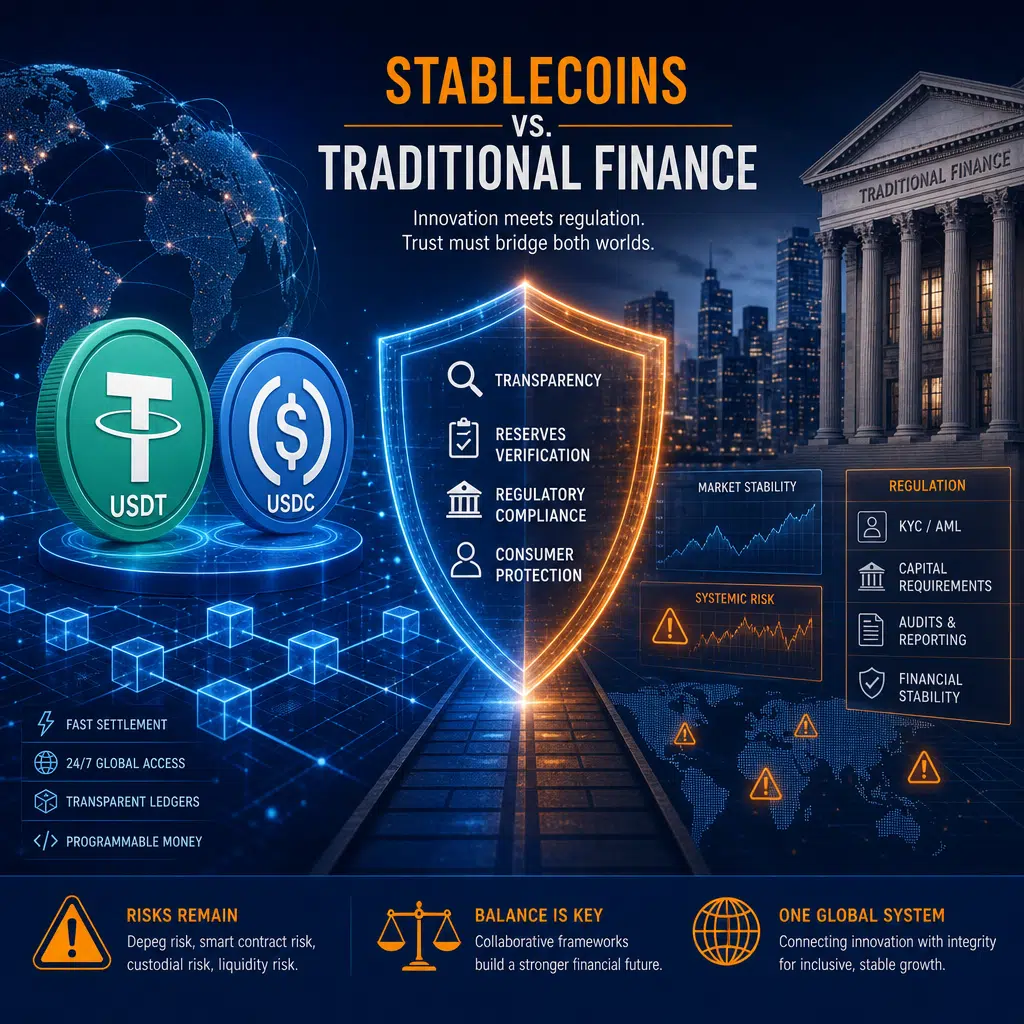
Stablecoins have emerged as some of the most widely used assets in the cryptocurrency sector. Their purpose is simple: to provide a stable, digital alternative for holding and transferring value, avoiding the wild price swings that characterize cryptocurrencies like Bitcoin and Ethereum. According to the BIS report, stablecoin growth is dominated by two dollar-pegged tokens, Tether’s USDT and Circle’s USDC. Collectively, these coins account for the overwhelming majority — 99.4% — of the fiat-backed stablecoin market by value, a market now worth approximately $320 billion as of May 2026.
Other stablecoins, including Sky’s USDS, BitGo’s USD1, and Ethena’s USDE, trail far behind in terms of market capitalization. This heavy concentration suggests the stablecoin ecosystem is not as decentralized as commonly perceived. Instead, it is primarily driven by entities and platforms with U.S. dollar exposure.
Stablecoins: More Like ETF Shares Than Money
Despite their promise, the BIS highlights several technical and structural limitations that prevent stablecoins from functioning as true money. The report notes that secondary market prices for stablecoins can fluctuate away from their nominal $1 valuation, and redemption processes often include hurdles, delays, or extra costs.
As a result, rather than acting as a liquid, universally usable means of payment, stablecoins more closely resemble exchange-traded fund (ETF) shares. These digital tokens are often bought, held, and traded as speculative digital assets rather than being used for everyday payments or settlements. The BIS argues that without consistent redemption at par, instant settlements, and robust oversight, stablecoins will struggle to achieve the trustworthiness enjoyed by cash or commercial bank deposits.
Stablecoins and Illicit Blockchain Activity
One of the most serious concerns raised by the BIS relates to the ease with which stablecoins can be used for unlawful or unregulated transactions. Because stablecoins operate on public, permissionless blockchains, accounts can be created and used pseudonymously, making it difficult to enforce anti-money-laundering (AML) protocols or monitor illegal activity.
According to the BIS, stablecoins have become a significant channel for illicit on-chain activity. This includes sanctioned financial flows, money laundering, and the funding of illicit enterprises. The pseudonymous nature of many blockchain transactions, especially outside of regulated exchanges, complicates the task of enforcing global financial integrity standards. This remains a major issue for regulators and policymakers worldwide.
Market Risks: Treasury Backing and the Threat of Fire Sales
Stablecoins like USDT and USDC are typically backed by reserves, much of which consist of highly liquid assets, such as short-term U.S. Treasury bills. While this is generally touted as a source of safety and reliability — since these are considered some of the safest assets in the world — the BIS highlights a uniquely systemic risk.
If confidence in a leading stablecoin were to decline suddenly — due to a technical failure, regulatory issue, or a spate of negative publicity — there could be a wave of mass redemptions. To meet these redemptions, the stablecoin issuers would be forced to rapidly sell off their holdings of Treasuries and cash equivalents. The BIS warns that such a scenario could spark “fire sales” in the broader Treasury market, potentially transmitting stress to the global money markets and even the sovereign debt markets, given the scale and concentration of these assets.
Dollarization Pressure on Emerging Markets
While stablecoins may bring efficiency to payments, the BIS’ sharpest warning is aimed at emerging economies. There, demand for U.S. dollar-based stablecoins could accelerate a process known as dollarization, in which people abandon their local currency in favor of a foreign one — often the U.S. dollar — as their primary store of value and medium of exchange.


The report details how stablecoins can enable households and businesses to avoid capital controls and regulatory oversight, effecively bypassing domestic financial systems altogether. This can reshape cross-border flows and trade, and erode a nation’s monetary sovereignty. As seen in past episodes of physical dollarization, such shifts are extremely difficult to reverse and can undermine central banks’ ability to conduct effective monetary policy. The stablecoin phenomenon, with its scale and reach, poses a new variant of these old risks.
Policy Recommendations: Regulation, Innovation, and the Role of Central Bank Money
Despite its critique, the BIS stops short of calling for a blanket ban on stablecoins. Instead, it urges that the technical and institutional weaknesses of current stablecoin designs be addressed, while harnessing the efficiency of blockchain technology within the regulated banking system. The BIS points to tokenized money — that is, digital representations of money issued by commercial banks or central banks and backed by central bank reserves — as a safer and more reliable alternative.
This approach would ensure stablecoins (or their equivalents) are held to the same standards as mainstream money, including robust oversight, transparent audit requirements, clear redemption mechanisms, and full backing by central bank money. It also invests institutions with the responsibility and tools needed for effective anti-money-laundering and consumer protection.
Stablecoin Policy in the United States: The Ongoing Debate
The BIS report lands at a time when stablecoins are increasingly at the center of political and regulatory debates, especially in the United States. The White House and lawmakers are currently pushing for the passage of the CLARITY Act, a pivotal piece of crypto legislation expected by July 4, 2026. Among the most controversial elements of this bill is a provision related to stablecoin yield payments — essentially, the returns paid to users for holding stablecoin balances, not unlike interest earned on a traditional bank deposit.
These yields are generally generated through methods such as on-chain lending, staking, or investment in interest-bearing reserves. Critics warn that such products, if not properly regulated, could endanger consumers — echoing long-standing concerns about “shadow banking” in the traditional financial sector.
Additionally, there is a push to ensure that big technology and social media companies do not gain disproportionate control over the stablecoin market. Policymakers are balancing the promise of fintech innovation against potential risks to financial stability, competition, and consumer protection.
The Future of Stablecoins: Reform, Integration, or Displacement?
The future of stablecoins will depend on how they — and the regulatory environment around them — evolve in the coming years. With more central banks moving toward developing digital currencies (CBDCs) and exploring tokenized money infrastructures, the role of privately issued stablecoins may shift significantly. The BIS is clear in its call for improvement: authorities must shore up the vulnerabilities of current stablecoins and bring blockchain-based payment systems within the regulatory perimeter.
To promote resilience, legitimacy, and financial stability, the next wave of digital money will likely need to build on the principles that have long underpinned trusted currencies: strong institutional backing, transparent oversight, and commitment to consumer safety. The challenge will be integrating the efficiencies of blockchain with the legal, ethical, and systemic safeguards that secure the global financial system.
For now, stablecoins remain a contested but critical bridge between the world of traditional finance and the emerging universe of digital assets. As the BIS report underscores, their continued growth and evolution will require constant vigilance, smart regulation, and responsible innovation — especially as they become ever more deeply intertwined with the global economy.